
WOOL PELLET MACHINE
Compressing waste wool into high-quality fertilizer pellets, and this business can bring you additional profits.
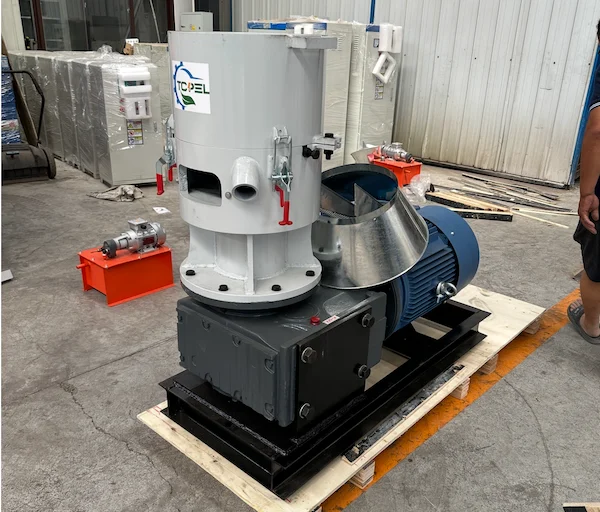
WOOL PELLET MACHINE FOR SALE
If you're struggling to deal with large amounts of waste wool, then a wool pellet machine might be your best option.
Wool pellet mills are efficient and environmentally friendly fertilizer granulation equipment that can transform waste wool into valuable fertilizer pellets. Waste wool, or wool mixed with sludge in sheep pens, is crushed and then extruded under high pressure into regular cylindrical fertilizer pellets by the wool pellet mill. Its core function is to densify the waste wool fibers, facilitating its use as slow-release organic nitrogen fertilizer or achieving resource recycling. This equipment provides an effective solution for livestock farming, horticulture, and environmental engineering.
WOOL PELLET MILL TYPES AND MODELS
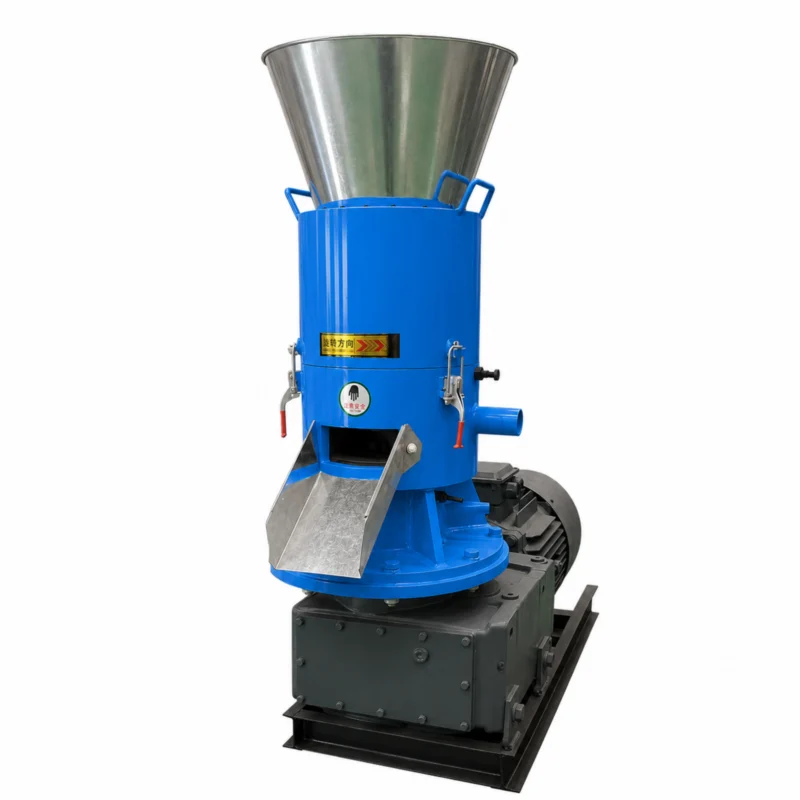
TCZL250 Wool Pellet Mill
Main Motor: 15KW
Capacity: 100-200kg/h
Configuration: pellet mill, control panel, automatic oil pump
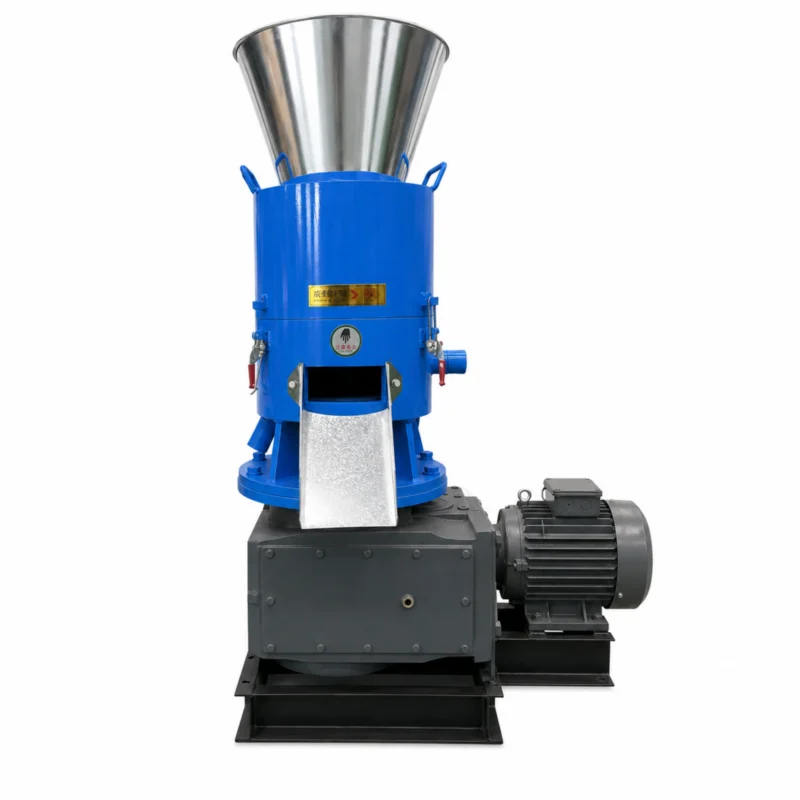
TCZL300 Wool Pellet Machine
Main Motor: 22KW
Capacity: 200-300kg/h
Configuration: pellet mill, control panel, automatic oil pump
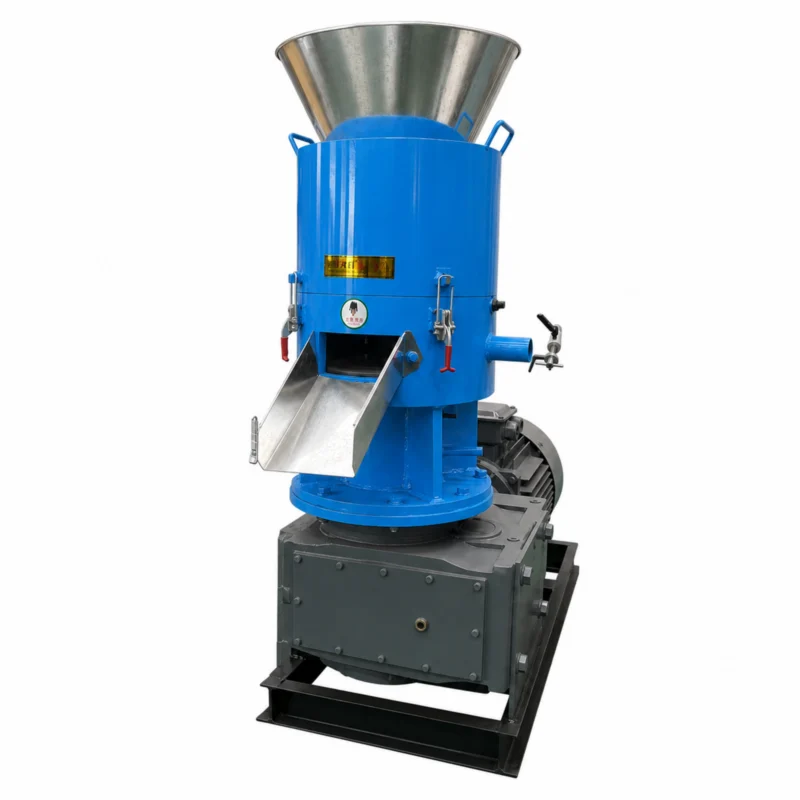
TCZL300 Sheep Wool Pellet Machine
Main Motor: 30KW
Capacity: 300-4000kgs/h
Configuration: pellet mill, control panel, automatic oil pump.
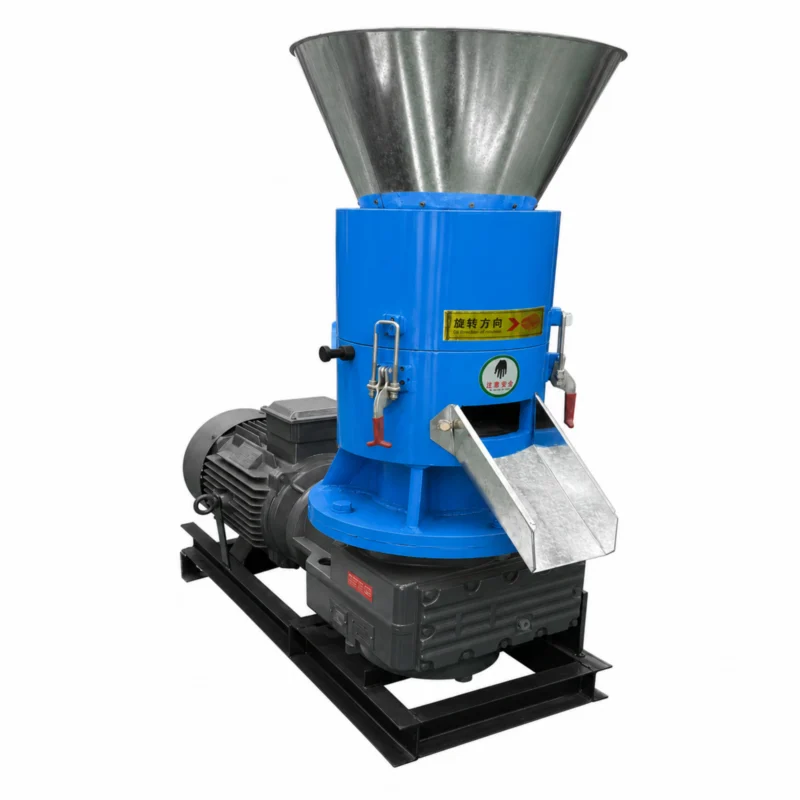
TCZL400 Wool Fertilizer Pellet Mill
Main Motor: 37KW
Capacity: 400-600kgs/h
Configuration: pellet mill, VFD control panel, automatic oil pump
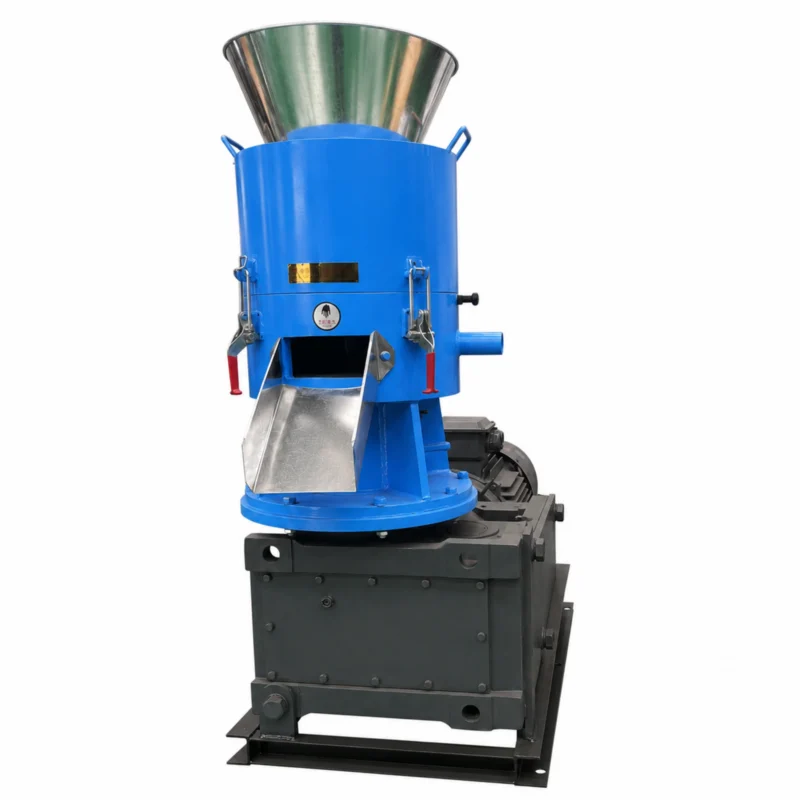
TCZL550 Sheep Wool Pellet Mill
Main Motor: 55KW
Capacity: 600-800kg/h
Configuration: pellet mill, VFD control panel, automatic oil pump
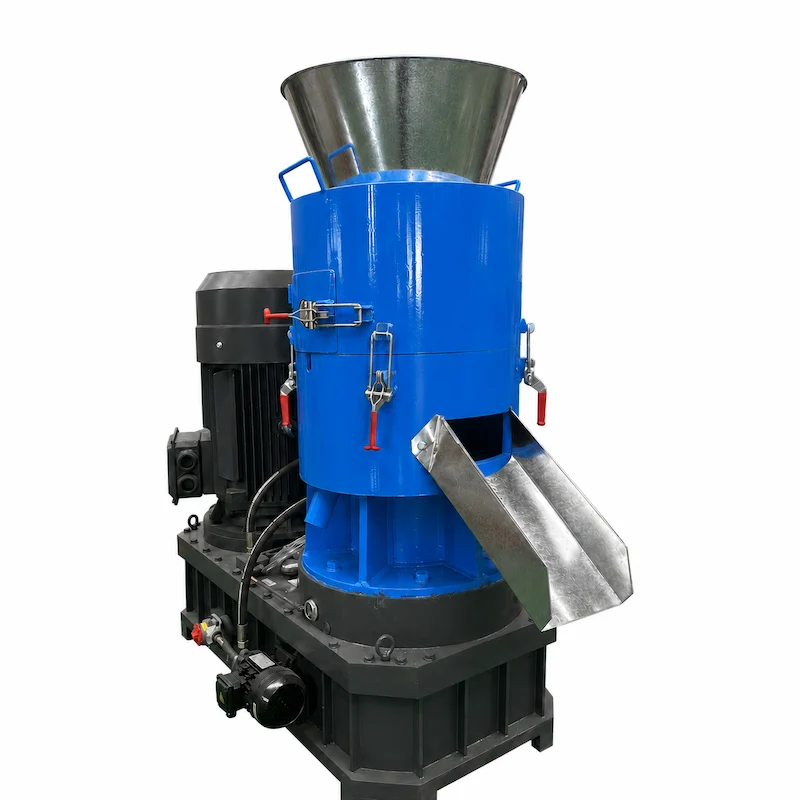
TCZL550 Wool Pellet Machine
Main Motor: 75KW
Capacity: 800-1100kgs/h
Configuration: pellet mill, VFD control panel, automatic oil pump
WOOL PELLETIZER TECHNICAL PARAMETERS
| Model | Flat Die Diameter | Power | Capacity |
|---|---|---|---|
| TCZL250 | 260mm | 15KW | 100-200KG/H |
| TCZL300 | 260mm | 22KW | 200-400KG/H |
| TCZL400 | 260mm | 37KW | 300-500KG/H |
| TCZL450 | 260mm | 55KW | 600-800KG/H |
| TCZL550 | 260mm | 55KW | 800-1000KG/H |
WOOL PELLET MACHINE STRUCTURE
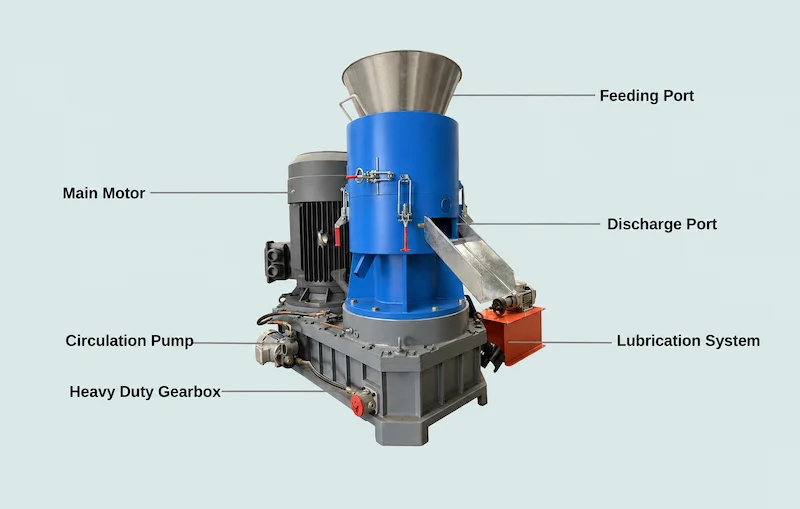
1.Feeding Port:
The wools enter the pellet making chamber directly through this inlet, which is connected to the VFD screw conveyor.
2.Discharging Port:
The produced wool fertilizer pellets are discharged from this port, and usually be sent to a wool pellets conveyor.
3 Heavy-duty Gearbox:
Our heavy duty gearbox is unit with enlarged gear and helical gear surfaces, allowing it to withstand greater driving forces. It is better suited for materials with different hardness.
4.Control Panel:
It controls all the motors for this wool pellet making plant, and ensuring the normal operation of all the motors.
5.Main Motor:
It drives the gearbox, the main shaft and the press roller to rotate.
WOOL PELLET MAKING MACHINE TEST RUN VIDEO
This video showcases the trial operation of a wool pellet machine. The video clearly shows wool from a livestock farm continuously entering the feed inlet, with wool pellets steadily flowing out of the outlet. The equipment operates stably without any blockages. Powerful internal pressure rollers continuously apply pressure to the die. Under high temperature and pressure, loose wool is compressed into high-density wool pellets with uniform length and density. This machine can produce fertilizer pellets with a diameter of 6-10 mm simply by changing the die.
HOW TO MAKE WOOL PELLET
Producing wool pellets generally involves two steps. First, the wool fibers are cut into short fibers less than 10 millimeters. Second, they are fed into a pellet mill and pressed into fertilizer pellets. The wool must be crushed because long wool fibers easily get tangled on the pellet mill’s pressure rollers, preventing them from being pressed into the pellet mill’s die forming holes.
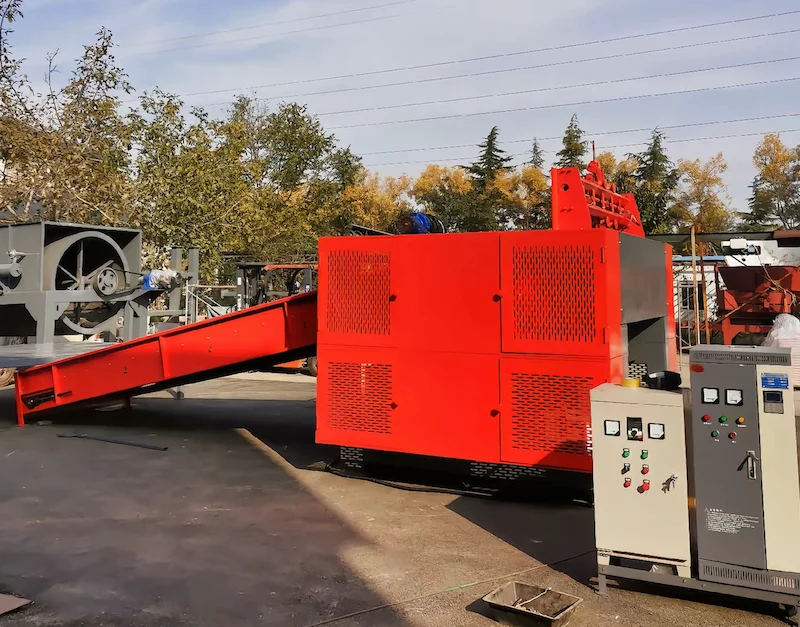
step 1: Use sheep wool shredder to crushing the wool.
For wool shredders, we generally recommend shear-type shredders. They are specifically designed for this type of tough fibrous material, using the shearing force of the blades to shred wool into fine fiber particles, unlike hammer mills which pulverize the wool into balls. Therefore, the shredded wool is more suitable for pellet mills, as its better flowability increases pellet mill output.
The blades of this type of shredder require regular sharpening. Therefore, when purchasing this machine, we suggest buying several sets of blades simultaneously. This facilitates use and reduces the transportation and time costs of purchasing individual blades later.
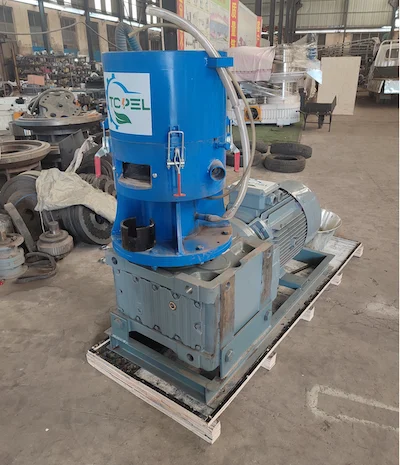
Step 2: Use wool pellet machine making wool fertilizer pellets.
Wool is a raw material with a very low bulk density. Even the wool sludge collected from livestock farms has a relatively low bulk density. Therefore, taking into account these characteristics, we have specially developed a wool fertilizer pellet mill and specialized molds specifically for wool. This results in a more efficient and stable pellet mill.
Of course, when producing wool fertilizer pellets, you can also choose to combine wool with other raw materials. Wool itself is rich in nitrogen (approximately 9%), phosphate (approximately 1%), and potassium (approximately 2%), and the resulting pellets are a natural slow-release organic fertilizer.
CHOOSE THE BEST WOOL PELLET MILL
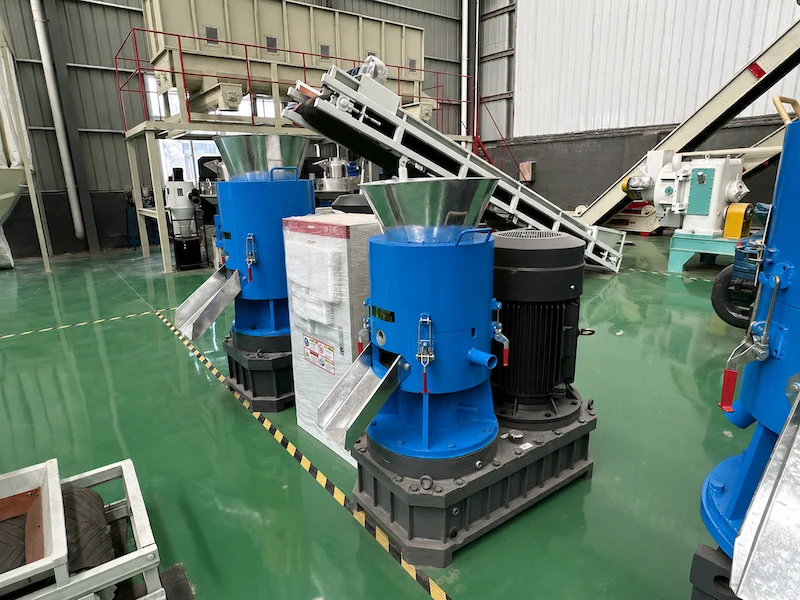
- Our upgraded wool pellet machine boasts a 10-20% increase in capacity, achieving significantly higher production efficiency.
- We can customize the die and rotation speed to suit the characteristics of wool waste, ensuring optimal results. This customized approach ensures that every investment you make translates into maximum returns, creating a perfect solution.
- Our small wool pellet mills feature an integrated heavy-duty reducer that can withstand greater driving forces and is designed with an extremely low failure rate. Its robust construction ensures stability and reliability, making it ideal for high-intensity, continuous operation.
- Our sheep wool pellet machine uses an automatic lubrication system, which reduces the risk of machine burnout due to human error and extends the machine’s operating efficiency. This not only ensures a stress-free production process, but also perfectly protects your equipment investment assets for years to come.
- This multi-functional wool pellet mill has many uses, producing fuel pellets, feed pellets, and fertilizer pellets. A single investment can meet diverse needs, significantly saving time, costs, and resources. It is an excellent value-for-money choice for reducing operating costs and maximizing business returns.
WHAT ARE THE USE OF WOOL PELLETS?
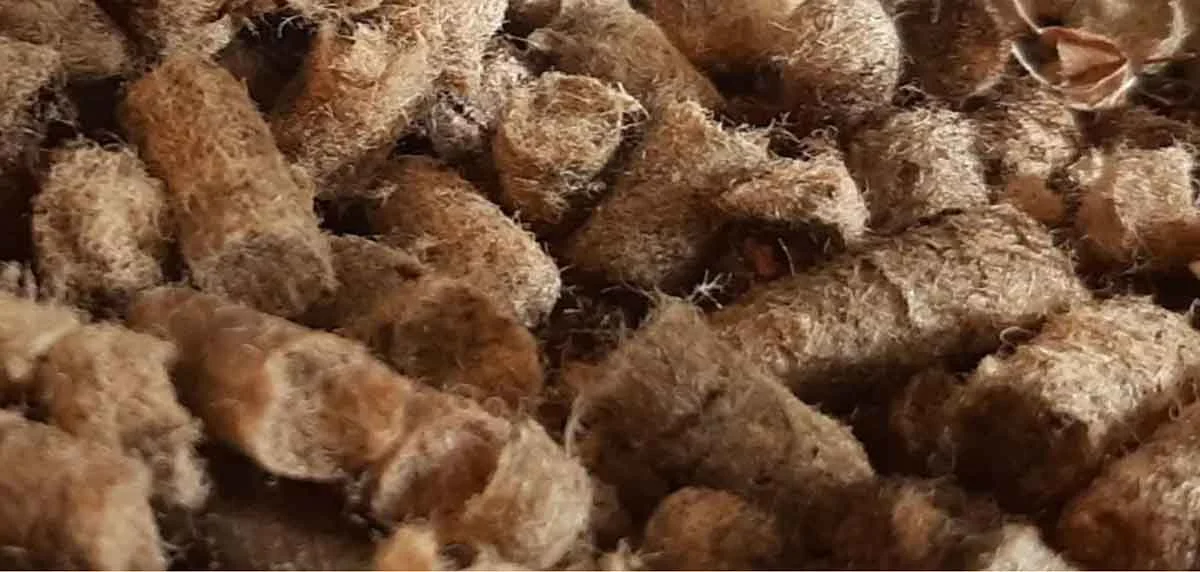
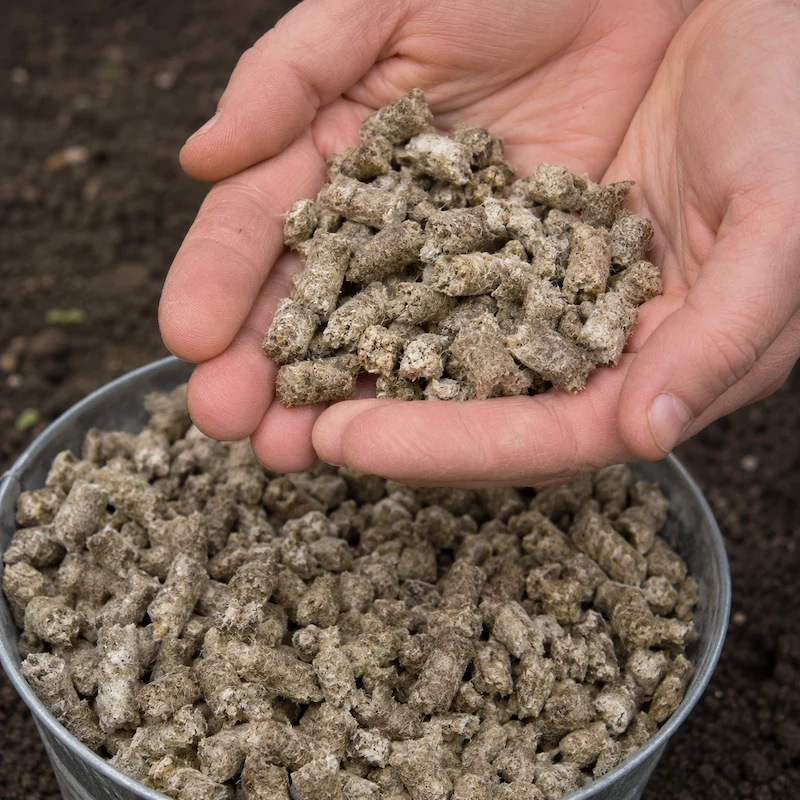
1. Organic fertilizer
Wool naturally contains 10%-12% ammonia, as well as small amounts of sulfur or potassium, which can provide plants with a uniform fertilizing effect that lasts for more than six months. More importantly, it does not cause the “root burn” that can occur with traditional chemical fertilizers.
2. High-efficiency water-absorbing sponge
Wool pellets have a built-in, highly efficient porous fiber mesh that can absorb 3-4 times its own weight in water. They absorb water when it rains or when people water them, and slowly release water to plants during dry periods. This ensures the plants receive the necessary water while conserving water resources and reducing labor costs.
3. Natural insect and weed repellent
Spreading wool pellets on the soil surface allows them to absorb moisture and form a felt-like layer, effectively suppressing weed growth. More importantly, the fine fibers in the wool pellets stimulate the feet of animals like snails, making it a natural insect repellent that won’t harm plants.
4. Improve soil structure
According to research, many soils become compacted after watering. However, the unique structure of wool granules expands when absorbing water and contracts when dry, creating countless tiny air gaps in the soil, making it loose and breathable.
WOOL PELLET MACHINE PROFESSIONAL MANUFACTURER
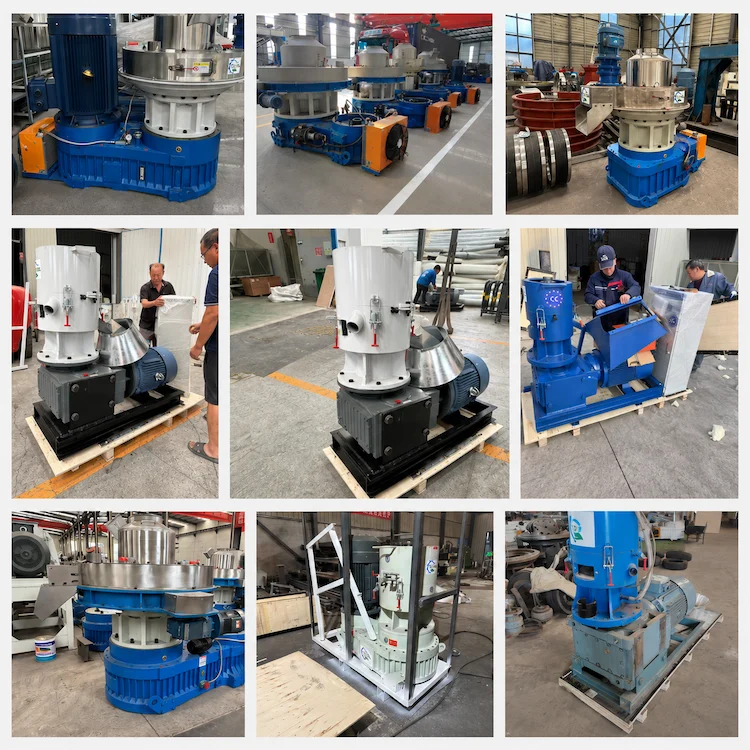
We specialize in manufacturing wool pelletizing equipment for high-fiber, high-toughness materials. Addressing the challenges of long, highly entangled wool fibers and fluctuating moisture content, we employ anti-clogging forced feeding and high-strength mold design to ensure proper material formation. Our equipment is widely applicable to the production of fuel or slow-release fertilizer pellets from wool, textile waste, and mixed sludge, helping you solve your waste disposal problems.
FREQUENTLY ASKED QUESTIONS
1. What is wool pellet machine price?
The price of a wool pellet machine depends on its model and output. We can divide pellet machine prices into three categories: small-scale production pellet machines cost around USD 2000, medium-scale production pellet machines cost USD 4000-8000, and large-scale production pellet machines cost USD 20000-60000. If you are just starting out or using it for home purposes, we recommend choosing a small pellet machine.
2. Do you have used wool pellet machine for sale?
Sorry, we do not sell used wool pellet machines; all our machines are brand new. If you are looking to purchase a used wool pellet machine, please note that taxes can be high in some countries, so it is crucial to discuss customs clearance details in advance.
3. Are there any precautions to take before wool enters the pellet mill?
Yes. First, all wool from sheep can be made into pellets, but it must be kept dry, ideally with a moisture content between 12% and 15%. Excessive moisture will result in poor pellet formation; air drying is recommended. Insufficient moisture will cause the wool to char at high temperatures; a small amount of water mist spray can be used in this case. Second, excessively long wool fibers can clog the machine, so a shredder should be used to shred the wool fibers to within 10mm, ideally 3-5mm. Finally, large quantities of wool brought back from farms may contain nails, stones, etc. These hard objects can damage the pellet mill, so a thorough inspection is necessary before pelletizing.
4.What is the diameter of the wool pellets produced, and are they easy to sell?
First, the typical pellet diameter is 6mm-8mm, but we can customize the flat die to meet your specific needs. Second, wool pellets have high utilization value in horticulture, agriculture, environmental engineering, and new energy fields. Making pellets from waste wool undoubtedly maximizes its value and solves problems such as space constraints during transportation.
5.What should I do if I can't install it or encounter other machine problems after purchasing it?
After you receive the goods, we will provide you with professional and clear installation videos. We can also provide timely assistance with any subsequent machine-related issues. Furthermore, we offer a one-year warranty (excluding consumable parts). Choosing us is not just buying a machine, but also purchasing “insurance” for long-term, stable production.
6.Do you have a mini wool pellet machine for home use?
Yes, we have a very small pellet mill, 7.5KW only, but the capacity is only 20-50kgs/h, as the pellet making chamber very small, so it’s only for home use.
Associated Machines
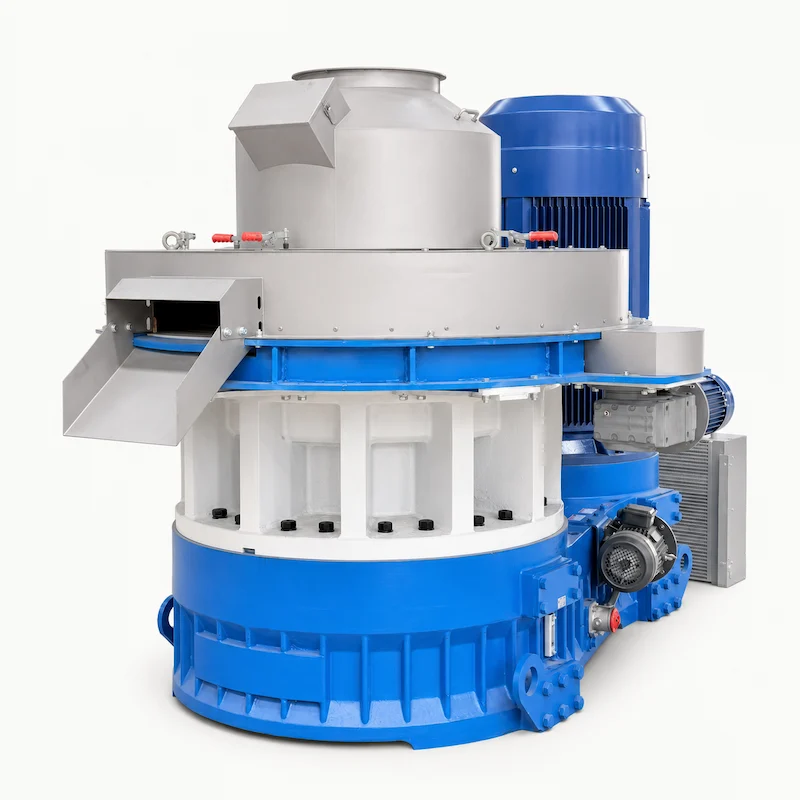
TCZL560A Pellet Machine
The output of this large particle machine ranges from 1500 to 2000 kg per hour. It is particularly suitable for medium-sized and large-scale biomass pellet processing plants as well as medium-sized enterprises. It is an ideal core equipment for achieving large-scale mass production.
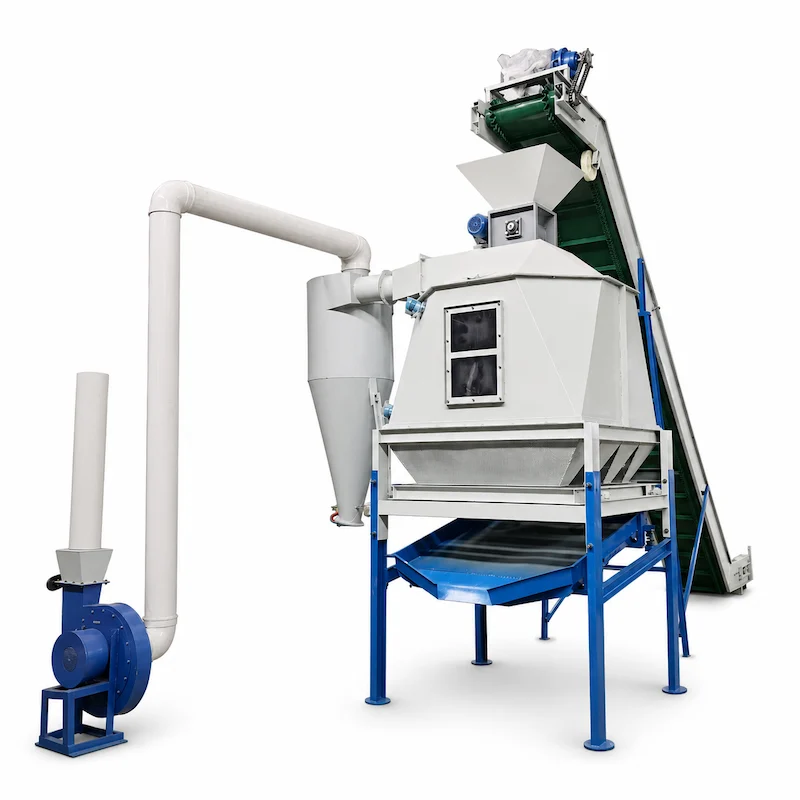
KX-PC1.2
This cooling machine is specifically designed for cooling high-temperature produced particles. It adopts advanced cooling principles and can uniformly reduce the high-temperature particles to normal temperature within a short period of time, thereby maximizing the hardness of the particles.
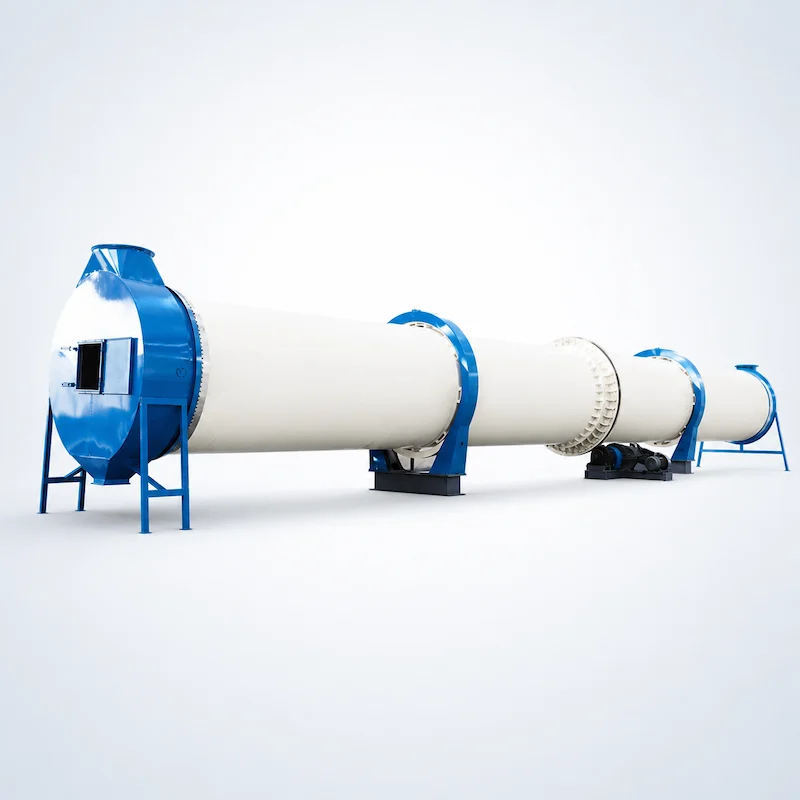
KXMD1600
Due to the excessive moisture content of the raw wool, this dryer is an indispensable equipment in the entire production line. It can reduce the risk of machine blockage in the later stages by controlling the moisture content..
CONTACT US NOW
TCPEL as one of the most professional pellet mill and briquette machine manufacturers with more than 20 years experience, could provide turn-key project solution.
- The best design & quality machines
- Quick reply within 2 hours
- Provide the best proposal within 72 hours.
- Free test run service for special raw materials
- Decades of expertise, highly skilled team, tailored solutions.