

COFFEE GROUNDS HUSK PELLET MACHINE
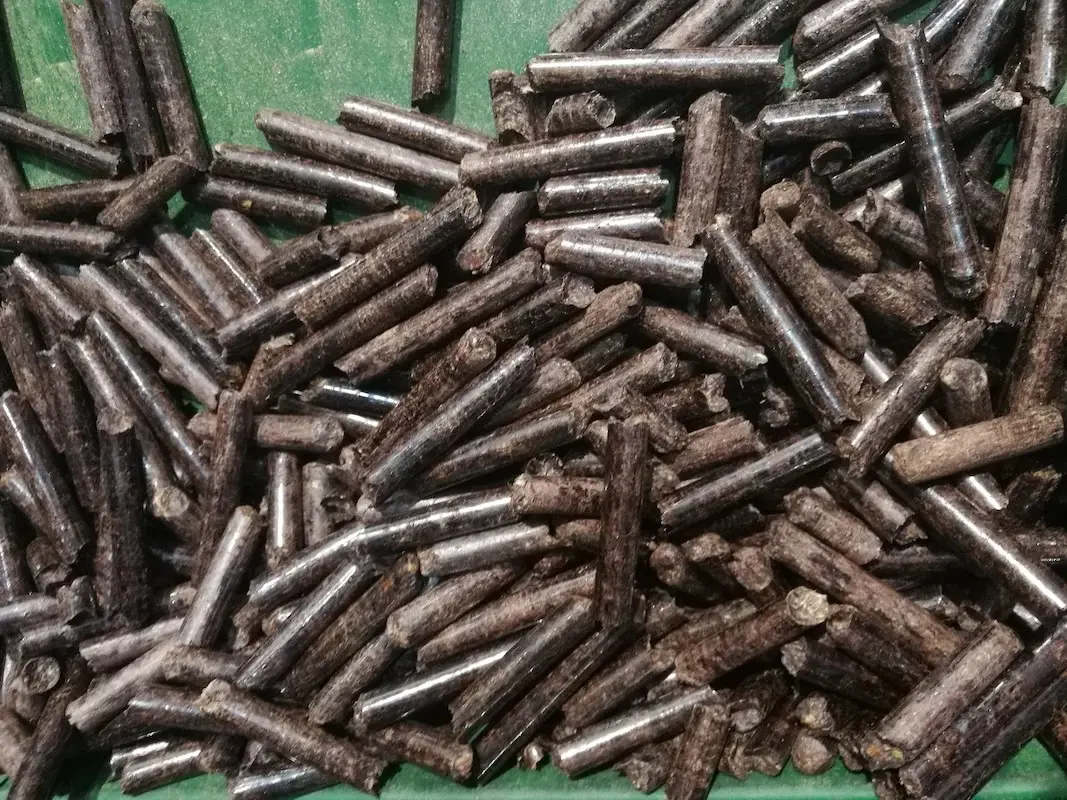
The coffee grounds pellet machine turns coffee grounds or coffee husks into uniform, bio-based green fuel pellets, widely used in fireplaces, stoves, and outdoors.
COFFEE GROUNDS HUSK PELLET MILL FOR SALE
Turn coffee grounds and shells into valuable pellets: efficiently convert waste into high-value fuel pellets with our pellet mill!
- During the coffee bean processing, there are lots of agricultural byproducts such as coffee husks and coffee frounds are generated. The accumulation of this waste not only occupies land and impacts the environment, but its natural decomposition or incineration can also cause pollution .
- Coffee husk pellet mill provide an efficient solution for resource recovery by compacting coffee husks and similar materials into high-calorific-value biomass pellet fuel. This process transforms waste into clean energy, enables the recycling of agricultural residues, and effectively mitigates the environmental and safety risks associated with improper disposal.
THE TYPES OF THE COFFEE GROUNDS PELLET MACHINE
Coffee pellets, as an innovative and sustainable alternative fuel, are gradually replacing traditional biomass fuels in some places. By recycling coffee grounds, this form of fuel helps address multiple environmental challenges, including reducing carbon emissions, decreasing waste accumulation, and reducing reliance on virgin wood fuels.

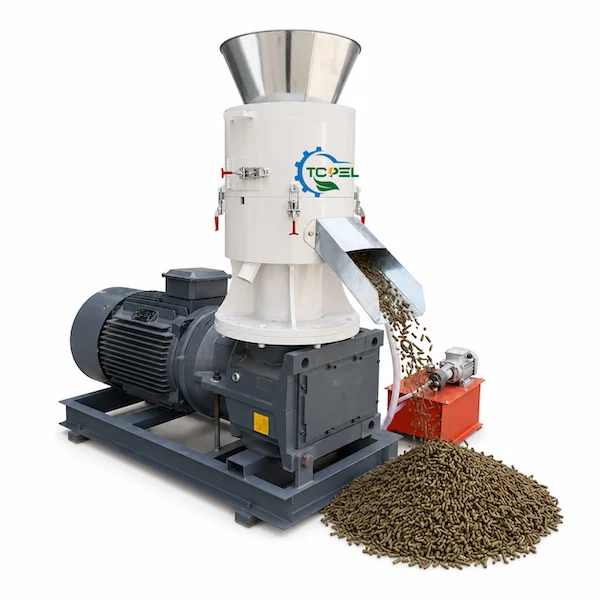
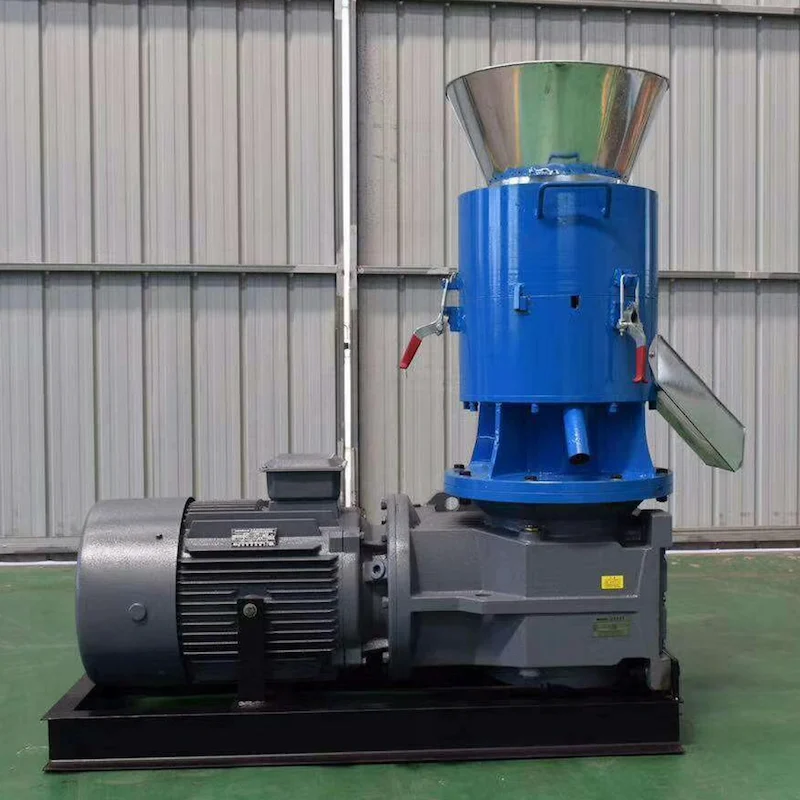
FLAT DIE COFFEE GROUNDS PELLET MILL
In terms of production scale, flat die pellet mills are more suitable for producing pellets from coffee grounds. This is mainly because in many projects, the amount of coffee grounds collected is not that high. Due to its feature of high moisture content, even a middle-sized flat die pellet mill can meet a 4 tons/hour original processing capacity request, because the dry coffee grounds from the rotary dryer are only 500-800 kg/h, which is still within the output range where flat die pellet mills have a greater advantage.

Flat die coffee grounds pellet mills have the following characteristics:
- Simple structure and stable operation. Flat-die pellet mills mainly consist of a motor, heavy-duty gearbox, main shaft, pressure roller, and die for the pellet mill. The structure is very simple; therefore, both operation and maintenance costs are lower than the other options.
- Low energy consumption, small investment cost, suitable for beginners. Flat die pellet mills have a natural design advantage in the output of less than 1 ton/hour, making them very user-friendly. The workers could operate them proficiently and quickly only through simple training, making them the best choice for beginners.

RING-DIE COFFEE HUSKS PELLET MACHINE
Compared to coffee grounds, coffee shells are generally produced in much larger quantities. Furthermore, coffee shells typically with a very low moisture content, which eliminates the drying cost directly. In fact, in many of the wood pellet production lines, they use coffee shells to neutralize the excess moisture in the wood sawdust and also adjust their average hardness. Therefore, in terms of output request, ring-die pellet machines are more suitable for coffee shells and husks.
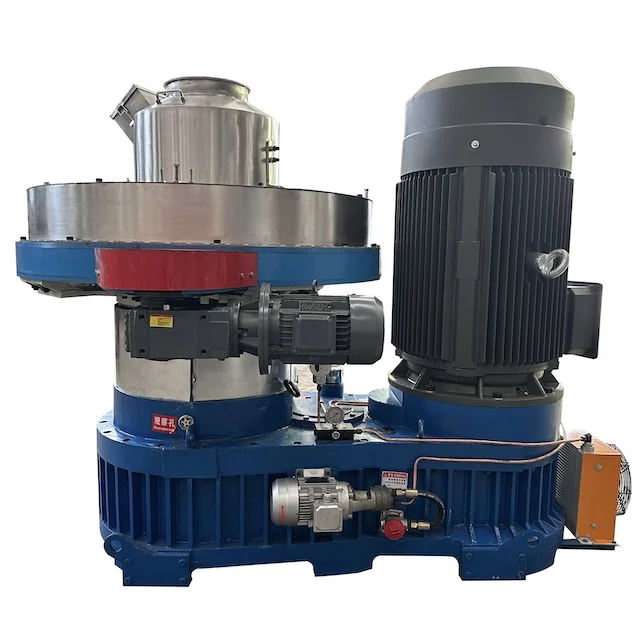
The ring-die coffee husk pellet mill has the following features:
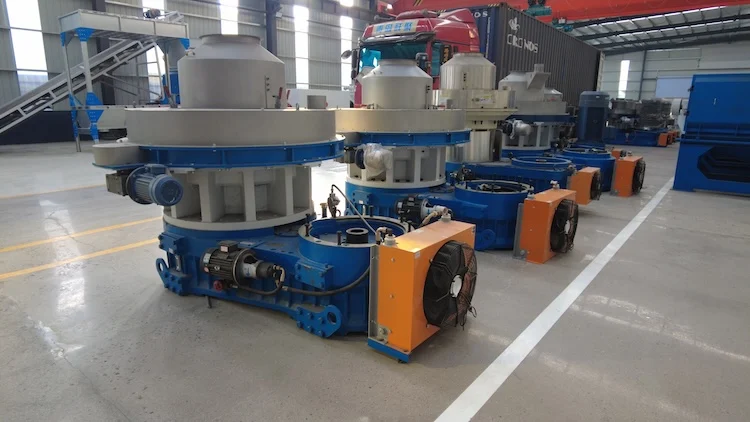
High output, saving space and labor costs. The output of the coffee shell ring die pellet mill ranges from 1000 kg/hour to 4000 kg/hour. With our research and development, the machine with higher output is under testing phase. Compared with flat die pellet mills, ring die pellet mills require less space and have lower labor costs for the same capacity, which will save on your production costs.
Automated lubrication of the pellet mill rollers and main shafts reduces the possibility of operational errors. The main shaft of the coffee shell pellet mill can be lubricated integrally with the heavy-duty gearbox, and its roller assembly and discharge turntable can also be automatically lubricated simultaneously. This greatly reduces the possibility of machine failure due to workers forgetting to manually lubricate the machine, ensuring stable and long-term operation.
TECHNICAL PARAMETERS
| MACHINE TYPES | MAIN MOTOR | CAPACITY |
| Flat Die Type Pellet Machine | 7.5-75KW | 80-1,000kg/h |
| Ring Die Type Pellet Machine | 55-280KW | 600kg/h-4,000kg/h |
Why choose us as your coffee grounds pellet mill supplier?
We use a heavy-duty pellet machine to process coffee grounds into pellets. Most coffee processing facilities require moderate output, typically under 1 ton per hour, and do not operate continuously. Our commitment is to deliver pellet machines of exceptional quality and durability.
More choices: A complete range of models are available, from small to large.
Lower failure rate: All models feature heavy-duty gearboxes, enabling continuous operation for 2-3 shifts.
Top-of-the-line configuration found on the market: Motors, bearings, and molds are made with top brands and high-quality materials, resulting in an extremely low failure rate.
Excellent after-sales service: Online installation guidance is available, saving you thousands of dollars in after-sales costs.
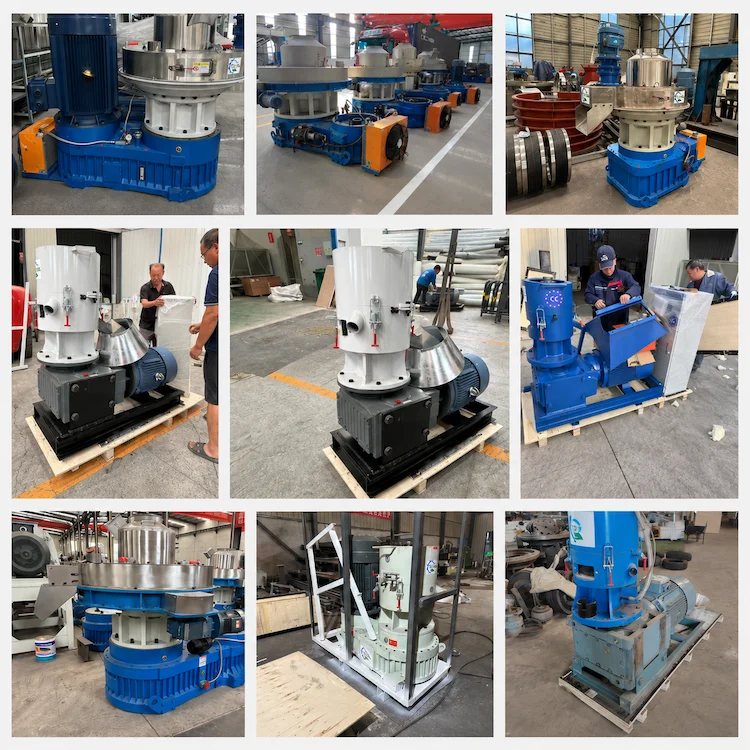
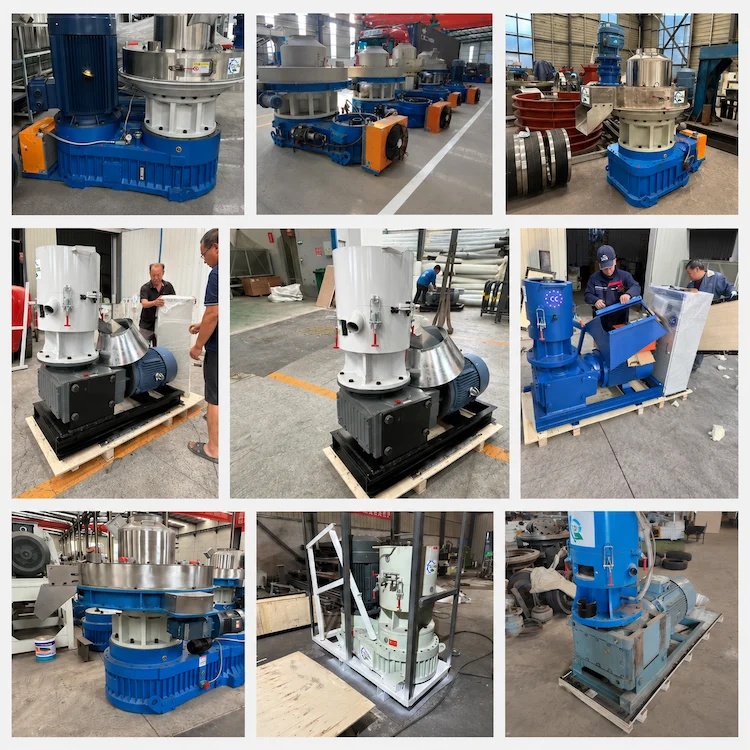
COFFEE SHELL PELLET MACHINE SHOWROOM DISPLAY
We are a professional biomass pellet production lines manufacturer, with over 20 years of manufacturing experience in different kinds material pellet and briquetting plant. If you have any technical questions, please feel free to contact us.
THE PELLETIZING PROCESS FROM COFFEE GROUNDS HUSKS TO FUEL PELLET
From coffee grounds and husks to high-density fuel pellets, most of the processing steps are the same, but the overall process is not entirely the same. Below, we will list the specific processing steps and the machines used in detail.
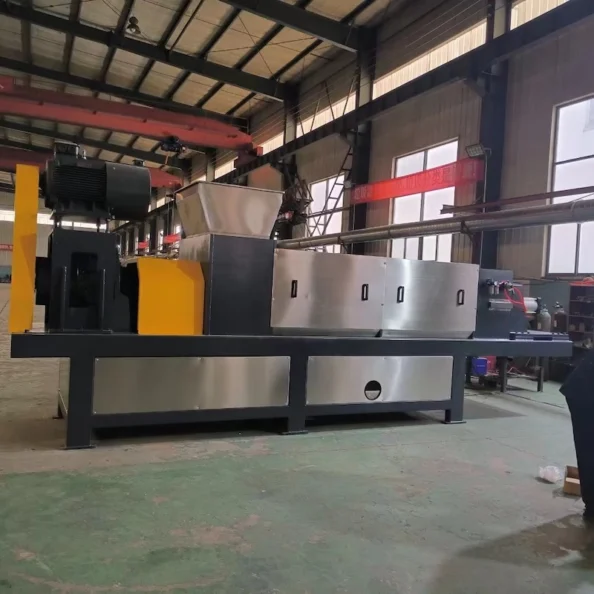
DEWATERING PROCESS - DEWATERING MACHINE
The moisture content of coffee grounds can be up to 80%, so directly drying makes it very inefficient and also very costly. Therefore, coffee grounds need to be dewatered by a screw-type dehydrator. Dehydration significantly reduces the moisture content to 40%-60%, which drastically reduces drying costs. Our screw-type dewatering machine uses stainless steel for all material contact parts, and the extrusion screw is made of wear-resistant alloy steel, greatly reducing machine wear and extending the lifespan.
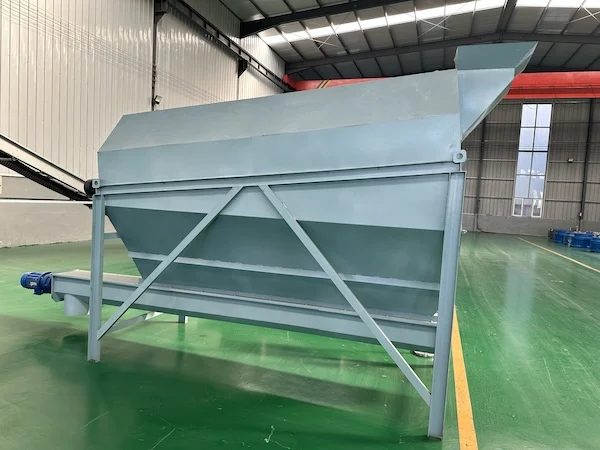
SCREENING PROCESS - BIOMASS SCREENER
Coffee grounds contain filter paper. To improve the quality of coffee ground pellets, you can use a drum screener to remove them. However, because the moisture content of coffee grounds is still high even if it is dewatered, the bottom discharge belt and main body of the drum screener need to be customized to prevent coffee grounds from sticking to the bottom of the drum screen and to ensure stable machine operation. However, if your coffee grounds do not contain filter paper or other impurities, you can skep this step.
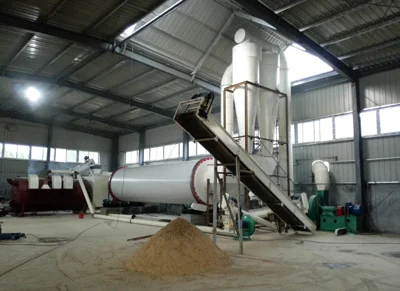
DRYING PROCESS - BIOMASS ROTARY DRYER
Even after dewatering, coffee grounds still contain 50%-60% moisture, so a rotary drum dryer is required. First, you need to confirm which type of fuel you plan to use. Based on this decision, we will design and recommend a matching hot air furnace. This is the crucial point that decides if the dryer could achieve its rated output or not, as the high moisture content severely tests the furnace’s heating capacity and stability. If the output you need is within 2 tons/h, a single-layer rotary drum dryer is sufficient. For outputs above 3 tons, we recommend our new type multi-layer segmented rotary drum dryer.
PELLET MAKING PROCESS - BIOMASS PELLET MILL
Our coffee pellet mills, whether flat die or ring die, do not require binders. However, some customers may want to add other ingredients before pelleting for various reasons, which requires a mixer, but most customers do not. Of course, you can also mix coffee husks or grounds with sawdust or other biomass materials and press them into pellets, which is also possible, but requires custom molds. Please contact us to discuss more details.
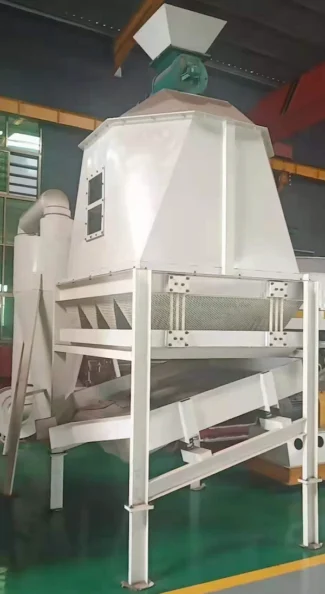
COOLING PROCESS - PELLET COOLER
During the pellet cooling stage, there are three options: using a counter-flow cooler, using a cooling bin, or using a pellet mill cooler and a cooling hopper together. This mainly depends on the output of the biomass pellet mill you choose. We believe the best option is to use a properly sized non-powered cooling bin, which can reduce energy costs and also lower labor costs compared to using a coffee grounds pellet cooler.
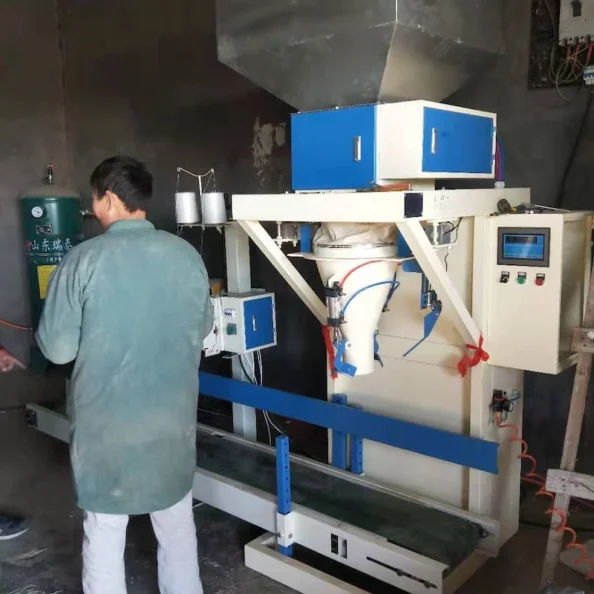
PACKING PROCESS - BIOMASS PELLET PACKING MACHINE
We recommend using semi-automatic packaging machines in most of pellet plant projects. They are more reasonably priced, flexible to operate, easy to maintain, and much more cost-effective. Unless labor costs are particularly high in your place, or you require continuous 24-hour production, semi-automatic models are generally a more economical and practical choice.
What are the advantages of coffee grounds and coffee shells pellets?
- High and stable calorific value: Coffee grounds pellets have a calorific value between 4000-4500 kcal, making them an excellent biomass fuel pellet.
- Lower production cost: Because it doesn’t require crushing, only drying, the production cost is lower, which means higher profit.
- Low raw material procurement cost: Coffee grounds are entirely a by-product and waste, making them extremely low-priced to obtain.
- Low transportation cost after pelleting: As a high-quality fuel, it can be used in both domestic and industrial boilers, resulting in a large market.
FREQUENTLY ASKED QUESTIONS
1.What is the price of a coffee husk pellet machine, and what is the total investment required?
The price of a coffee husk pellet machine depends on the model selected. Flat‑die pellet machines are suitable for household or small‑scale commercial use, with prices ranging from $2,000 to $20,000. Ring‑die pellet machines are designed for commercial investment or large‑scale industrial production, with prices between $12,000 and $60,000. For a complete production line, the price is determined based on the specific characteristics of your raw materials and production requirements.
2.I’m new to this business. How should I start my coffee husk pellet operation?
We recommend starting with a smaller machine to test the market and identify your target customers. Once you have established a steady demand and gained experience, you can gradually scale up your production capacity. Recycling coffee grounds to high value fuel pellet is really a good business.
3.Can I use only coffee grounds or only coffee husks to make pellets, or is it better to mix them?
Both options are possible. Using coffee husks alone is often recommended because they typically do not require crushing or drying, resulting in lower production costs and higher profit margins. Another effective approach is to mix coffee grounds with husks—this can eliminate the need to dry the grounds, but the materials must be blended uniformly for consistent pellet quality.
4.Can my coffee husk pellet machine only process coffee grounds and coffee husks?
Not necessarily. However, processing other materials may require a custom‑designed flat die or ring die, as different raw materials often need specific compression ratios in the mold. If you plan to use additional biomass materials, please inform us of the types, and we can recommend a suitable replacement die for your machine.
Get Coffee Grounds Husk Pellet Solution
With over 12 years of dedicated expertise in biomass pelletizing, we focus on delivering excellence through precision engineering and uncompromising quality. Choose us for a decision you can rely on.
- Prompt responses within 2 hours.
- Detailed pellet solutions within 24 hours.
- Free test runs for unique raw materials.
- In-depth case analysis following your inquiry.