SLUDGE PELLET MACHINE

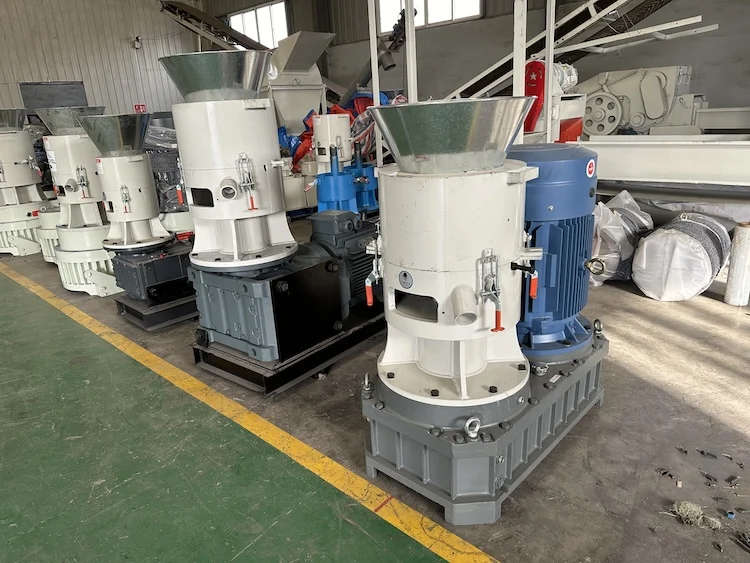
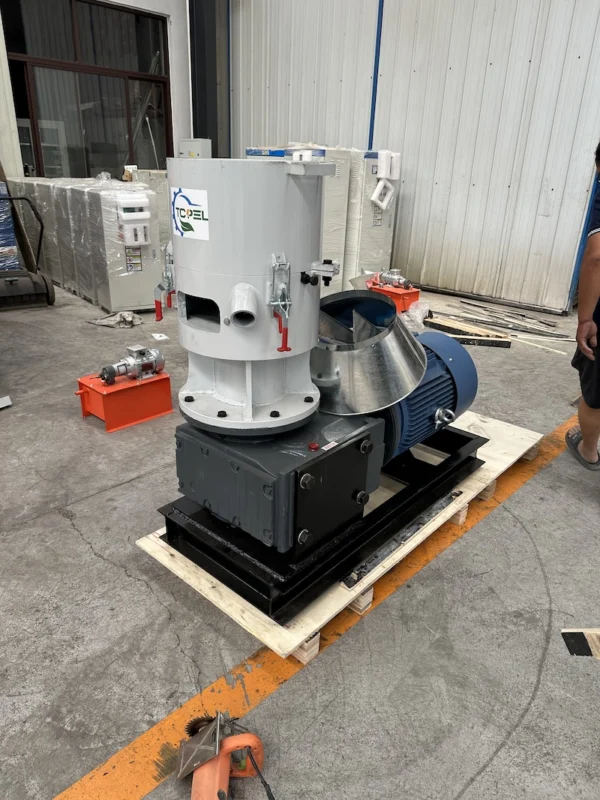
The sludge pellet machine can efficiently process dried sludge into fuel pellets of uniform density. It integrates mixing and granulation, has a high pelletizing rate, stable operation, and realizes sludge reduction and resource utilization.

SLUDGE PELLETIZER FOR SALE

Designed specifically for industrial requirements, with high configuration and 24-hour continuous operation, this is the best sludge pellet mill you can find.

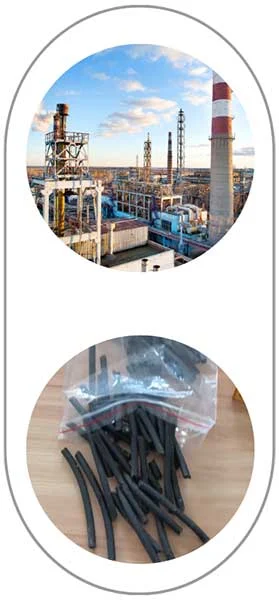
The sludge pellet mill is a pellet mill used to compress dried industrial sludge into fuel pellets, which can be incinerated for resource recovery and harmless treatment. These industrial sludge mainly comes from paper mills, textile printing factories, sewage treatment plants, food processing plants, and the pharmaceutical industry. This type of industrial sludge typically has a calorific value of only around 2000 kcal and can be compressed into 8-10 mm fuel pellets for use as fuel in industrial boilers.

TCPEL kx-sludge-pellet-mill
sludge pellet mill

SLUDGE PELLETIZER MACHINE TYPES

TCPEL TCZL550-sludge-pellet-machine

TCZL550 Sludge Pellet Machine

Main Motor : 55KW Capacity : 1200-1800kgs/h

TCPEL TCZL550-sludge-pelletizer

TCZL550 Sludge Pelletizer

Main Motor : 75KW Capacity : 1,500-2,500kgs/h

TCPEL TCZL550-sludge-pellet-machine

TCZL550 Sludge Pellet Mill

Main Motor : 110KW Capacity : 2,500-3,500kgs/h

Compared to ring die pellet mills, flat die pellet mills are more suitable for pressing sludge. This is because sludge has a higher density compared with biomass material, and under the influence of gravity, the rotating press rollers distribute the sludge evenly on the flat die surface. Therefore, the pellet mill has a higher output, and the die wear is more uniform. For large-scale sludge pellet processing production lines, it is recommended to directly use the TCZL550 sludge pellet mill.

Add Your Heading Text Here

TYPE DIE PARAMETER MAIN MOTOR CAPACITY
Flat Die Flat die diameter, 450mm 15KW 100-200KG/H
Flat Die Flat die diameter, 450mm 22KW 200-400KG/H
Flat Die Flat die diameter, 450mm 37KW 300-500KG/H
Flat Die Flat die diameter, 450mm 55KW 600-800KG/H
Flat Die Flat die diameter, 450mm 55KW 800-1000KG/H

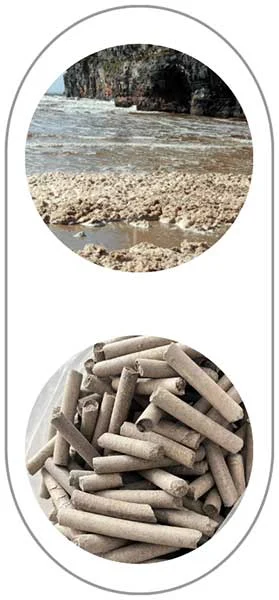
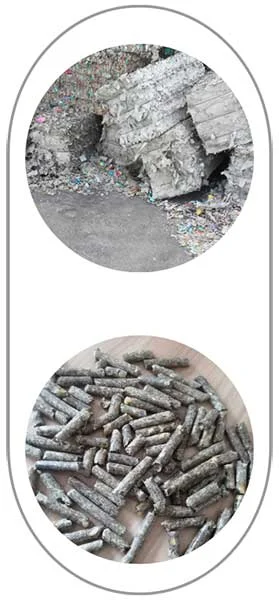
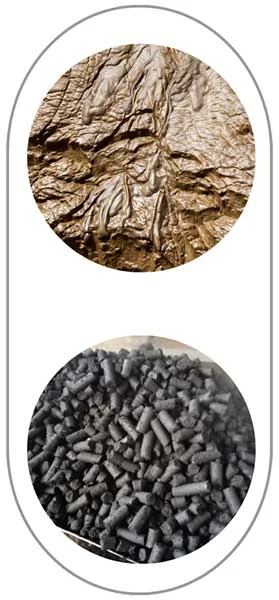
THE SLUDGE TYPES THAT CAN BE PRESSED TO PELLETS

TCPEL sludge-from-clothes-production
sludge from clothes production
TCPEL Sludge Pellet Machine
sludge from paper production
TCPEL sludge-from-food-processing
sludge from food processing
TCPEL sludge-from-chemical-factory
sludge from clothes production

Industrial sludge primarily originates from the end-of-pipe wastewater treatment processes of various industries. This sludge requires processing precisely because of its diverse origins, complex composition, and often toxicity. Major sludge-producing industries include: heavy metal sludge from battery manufacturing and mining; oily sludge from steel processing and machinery manufacturing; chemical sludge from textile printing and dyeing, fine chemicals, and pharmaceuticals; and sludge from papermaking, sugar refining, and brewing. Organic sludge is granulated for use as fuel or fertilizer, while inorganic sludge is granulated for use as building material aggregates, thus achieving stabilization and resource recovery.

The video shows a TCZL550 sludge pellet mill. We used mixed oily sludge for testing. The pellet diameter is 6 mm, and the output is approximately 2.5-3.5 tons/hour. You can contact us for more information.

THE SLUDGE PELLETING PROCESS HOW TO MAKE FUEL PELLETS FROM SLUDGE?

The production processes for different industrial sludge pellets are not entirely the same. This is because the original moisture content, raw material characteristics, and size of sludge from different industries are different. Therefore, most sludge fuel pellet production lines need to be customized according to the actual situation. The following are commonly used processing procedures.

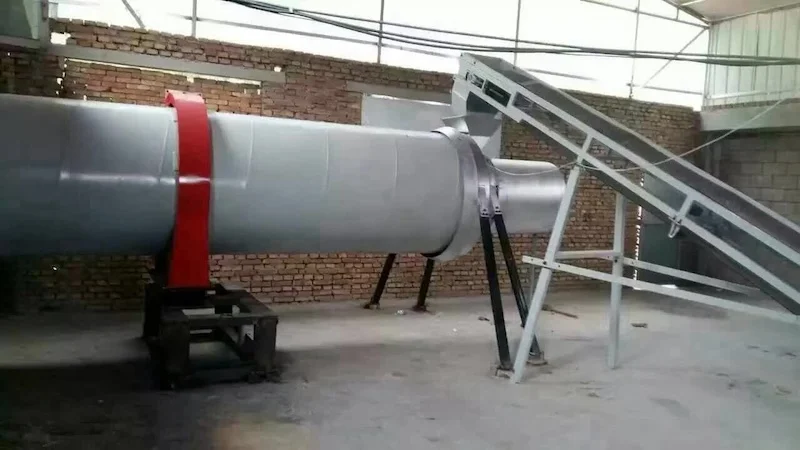
Step 1, Sludge Drying – Rotary Drum Sludge Dryer

Most industrial sludge has already undergone preliminary dewatering treatment during collection process. At this point, the sludge’s moisture content is generally above 60%, making it suitable for processing using a dedicated rotary drum sludge dryer. Sludge is a highly viscous raw material that easily clumps; therefore, dispersing and combing devices need to be added during the automatic feeding stage and inside the dryer. Simultaneously, the dryer drum needs to be equipped with a vibration device to prevent sludge from adhering to the drum wall.

TCPEL Sludge Pellet Machine
sludge dryer

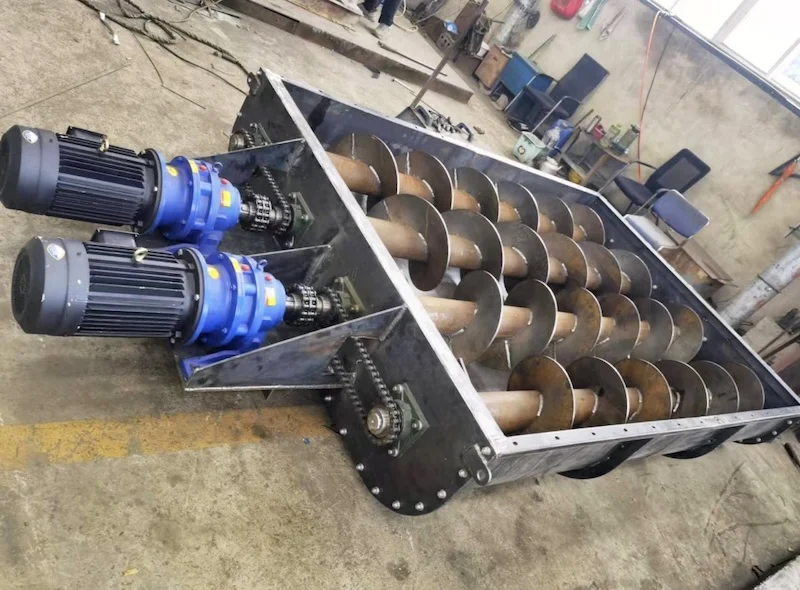
Step 2, Mixing or Feeding by a Paddle Feeder

Dried sludge can be directly used to manufacture fuel pellets. However, for many types of industrial sludge with low calorific value, the pellets have poor combustion value. To solve this problem, it is necessary to mix the sludge with raw materials with higher calorific value, such as sawdust, rice husks, straw, or other high-calorific-value materials. The calorific value of the mixed raw materials can reach around 3000 kcal, and such sludge pellets can be sold to large fuel consumers such as cement factories or power plants, thus possessing good combustion value.

TCPEL Sludge Pellet Machine
paddle feerder

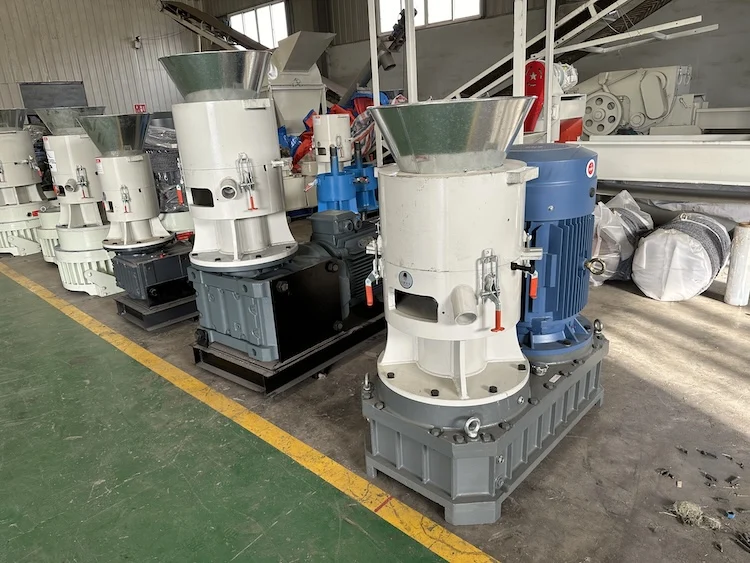
Step 3, Press Sludge Pellets – Sludge Pellet Mill

The sludge pellet mill requires a sludge moisture content of approximately 15% and a size within 10 mm. During pelletizing, the working temperature of the pellet mill die and pressure rollers is between 90-110 degrees Celsius. This high temperature helps the sludge adhere better and evaporates some of the moisture, resulting in a final sludge pellet moisture content of around 10%, increasing and stabilizing the calorific value of the finished product. However, if other high-calorific-value raw materials need to be added in the previous step, you need to inform us in advance, as the compression ratio of the pellet mill die used for pure sludge and mixed sludge is different.

TCPEL kx-3sets-sludge-pellet-machine
sludge pellet machine

Step 4: Sludge Pellet Cooling and Packaging – Sludge Pellet Cooling and Packaging Machine

Sludge pellets are not suitable for household biomass fuel pellets; they are primarily used in industrial boilers, power plants, and cement plants. Therefore, small bag packaging is unnecessary. We recommend using a large cooling silo. After natural cooling for 5 hours, the pellets can be directly packed into bulk bags for transport. If you do not wish to build a large cooling silo locally, a mesh belt cooler can be used. This system simultaneously performs transportation and cooling functions, resulting in higher pellet integrity compared to counter-current coolers.

TCPEL Sludge Pellet Machine
sludge pellet cooler

WHY PROCESS SLUDGE INTO FUEL PELLETS? THE ADVANTAGES YOU NEED TO KNOW

The core purpose of processing sludge into fuel pellets is to address its characteristics of being “difficult to handle, harmful, and costly to process.” In many countries, with increasingly stringent environmental regulations, pelletizing dried sludge has become a new resource recovery method. Sludge pellet mills can transform sludge from a difficult-to-manage “pollution source” into a usable, high-value “resource.”

The advantages of processing sludge into pellets are mainly as follows:

Resource utilization, turning waste into treasure: Some sludge contains organic matter and nutrients, but direct use would pollute soil and water sources. After processing into pellets, it can become an alternative fuel for cement plants or power plants. Of course, some sludge has a very low calorific value; during processing, wood chips, straw, rice husks, etc., can be added to increase the calorific value of the pellets.

Improved physical properties, facilitating transportation and combustion: Wet sludge is like mud, smelly and sticky, making transportation and use very difficult. However, after being made into pellets, it becomes firm and uniform in size, not only facilitating clean transportation but also allowing for automated feeding during storage and subsequent use as fuel.

Significantly Reduced Lifecycle Costs: Sludge has a high water content, potentially reaching around 80%, resulting in substantial transportation costs. However, dried and granulated sludge particles have increased density and reduced volume, reducing transportation costs by more than half. Simultaneously, the granulation process solves the problem of wet sludge being difficult to landfill.

Achieving Stabilization and Detoxification: Fresh sludge emits foul odors, releases harmful gases, attracts mosquitoes, and spreads diseases. The high temperatures or chemical reactions during the drying and granulation process thoroughly kill bacteria and insect eggs, eliminate odors, and prevent organic matter from decomposing, transforming it into chemically stable fuel pellets.

TCPEL - PROVIDE YOU THE BEST SLUDGE PELLETIZER

TCPEL kx-sludge-pellet-mill-heavy-duty-gearbox

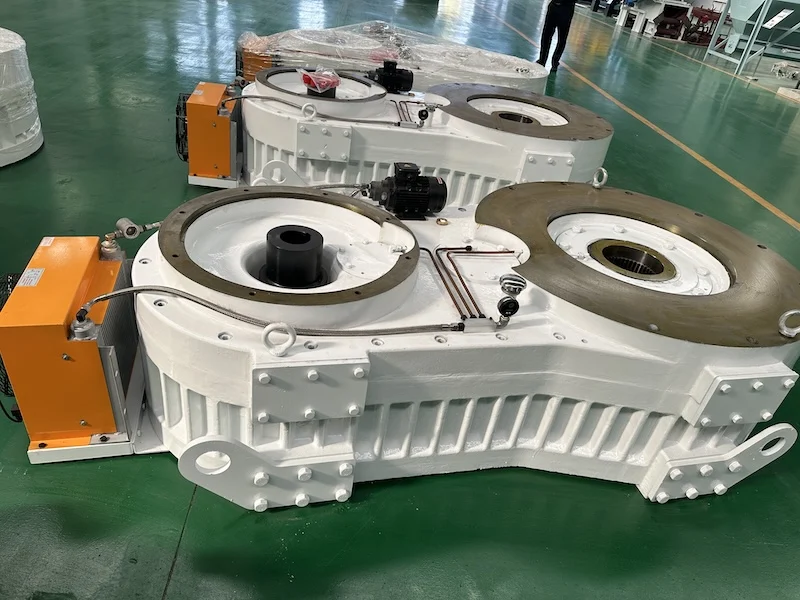
Custom-made heavy-duty gearbox

The core component of a sludge pellet mill is its heavy-duty gearbox. After numerous tests, we customized a heavy-duty gearbox specifically for sludge pellet mills, based on the optimal rotational speed. This ensures both high output and the lowest possible failure rate during long-term operation.

The thickened body design ensures stable operation

Matching the heavy-duty gearbox is a thickened steel body design, which is welded from high-quality corrosion-resistant steel plates. It is heavy and runs very smoothly. Moreover, the whole set of machine is equipped with an automatic lubrication system, which can run continuously for 24 hours without failure.

TCPEL Sludge Pellet Machine
TCPEL kx-sludge-pellet-mill-customized-3-heavy-roller-design

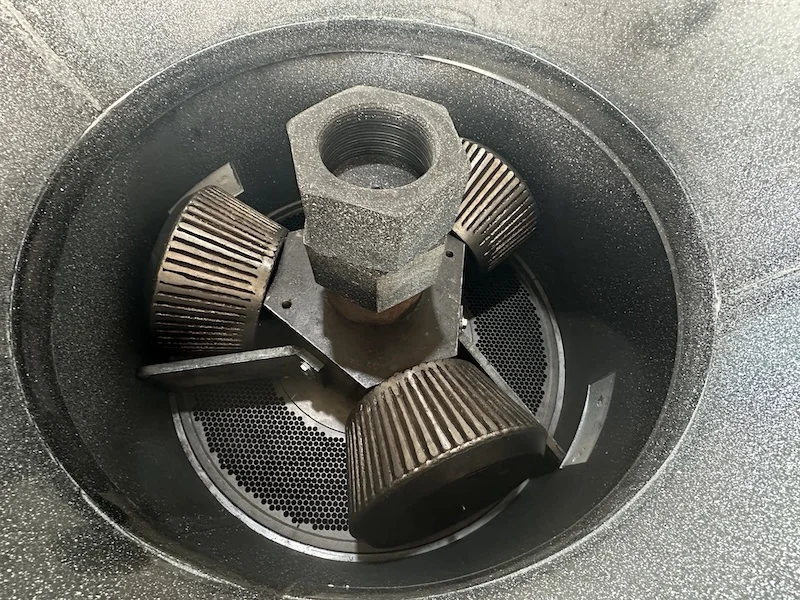
The weighted three-roller design improves 30% pressing efficiency

In response to the characteristics of sludge, we designed a weighted three-roller design and adopted a double locking device, which greatly improves the machine’s output, reduces the production cost of sludge pellets, and at the same time ensures that the screws will not loosen during long-term operation, also improving the machine’s stability.

TCPEL - PROFESSIONAL SLUDGE PELLET MACHINE MANUFACTURER

TCPEL kx---professional-sludge-pellet-machine-manufacturer

TCPEL has focused on briquetting and pelleting of various raw materials for over 20 years, possessing rich experience in raw material processing and comprehensive after-sales service. A large sludge drying site is located near our factory, available for your visit. Welcome to our factory!

FREQUENTLY ASKED QUESTIONS

Is sludge pellet business profitable?

Yes, there is profit in producing sludge granules. Profits mainly come from several sources: first, customers who need sludge treatment will pay for it; second, you can check if your local government offers subsidies for sludge treatment projects; and third, selling the produced sludge granules to cement plants or power plants can also generate some revenue.

Of course, but currently sludge is considered solid waste and is difficult to clear through customs. Therefore, if you have a customer or friend near our factory who can help you send it, it will be much easier.

We do have smaller models. If you are only using it in a laboratory or small factory, you can contact us for information on small sludge pellet mills for your reference.

We are guessing you might not need a single sludge pellet mill, but rather a complete sludge pellet production line. Such lines are custom-made, requiring customization based on the moisture content of the raw materials and the desired output. You can contact us for a detailed quote, but the smallest sludge pellet mill only costs around $2000.

Related Machine

TCPEL kx-sludge-dryer

Sludge Dryer

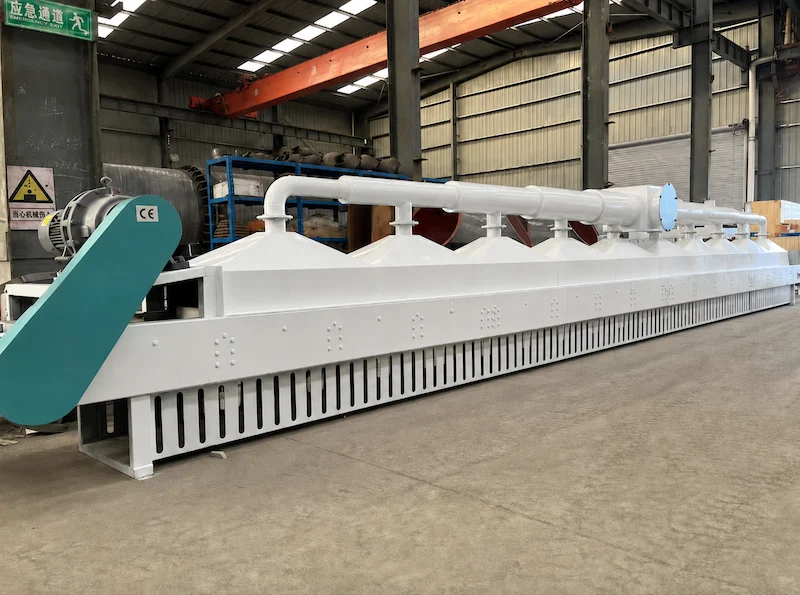
High-temperature dryer specifically designed for drying sludge

TCPEL kx-automatic-feeder

Automatic Feeder

While transporting sludge, it can also be broken up, improving work efficiency.

TCPEL kx-sludge-dryer

Chain Cooling Machine

Used for cooling pellets or briquettes, it allows cooling to be completed during conveying

CONTACT US NOW

We are one of the most professional pellet mill and briquette machine manufacturers with more than 20 years experience. You are welcome to contact us to discuss more details.

  • The best design & quality machines
  • Quick reply within 2 hours
  • Provide the best proposal within 72 hours.
  • Free test run service for special raw materials
  • Decades of expertise, highly skilled team, tailored solutions.

TCPEL Alfalfa Hay Pellet Making Machine

TCPEL product guidance

Sludge Pellet Machine: quick answer

A sludge pellet machine processes suitably prepared material into pellets. The correct machine and die depend on particle size, moisture, target kg/h output, pellet diameter, working hours and local voltage.

Best matched by

Raw material, moisture, output, pellet size and working hours.

Configuration options

Single machine or matched process equipment for a complete line.

For a useful quotation

Send capacity, voltage, destination port and material details.

Frequently asked questions

What is the sludge pellet machine used for?

It is used to process properly prepared material into consistent pellets. The final configuration depends on material condition, target output, pellet diameter and operating schedule.

How do I choose a sludge pellet machine?

Compare the material, moisture, particle size, target kg/h output, pellet diameter, voltage and daily working hours before selecting a machine.

What should I provide for a model recommendation?

Send raw material photos, moisture, required capacity, pellet size, local voltage, working hours and destination port.

Content maintained by TCPEL, a brand of ALLWIN INTERNATIONAL CO.,LTD. Last updated 2026-07-25. Specifications and recommendations are confirmed against the material and project scope before quotation.

Request a model recommendationExplore feed pellet machines

Contact us