
WOOD PELLET MANUFACTURING PROCESS
This page will explain all the processes involved in manufacturing wood pellets and all the things you need to know before you begin. This is the foundation for getting started, so let’s begin.
Many customers are curious about how wood pellets are made. How to process sawdust into regular, high-density fuel wood pellets? The truth is, wood types vary greatly in moisture content, size, and hardness, requiring entirely different pellet production processes. Furthermore, the configuration of a wood pellet production line depends not only on the raw materials but also on your specific production needs. Raw material conditions, size, moisture content, and capacity requirements are all key factors determining the entire processing flow.
Many investors, lacking understanding of the production process, are easily misled by publicly available information. They configure complete wood pellet plant for chipping, crushing, drying, pelleting, cooling, and packaging for small-scale pellet production line, resulting in high energy consumption and high production costs. Such small-scale pellet production lines cannot be profitable. Based on years of experience in wood pellet manufacturing equipment and on-site project installation, we have summarized the wood pellet production process for different wood raw materials and output levels, hoping it will be helpful to you.
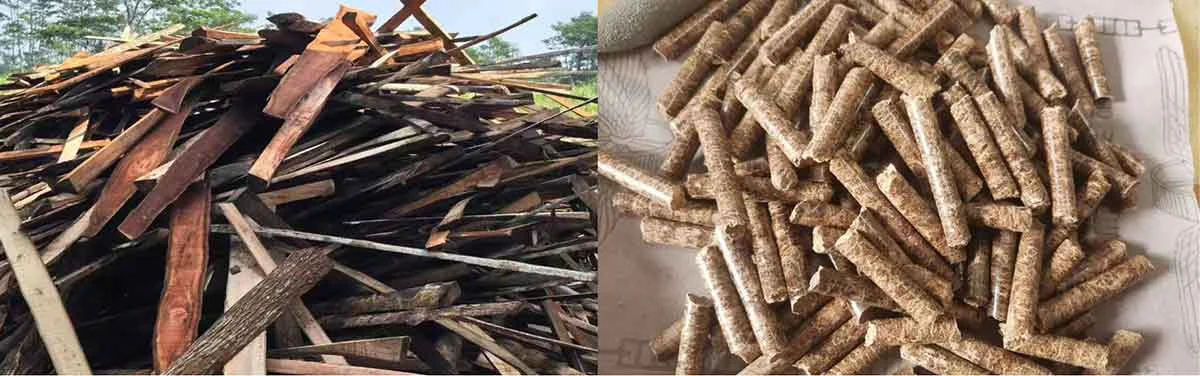
1.Complete wood pellet manufacturing process
The requirements for wood pellet mills mainly include two aspects: firstly, the size must be within 10 mm; secondly, the moisture content must be between 13% and 17%. Therefore, raw material pretreatment is an unavoidable issue. Wood pellet production is a systematic physical compression process, typically divided into three main stages: raw material pretreatment, pelletizing, and post-processing and packaging. A complete industrial-grade production line usually includes the following steps:
A. Raw Material Pretreatment
- Chipping/Crushing: Wood or forestry waste is processed using a chipper or hammer mill, reducing the raw material size to approximately 10 mm or less.
- Impurity Removal (Important): Hard objects such as metal and stones are removed from the raw material to prevent damage to the pellet mill’s die.
- Drying (Critical): The moisture content of the raw material is precisely controlled within the ideal range (usually 13% – 17%). Excessive moisture or dryness will severely affect pellet quality and forming rate.
B. Core Process – Pelletizing
Materials enter the pellet mill’s granulation chamber, where they are forcefully compressed by pressure rollers and forced through the die holes of a ring or flat die. Under high temperature and pressure, they are physically compressed into high-density cylinders. The generated high temperature (approximately 90-120℃) catalyzes the lignin reaction, acting as a natural binder to bind the raw materials into high-density, hard granules.
C. Pellet cooling and Packaging
The wood pellets, fresh from the wood pellet machine at 70-80℃, require cooling treatment (e.g., reducing to below 30℃) to room temperature to harden and set. After cooling, powder and debris are sieved out (usually recycled), and finally, the granules are weighed and packaged.
2.Wood pellet manufacturing process – small scale
Small-scale wood pellet production lines typically refer to those with an hourly output of less than 1 ton. Assuming convenient raw material sourcing and a clear market positioning, this output and scale could theoretically be a profitable entrepreneurial path. However, many small and medium-sized investors are misled, resulting in unprofitable pellet production. We will analyze this in two scenarios below.
Wood Pellet Production Process with Capacity Below 500 kg/hour
If you are a newcomer to this industry aiming for a wood pellet production line with a capacity below 500 kg/hour, we recommend prioritizing dry wood chips as the raw material. We do not recommend using waste wood or branches. This is primarily because such low production volume makes it difficult to achieve profitability through economies of scale. Using dry wood chips or wood chips allows for rapid profitability after deducting pelletizing costs. Of course, if you can procure dry wood chips, you can add a small crusher, but we do not recommend using dryers and shredders on such small-scale production lines. This is crucial for profitability.
Wood Pellet Production Process With Capacity of 500 kg/hour to 1 ton/h
For wood pellet production lines within this output range, raw materials can be expanded from dry wood chips to dry or wet wood chips. However, using logs and branches is still not recommended to minimize pre-processing costs. Therefore, to achieve a higher return on investment, it is advisable to use dry or wet wood chips, adding a step between a drum dryer and a pulverizer. Using two steps simultaneously is not recommended, as for outputs below 1 ton, adding both pulverization and drying during pre-processing can easily lead to excessively high production costs and make it unprofitable.
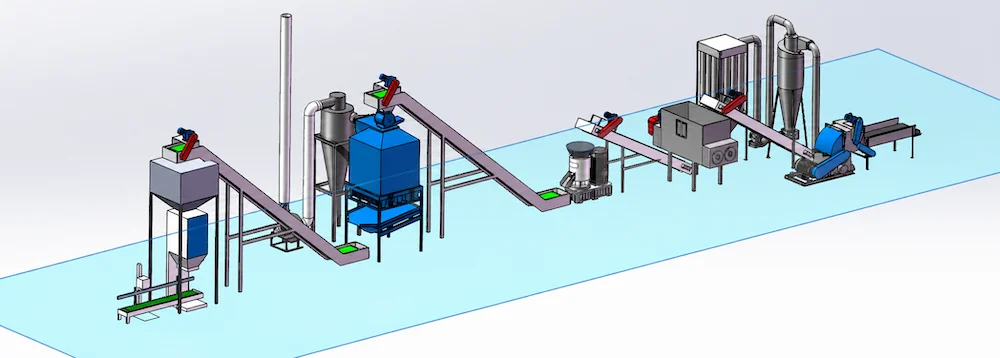
3.Wood pellet manufacturing process – Large Scale
Large-scale wood pellet manufacturing plant are designed to meet the demands of large-scale commercial production. Compared to small-scale production lines, large-scale production lines share the same core principles, but are more systematic, automated, and sophisticated.
Large-scale wood pellet production lines are typically equipped with crushers (for chipping logs or waste wood), pulverizers (for crushing wood chips into wood pellets), dryers (for drying wet wood pellets to a moisture content of 15%), ring die pellet mills (usually using multiple high-power ring die pellet mills operating in parallel), cooling and screening machines (using counter-current coolers to cool the pellets to slightly above room temperature), and pellet packaging machines. A large-scale wood pellet production line is a highly integrated and automated precision system that transforms biomass waste into high-quality clean energy through industrial means, and reduces costs and improves overall efficiency through large-scale production.
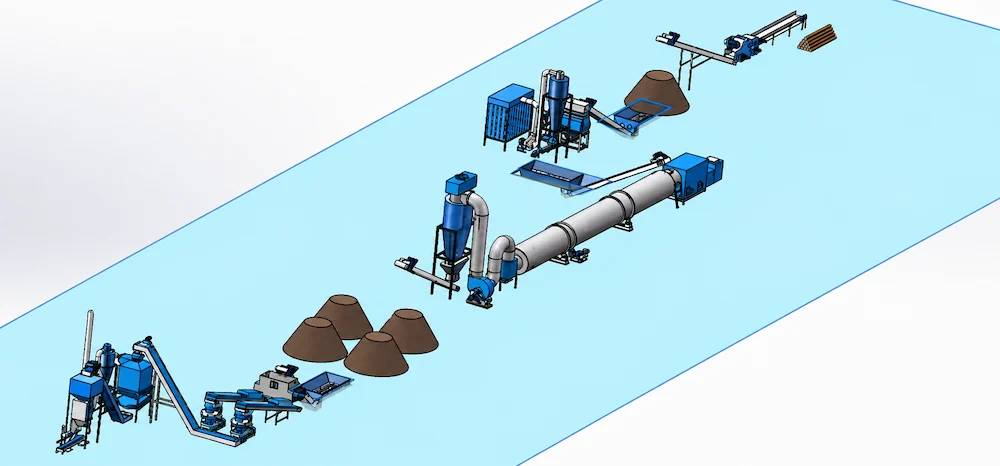
4.Wood pellet manufacturing machine
A stable wood pellet production line must be custom-designed based on your wood type and characteristics. We offer a one-stop service from slicing, crushing, drying, pelleting, cooling to packaging. Large-scale pellet production lines require ample space, a stable power supply, a well-trained team, and comprehensive after-sales support; therefore, many factors need to be considered. A stable production line is inseparable from a professional service team. We hope our expertise can be of assistance to you.
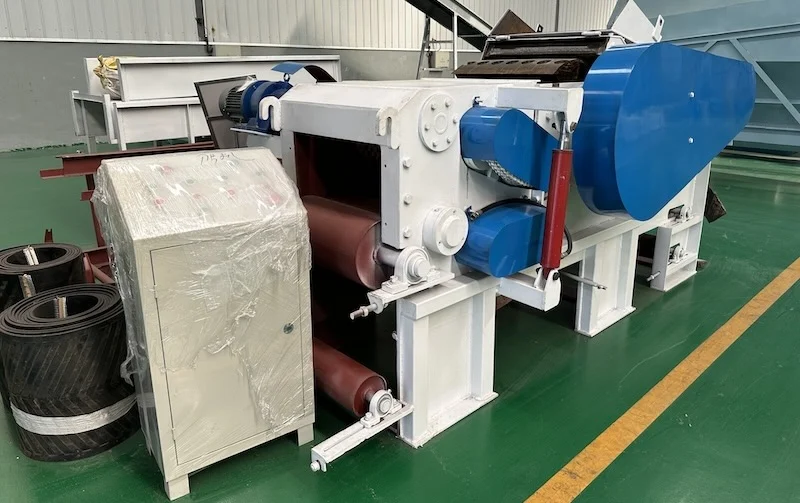
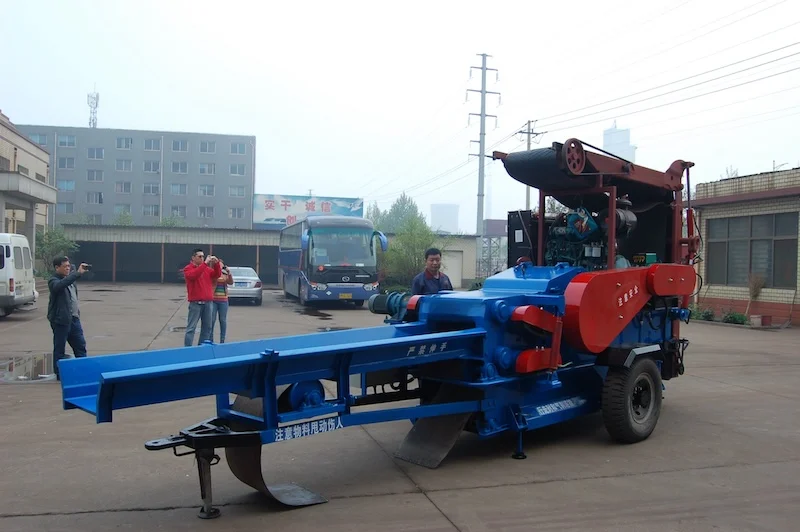
Wood Chipper
If your raw materials is wooden log, wood boards, or wooden pallets, you need the wood chipper to chip first.
Drum chippers are suitable for irregular raw materials such as logs, planks, and bark. For logs with a diameter no more than 20cm and a capacity of 3-4t/h, you can use the KXC216 model; for diameters within 25cm, the KXC218 model is better. For diameters of 25cm and above, use a comprehensive chipper for large-capacity applications. If you need a small capacity and the wood size is very large, you can pre-process with a log splitter. The equipment supports both electric motor and diesel power, allowing for selection based on specific operating conditions.
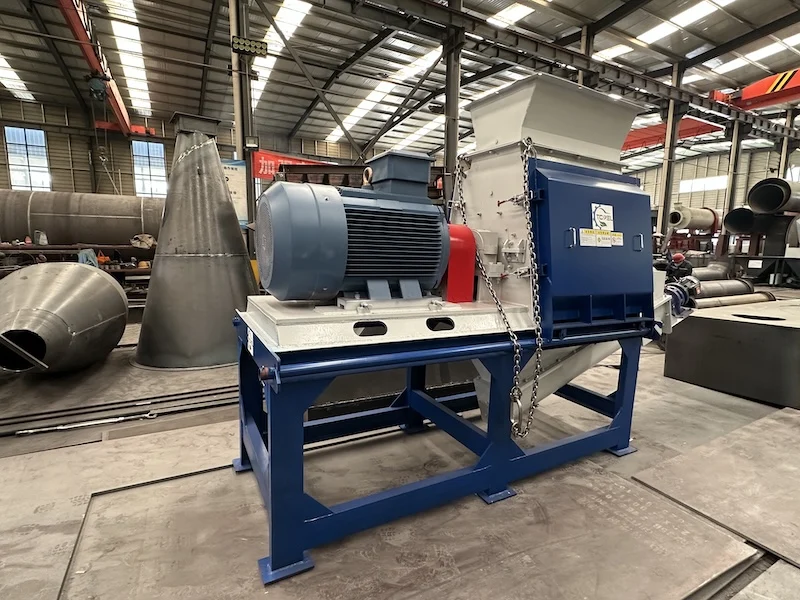
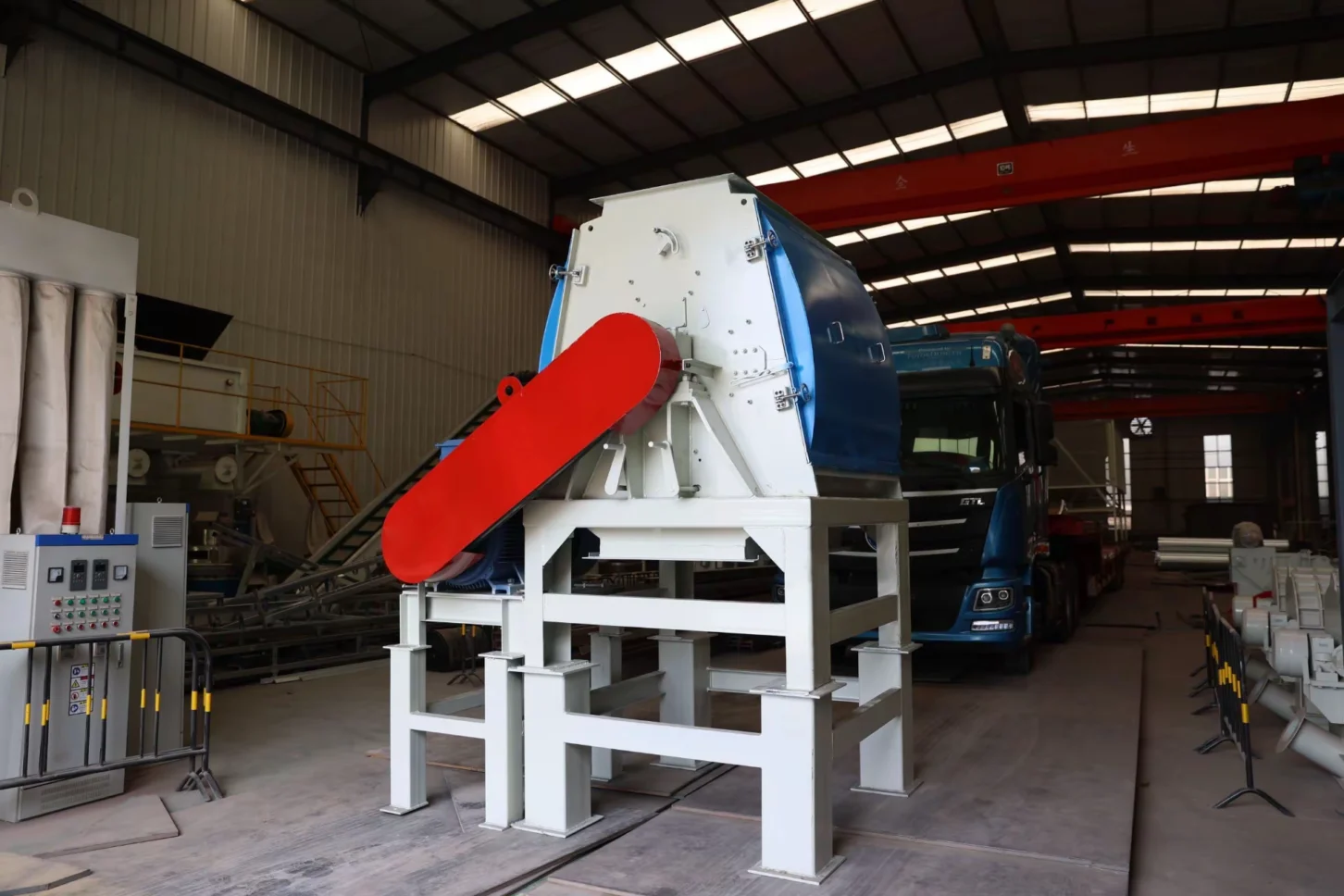
Wood Hammer Mill
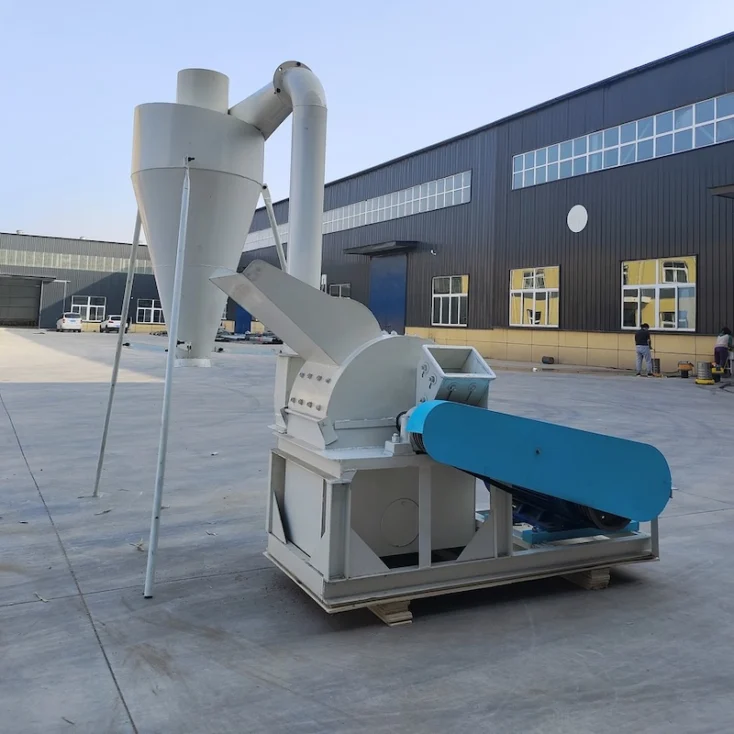
- Small wood hammer: the small wood crusher’s capacity is from 100-500kgs/h. It features dual feed inlets, one for wood chips and the other for fine branches, requiring the raw material size to be within 3 cm. You need to feed the raw material manually. When using branches, you must be fed one by one sequentially otherwise, this can easily cause blockages or even damage the blades. It comes standard with a cyclone and dust collector, effectively suppressing dust dispersion. If dust control is not critical on-site and you have sufficient space to store the crushed sawdust, only the main crusher part can be used, further reducing transportation costs.
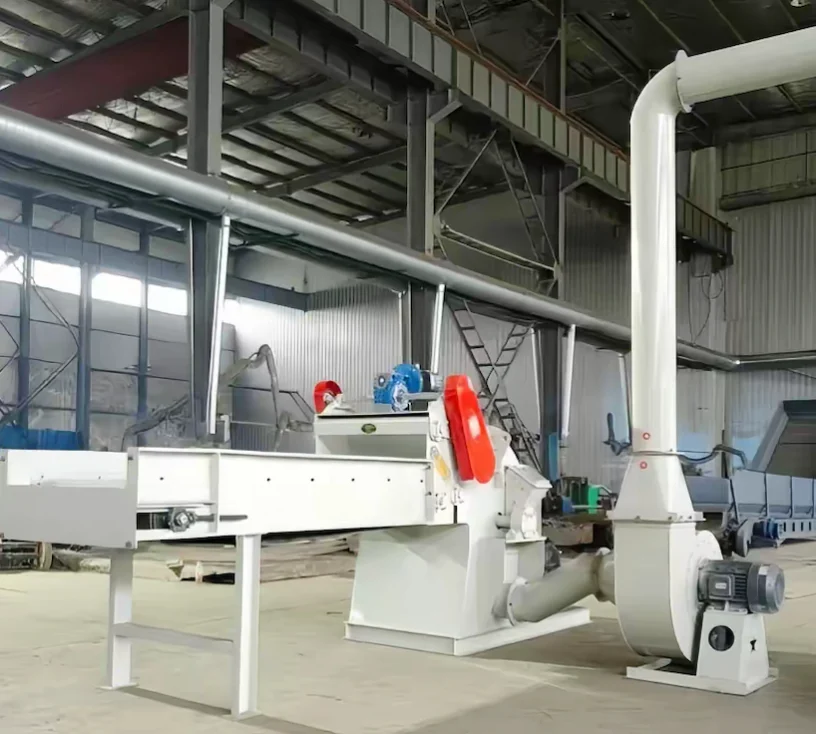
- Wood chips crusher: it is suitable for wood chips, the capacity is about 500-700kgs/h. This wood chip crusher has a capacity of 500-700 kgs/h. It comes standard with dust collection devices, including a cyclone with an airlock and dust collectors to effectively control dust leakage. You can use the feeding belt conveyor for automatic feeding, ensuring uniform feeding speed and continuous, stable operation of the equipment.
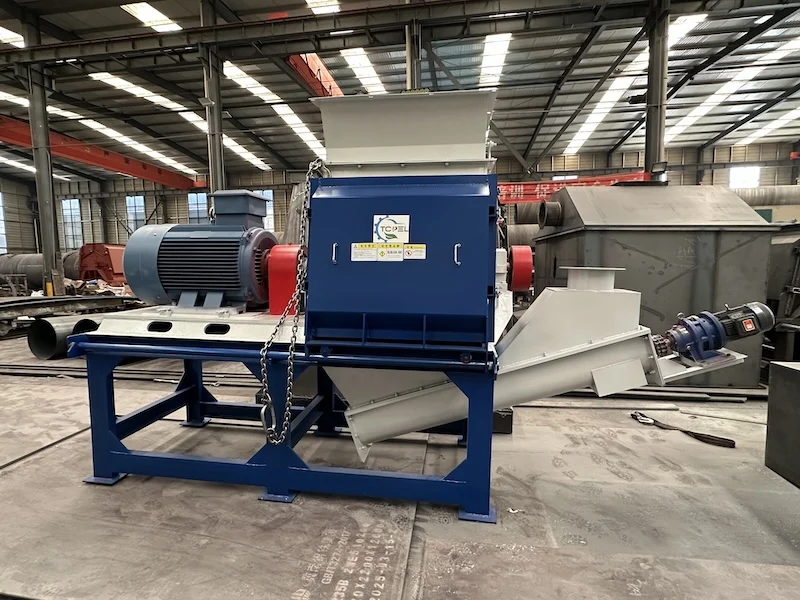
- Force feeding hammer mill: it’s suitable for wood chips and branches with a diameter of up to 8cm, with a capacity of 300-1,500kgs/h. It includes a cyclone and dust collector, providing excellent dust control. The machine features a dedicated feeding system that uses high-strength pressure rollers for forced feeding, ensuring smooth feeding, high capacity, wide material compatibility, and a compact structure.
Sawdust Dryer
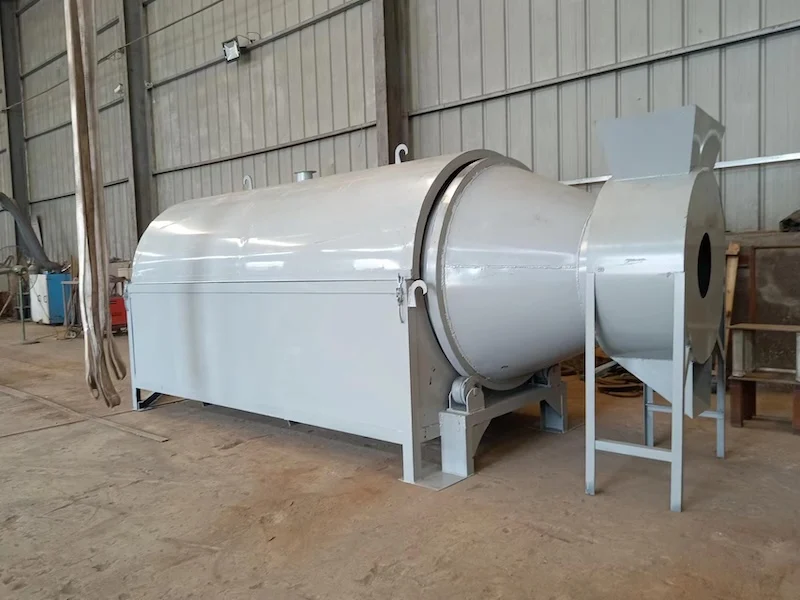
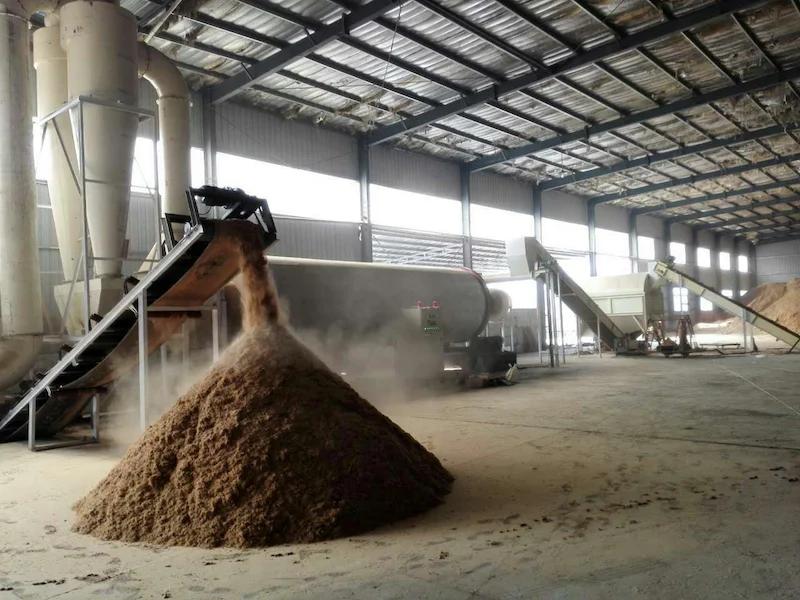
Pellet mills are very sensitive to the moisture content of wood, with an ideal moisture content of 13%–18%, and no more than 20%. If the moisture content is too high, the wood is difficult to press into shape, resulting in loose pellets of substandard quality, so drying equipment can be used for drying. However, if your production capacity is low, with less than 1 ton/h, investing in a dryer is not recommended. It will not only increase procurement and electricity costs but also require additional installation space, resulting in a low return on investment. You can prioritize natural sun drying or add some dry material to the high-moisture raw material to adjust the moisture content. If the production conditions do require a dryer, you can refer to the following two models:
- Batch dryer: This is a batch-type dryer. It can dry around 100-200 kg per batch, 20-30 minutes per batch. This type of machine features a low cost and is suitable for customers with a limited budget. We don’t suggest using this one for long-term work because of the low efficiency.
- Flash dryer: To be honest, we don’t recommend airflow dryers. They have significant drawbacks: firstly, they pose a fire risk. Secondly, they have low output and poor efficiency, which directly impacts the overall capacity of the pellet production line.
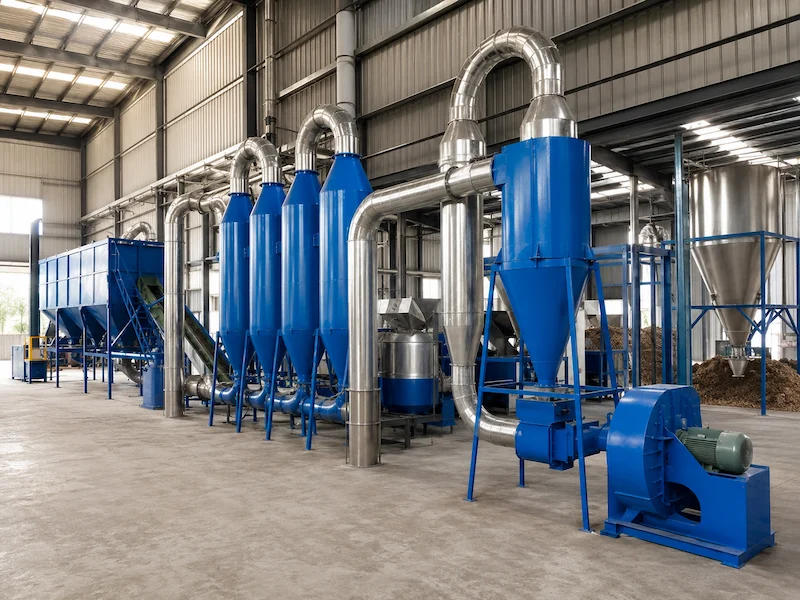
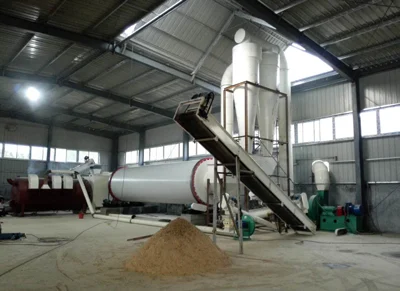
- Rotary drum dryer: It’s an ideal choice for wood pellet manufacturing process. Wood sawdust has good flowability, and appropriate drying equipment can be selected based on the raw material’s moisture content and application. When the raw material’s moisture content is higher than 50%, it is recommended to use a pellet burner to supplement the heat source, thereby improving the drying effect and operating efficiency. The heat source is crucial for the operation of the dryer, and a stable heating supply must be ensured. It is also recommended that the moisture content of the fuel used for the heat source be controlled below 30% to avoid excessive humidity affecting its use.
Wood Pellet Mill
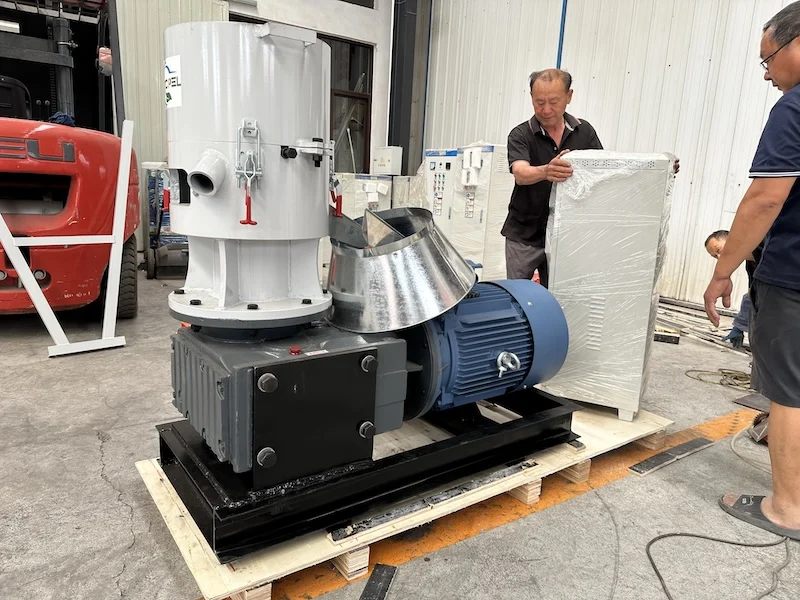
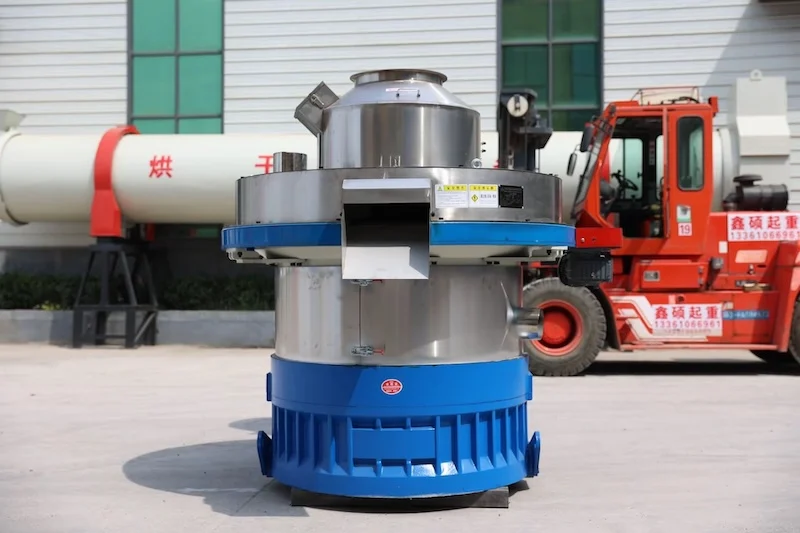
Wood pellet mills are highly sensitive to raw material conditions. To make sure the maximize capacity and consistently high-quality pellets, the raw materials need to meet two points: the size less than 10 mm and the average moisture content of around 15%, so the raw material can be fed into the pellet mill directly. If your raw material is wood sawdust, wood shavings, MDF, fine powder, rice husk, etc, the wood pellet mill can meet production needs. This configuration offers low initial investment, minimal space requirements, and significantly lowers project investment risk.
Wood sawdust is the most convenient raw material for pellet production. Their small size eliminates the need for pre-processing steps like chipping and crushing. For highly automated production scenarios, you can use the feeding system to feed raw material into the pellet mill. For large-scale commercial production, you can add the automatic feeder, maintaining a uniform feeding speed and ensuring stable pellet mill output.
When using the wood pellet mill, the following key points should be noted in daily operation:
- Ensure a stable raw material supply to avoid production disruptions. Maintain consistent raw material types, as different raw materials require different dies of compression rates to prevent inconsistent compression ratios from affecting pellet quality.
- Remove hard metal debris such as nails and iron blocks. It is recommended to install a strong magnetic separator at the feeding end to prevent hard metal objects from impacting and damaging the die, reducing equipment maintenance frequency and costs.
- Maintain stable raw material moisture content. You can prepare a moisture detector to prevent fluctuating moisture levels from affecting pellet quality and reducing economic benefits.
- Perform regular lubrication maintenance, regularly adding lubricating oil to all lubrication points throughout the machine. Proper lubrication and maintenance can reduce component wear and support the long-term, continuous, and stable operation of equipment.
The vertical ring die pellet machine is best choice for wood pellet production line. The biggest difference between vertical and horizontal pellet mills is that horizontal pellet mills are only used for feed pellets, while vertical pellet mills can be used for fuel, feed, and fertilizer pellets.
The wood pellet machine is equipped with the heavy-duty gearbox, ensuring the pellet machine run stably. Raw materials are vertically fed into the pellet mill via a feeding system and extruded by high-strength pressure rollers, effectively preventing machine blockage.
Many users mistakenly use horizontal feed pellet mills to produce fuel pellets. This type of equipment is not suitable for sawdust. Sawdust is rich in fiber, while horizontal pellet mills operate at high speeds and have insufficient pressure from the rollers. Prolonged use can easily lead to problems such as mold cracking and motor failure, and the resulting pellet density will also be difficult to meet standards.
Pellet Cooler or Pellet Cooling Bin
If you want to package and sell the wood pellets, you need to cool them first. Because produced pellets are at a high temperature, if they are packaged directly, the high temperature inside the bag will cause moisture to condense, which will not only make the granules damp, soft and loose, but may also cause problems such as mold and clumping, significantly reducing the quality of the granules.
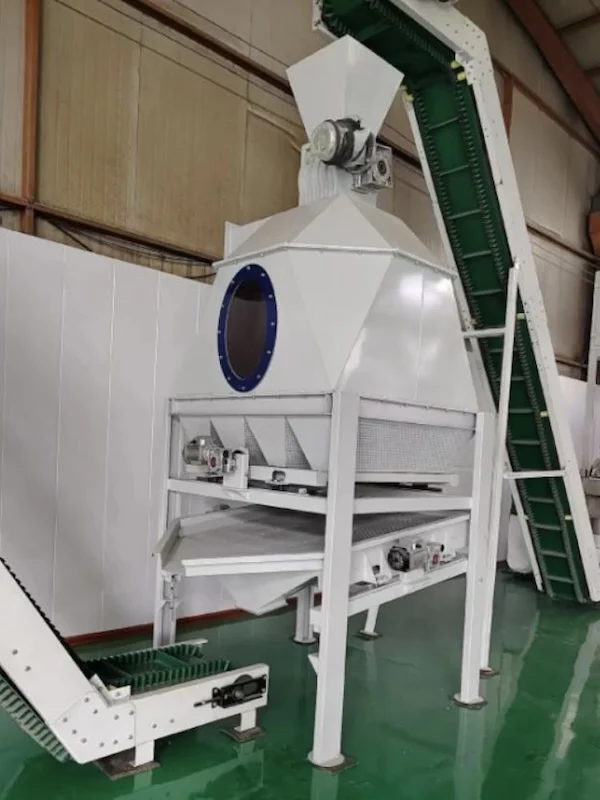
- Pellet cooler: The pellet cooler can operate continuously and stably, it can efficiently cool pellets. Due to the large size of pellet cooling machine, the transportation costs increase.
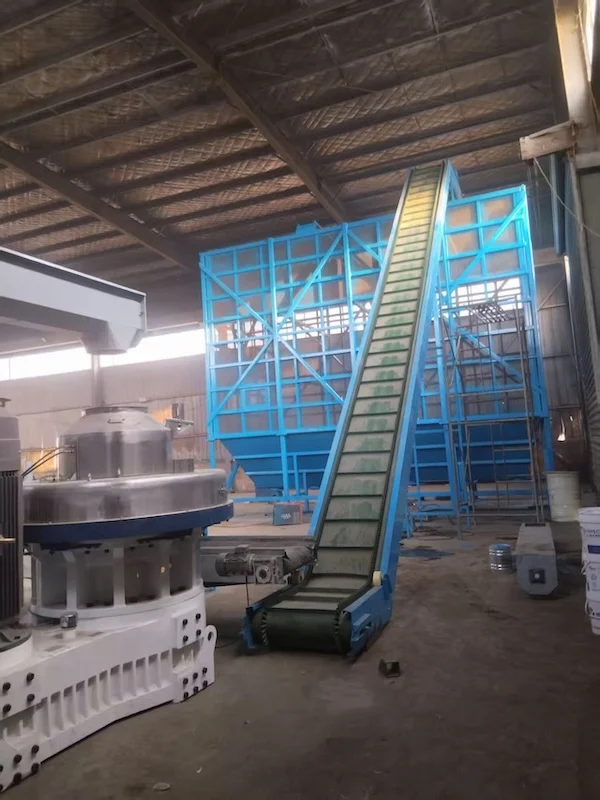
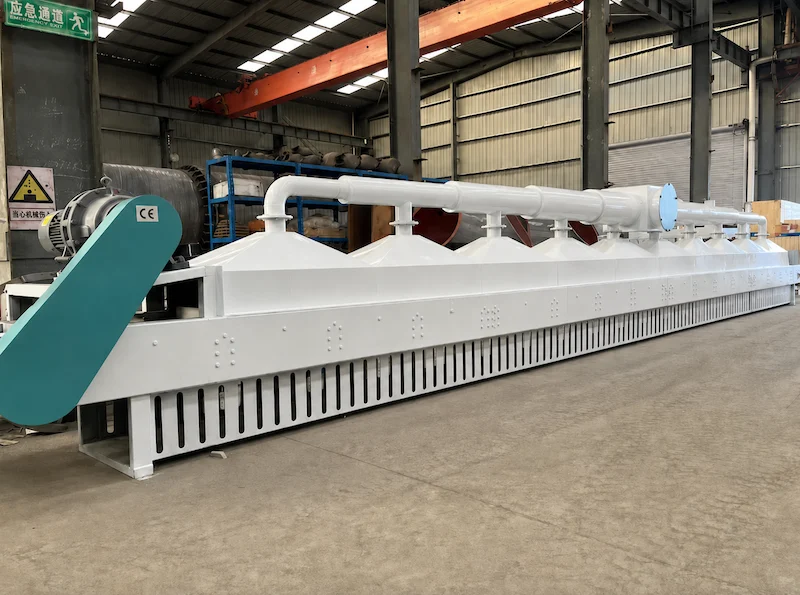
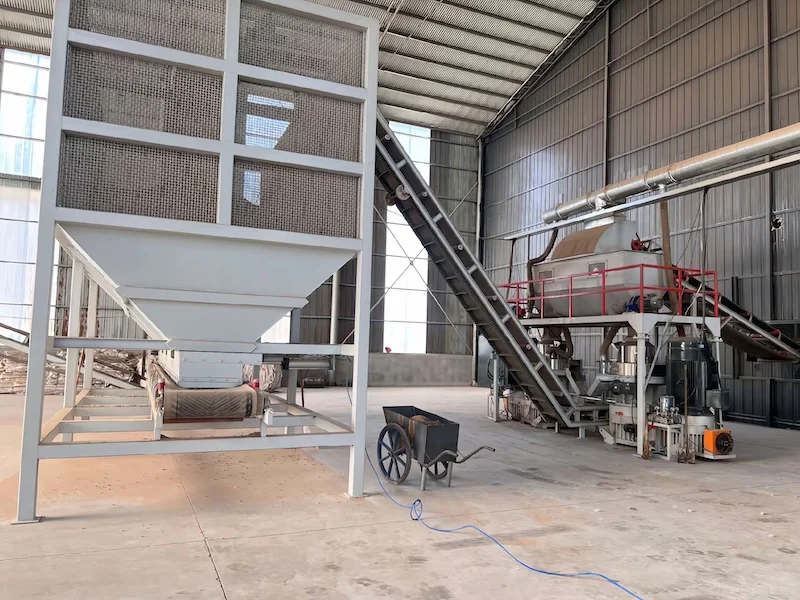
- Pellet cooling bin: For those with limited budgets and local processing capabilities, pellet cooling silos are a better option. We can provide drawings for on-site construction, combining cooling and storage functions for a more cost-effective solution. Counter-flow coolers provide uniform cooling, preventing pellet cracking from sudden cooling, and also integrate a vibrating screen to remove defective products. Mesh belt coolers can be single-layer or multi-layered, operate smoothly with minimal vibration, effectively preventing pellet breakage and suitable for continuous production.
Wood Pellet Packing Machine
Most customers use the half-automatic pellet packing machine, it is more cost-effective than fully automatic packers. You can arrange one worker to operate the pellet packing machine, it very easy to operate the machine.
Customers who choose small-scale pellet production lines all hope to maximize profits with minimal investment. Adhering to the principle of prioritizing customer needs, we simplify the overall configuration while ensuring equipment quality, minimizing investment costs for our clients.
Professional Wood Pellet Mill Manufacturer
With over 12 years of experience in vertical ring die wood pellet machine production, we have the expertise to assist you. Please feel free to contact us—we’re here to help you resolve any issues you may encounter.