
RING DIE PELLET MACHINE
Ring-die pellet machines are mainly used in large-scale pellet production lines. The output of the smallest pellet ring die pellet machine is generally more than 600kgs/h, and the maximum capacity can achieve 6-8t/h. It is a heavy-duty industrial pellet machine.
RING-DIE PELLET MACHINE FOR SALE
Revolutionize Your Manufacturing Process with Our High-Capacity Ring Die Pellet Mill.
Ring die pellet mills are a general type of pellet-forming equipment. They have a wide range of applications, including wood pellets, biomass pellets, feed pellets, fertilizer pellets, and other types of pellet production. They are specialized machines that use a ring die and built-in press rollers as their core working components, mechanically compressing powdery raw materials into dense, cylindrical pellets. During operation, the press rollers rotate under the drive of the main shaft, and the material is pressed into the wedge-shaped area between the ring die and the press rollers. In the relative movement between the rollers and the ring die, the material is continuously drawn in, compressed, and overcomes the frictional resistance of the die holes, being extruded from the conical feed hole of the ring die, and finally cut into pellets of the desired length by a cutter.
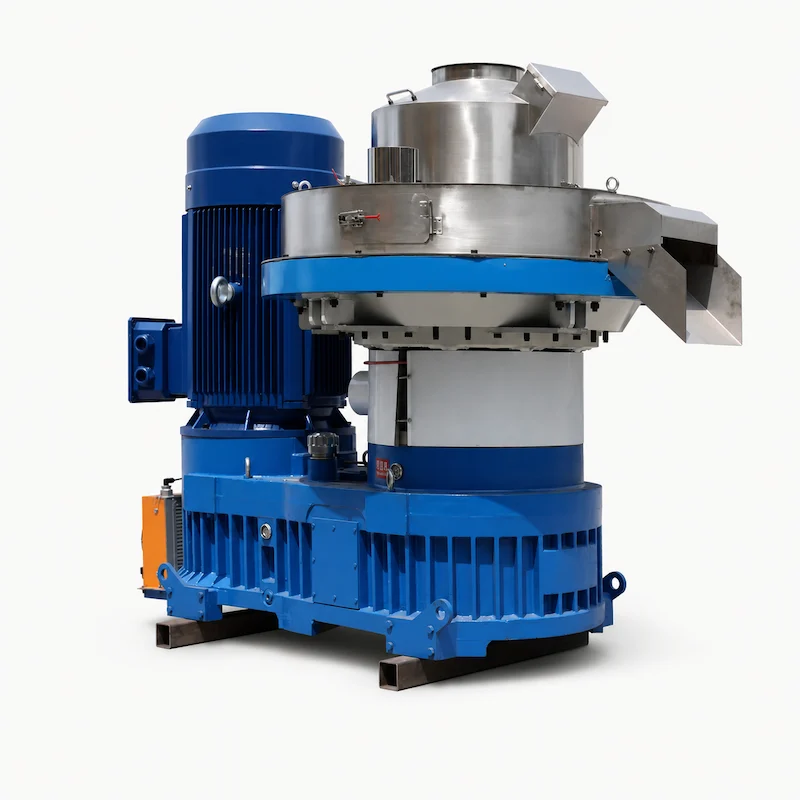
STRUCTURE OF RING DIE PELLET MACHINE
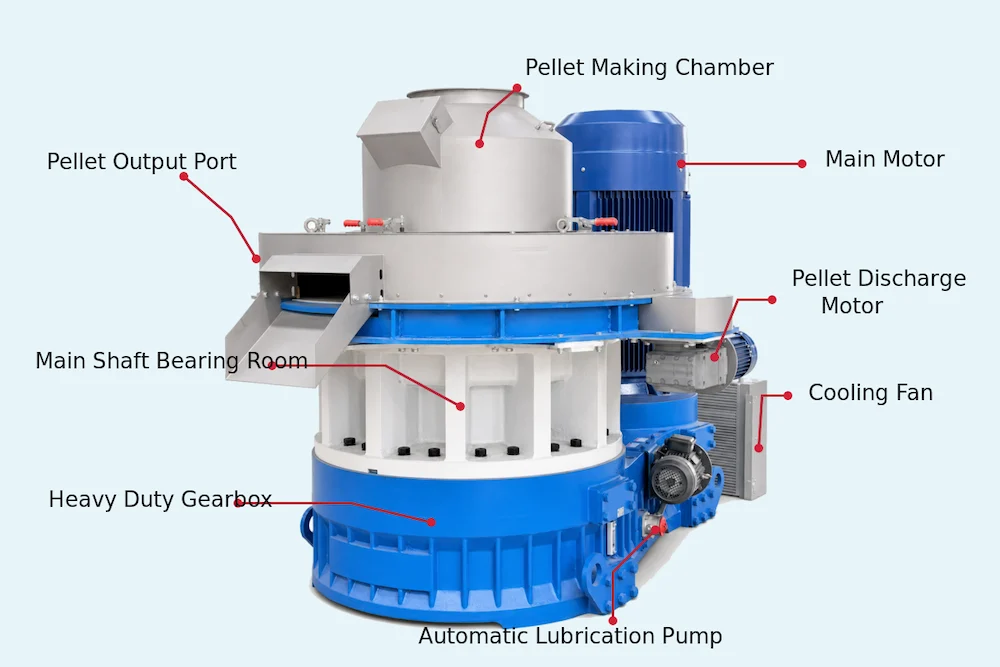
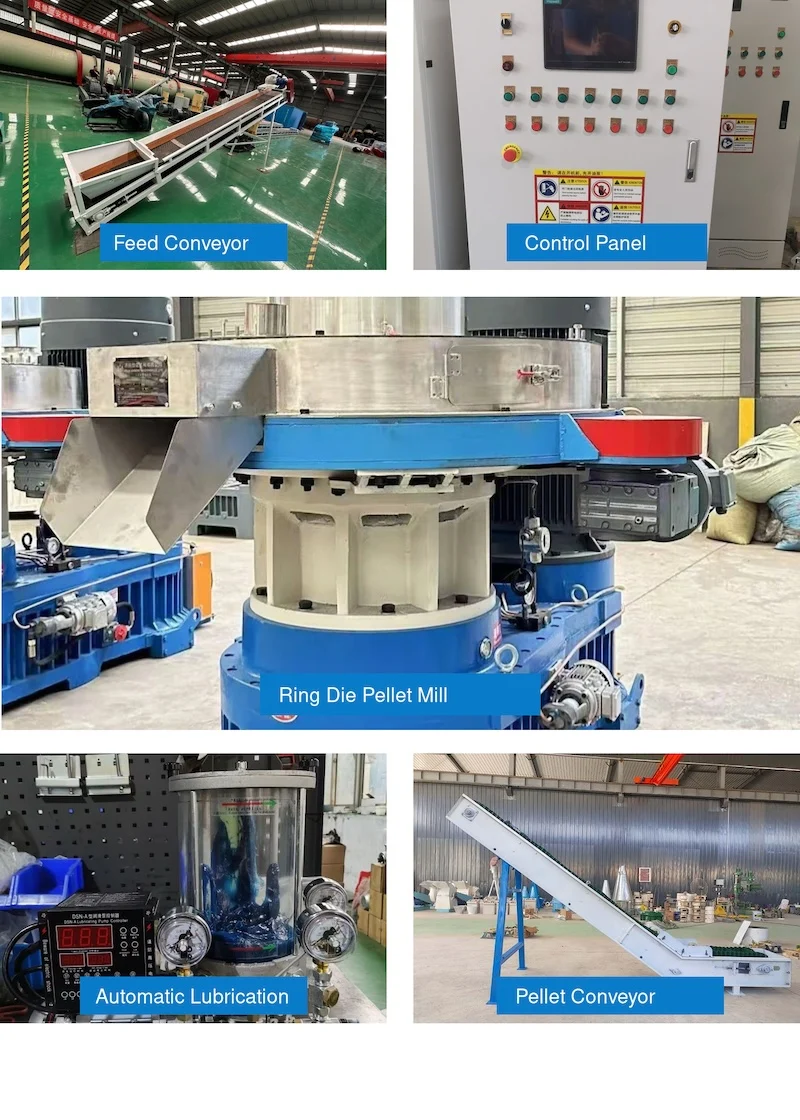
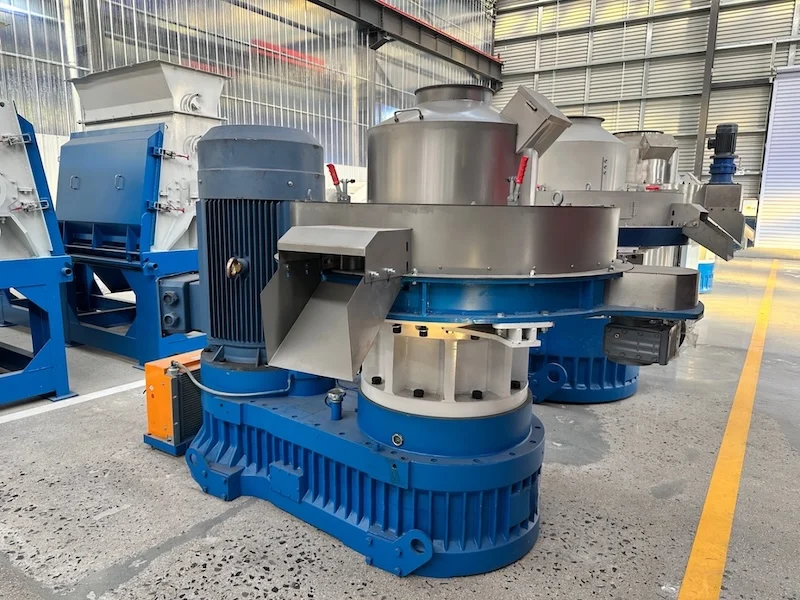
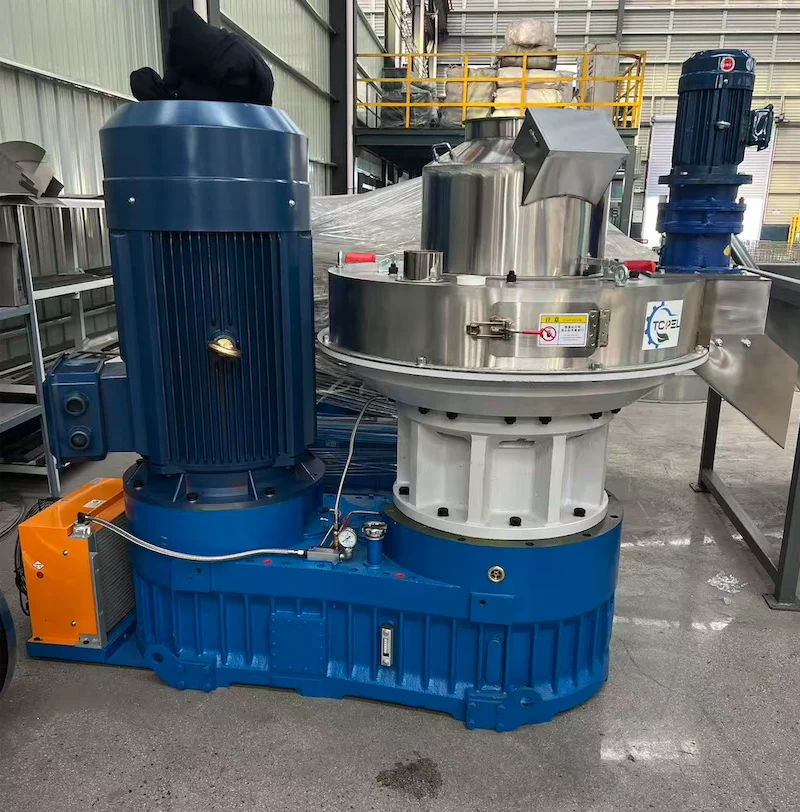
The ring die pellet mill is rationally designed and has a simple structure. It consists of a main motor, a three-stage heavy-duty gearbox, a one-piece type of main shaft, bearing housing, pellet-forming chamber, protective cover, automatic lubrication oil pump, forced cooling fan, and automatic control system. The most critical components are the three-stage transmission gearbox, the main shaft bearing housing, and the forming chamber. The vertical ring die and press roller assembly inside the forming chamber are the main sites where the raw material is transformed into pellets.
RING DIE PELLET MACHINE TYPES AND MODELS
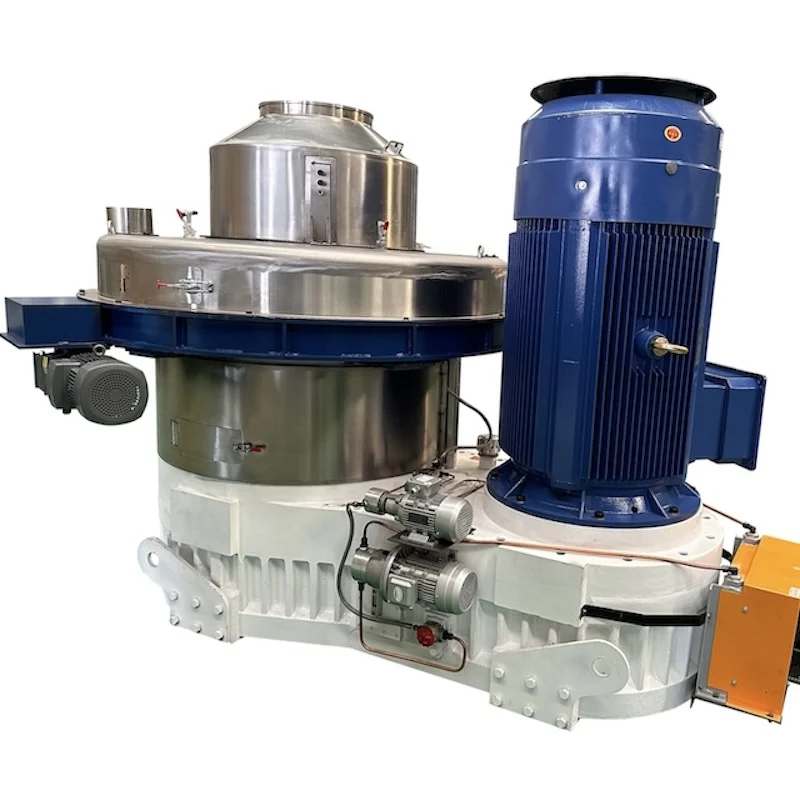
TCZL560 Ring Die Pellet Machine
- Model - TCZL560
- Motor power - 90KW
- Pellet diameter - 6mm, 8mm, 10mm
- Feeding type: Automatic
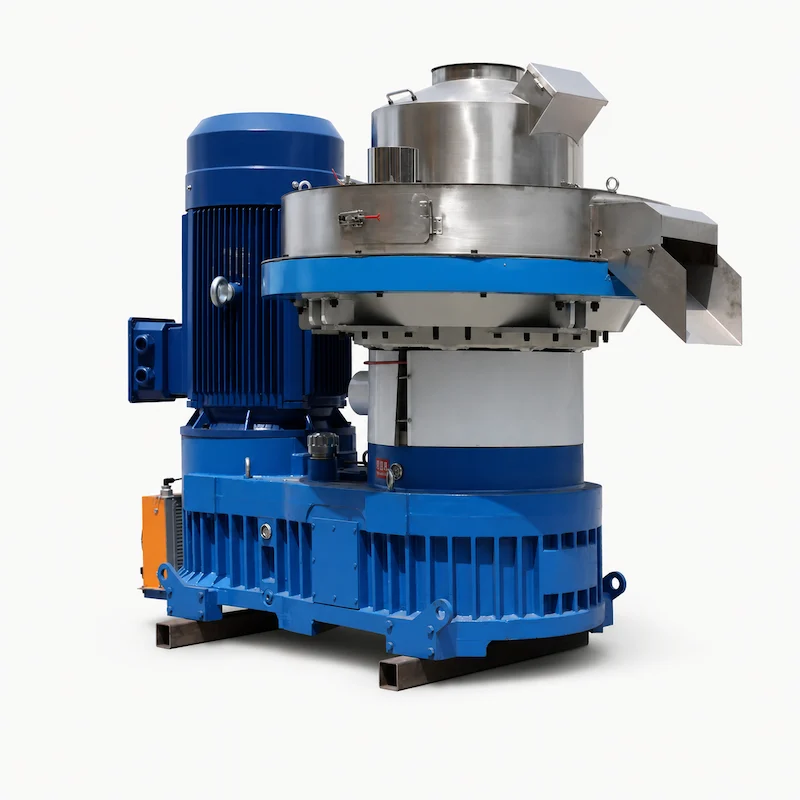
TCZL560 Ring Die Pellet Mill
- Model - TCZL560
- Motor power - 90KW
- Pellet diameter - 6mm, 8mm, 10mm
- Feeding type: Automatic
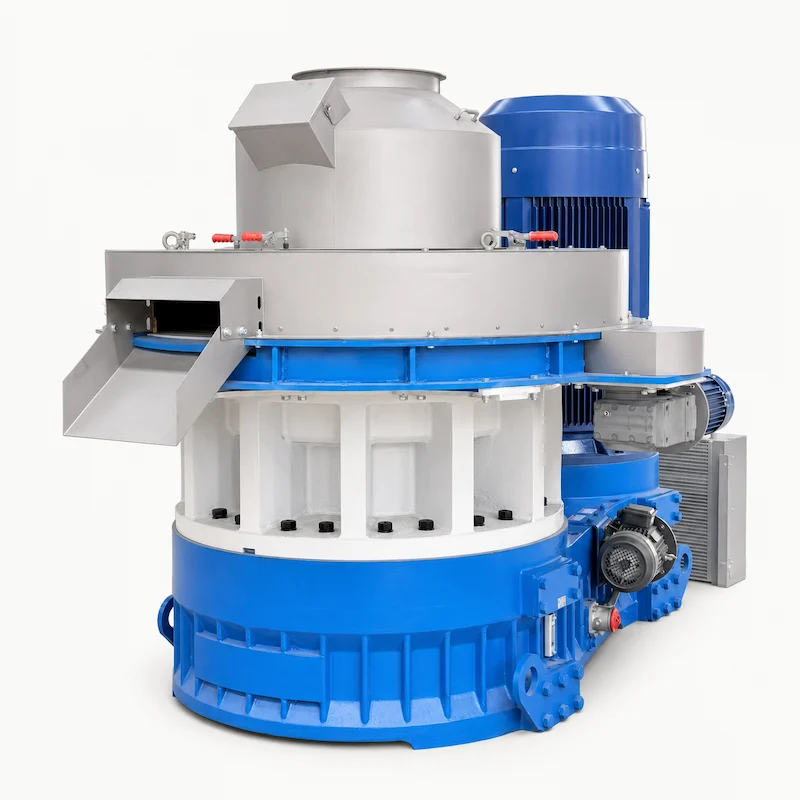
TCZL650 Ring Die Pellet Press
- Model - TCZL650
- Motor power - 110KW
- Pellet diameter - 6mm, 8mm, 10mm
- Feeding type: Automatic
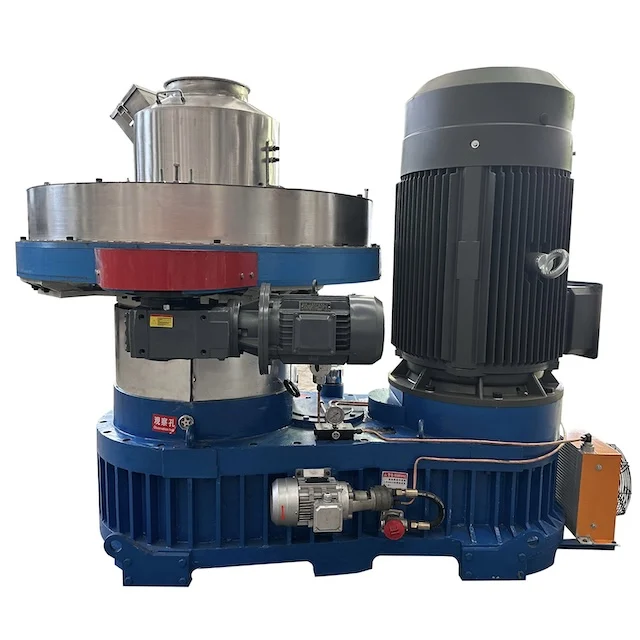
TCZL560A Ring Die Pellet Machine
- Model - TCZL560A
- Motor power -132KW
- Pellet diameter - 6mm, 8mm, 10mm
- Feeding type: Automatic
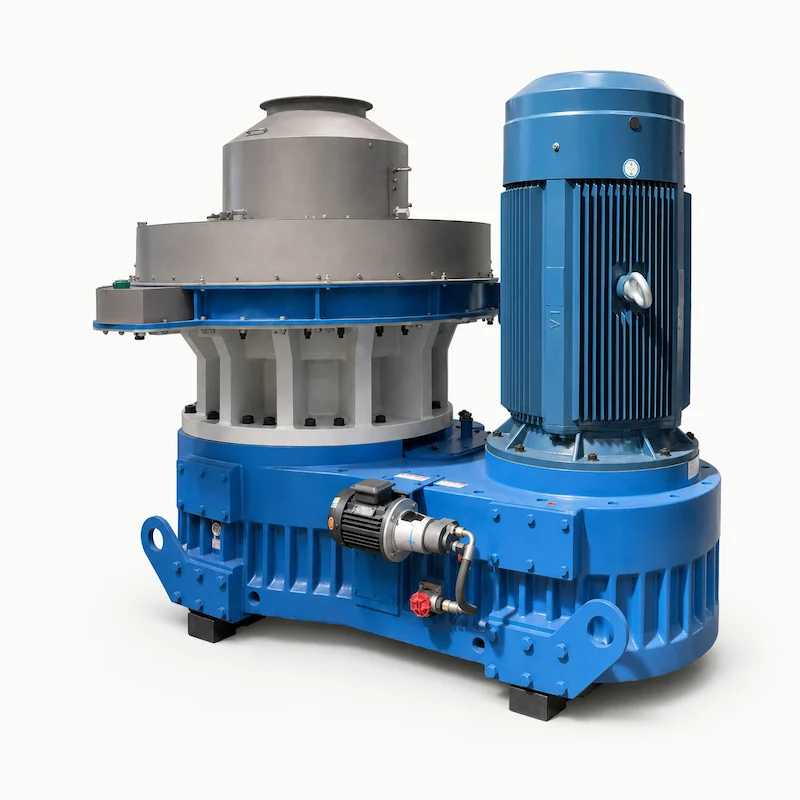
TCZL700 Ring Die Pellet Machine
- Model - TCZL700
- Motor power -160KW
- Pellet diameter - 6mm, 8mm, 10mm
- Feeding type: Automatic
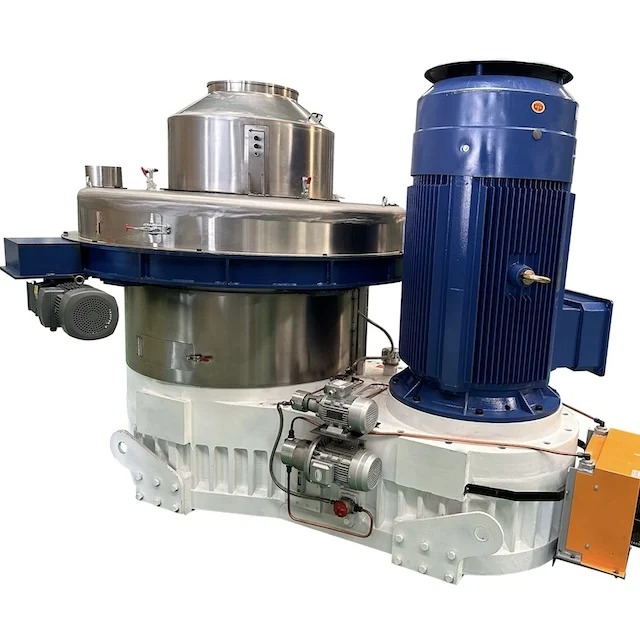
TCZL850A Ring Die Pellet Making Machine
- Model - TCZL850A
- Motor power -250KW
- Pellet diameter - 6mm, 8mm, 10mm
- Feeding type: Automatic
TECHNICAL PARAMETERS
| MODEL | MAIN MOTOR | WOOD CAPACITY | FEED/FERTILIZER | RDF CAPACITY | WEIGHT |
|---|---|---|---|---|---|
| TCZL560 | 90KW | 1000-1500KG/H | 1000-1500KG/H | / | 4800KG |
| TCZL650 | 110KW | 1200-1400KG/H | 1000-1500KG/H | / | 3200KG |
| TCZL560A | 132KW | 1500-2000KG/H | 1000-1500KG/H | / | 5500KG |
| TCZL700 | 160KW | 2000-2500KG/H | 1000-1500KG/H | / | 6800KG |
| TCZL850 | 220KW | 3000-3500KG/H | 1000-1500KG/H | / | 8800KG |
| TCZL850A | 250KW | 3500KG/H | 1000-1500KG/H | / | 10500KG |
| TCZL850B | 280KW | 4000KG/H | 1000-1500KG/H | / | 11000KG |
WHAT RAW MATERIAL CAN BE PRESSED BY RING DIE PELLET MACHINE
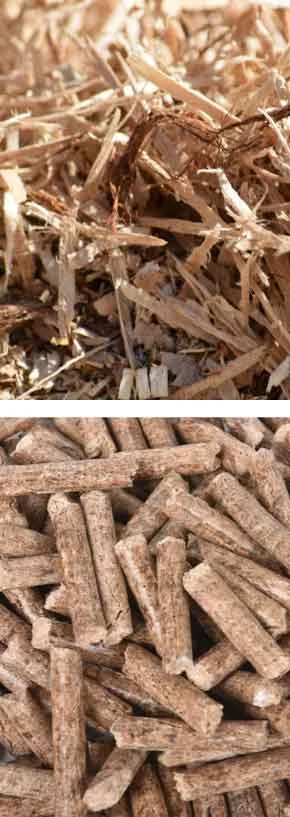
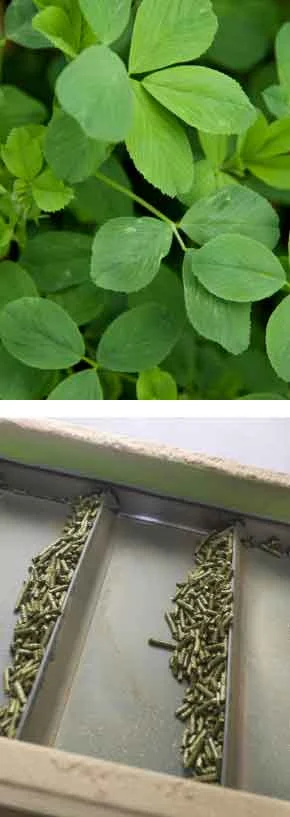
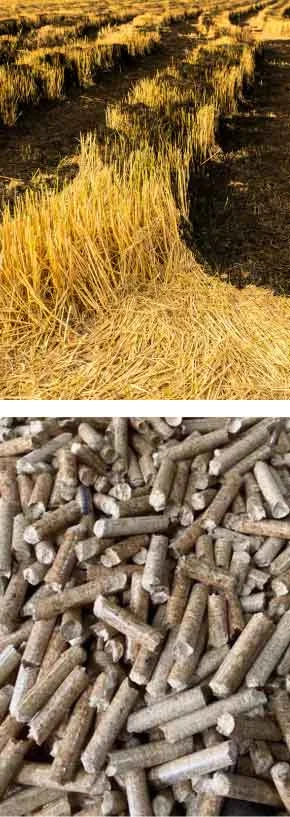
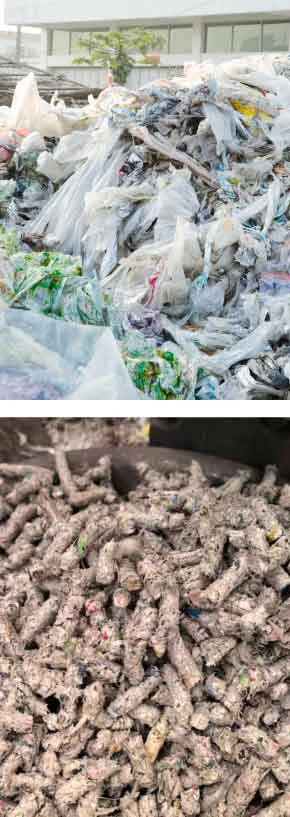
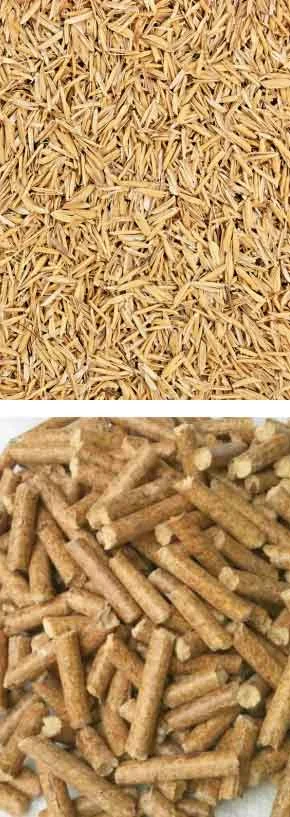
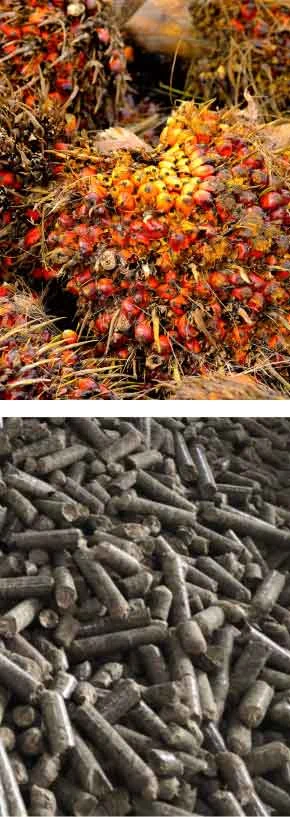
Ring die pellet mills are widely applicable. Classified by raw material type and pellet application, they mainly fall into four categories: biomass fuel pellets, feed pellets, organic fertilizer pellets, and RDF fuel pellets. The following are commonly used raw material types for your reference:
Biofuel pellet machine: Wood chips, wood scraps, rice straw, rice husks, stalks, peanut shells, hollow palm fruit bunches, coconut shells, various agricultural and forestry wastes, etc.
Feed pellet machine: Alfalfa, barley grass, elephant grass, various grain crops, etc., mainly used to produce feed for herbivores such as cattle, sheep, horses, and rabbits.
Organic fertilizer pellet production: Biogas residue, compost, cow dung, sheep dung, horse dung, and various farm animal bedding materials, etc.
RDF fuel pellet production: Waste paper, waste plastics, RDF raw materials, waste clothing and textiles, various sludge and industrial waste, etc.
THE UNIQUE ADVANTAGE OF VERTICAL RING DIE PELLET MACHINE
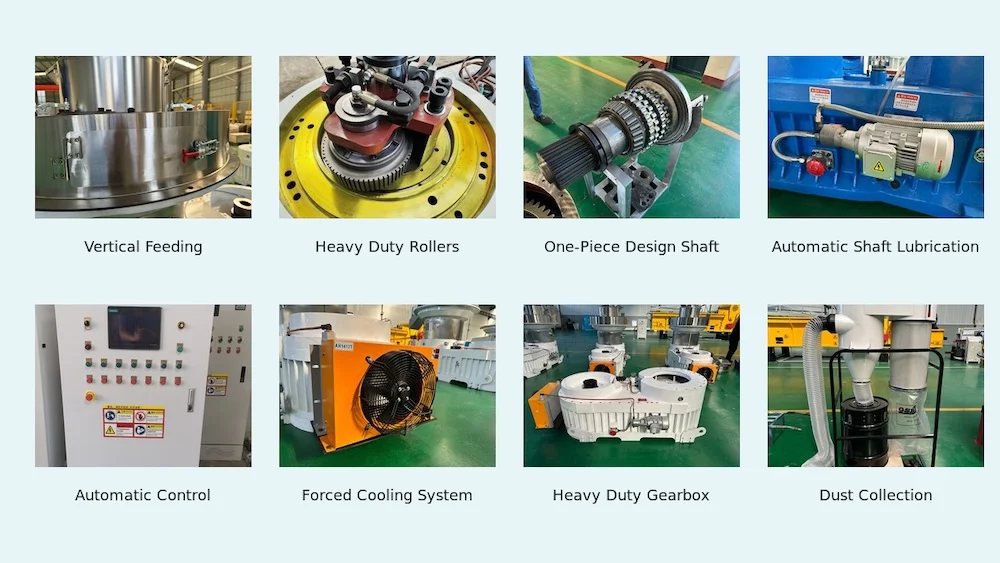
Vertical ring die pellet mills offer many unique advantages, which are particularly evident when pressing biomass pellets with coarse fibers. To help you better understand, we have summarized the following advantages:
Less risks to clogging during feeding. The feed inlet of a vertical ring die pellet mill faces upwards, allowing raw materials to enter the forming chamber directly from the feeding screw or belt conveyor by gravity. This shorter stroke reduces clogging and ensures more stable operation.
Automatic lubrication for the pressure rollers and main shaft, enabling 24-hour continuous and stable operation. Compared to horizontal ring die pellet mills, vertical ring die pellet mills feature a rotary distributor in their pressure roller assembly. Grease automatically lubricates the rollers periodically according to a set schedule, ensuring good lubrication even at high temperatures, reducing machine failure rates and maintenance costs.
Equipped with a low-speed, heavy-duty reducer, making it more suitable for pressing coarse fiber materials into pellets. Waste materials such as sawdust and crop straw have coarse fibers that are difficult to compress. Vertical ring die pellet mills are specially equipped with a three-stage transmission low-pressure heavy-duty reducer, which increases the pressure on the raw materials, resulting in high forming efficiency and reducing the risk of pellet discoloration due to high-speed rotation, thus producing higher quality pellets.
High safety factor. Equipped with a forced air cooling system and dust removal system, the machine boasts high output and a low failure rate. The pellet mill’s control system uses linkage control, and forced air cooling and automatic dust removal ensure stable and safe operation. The failure rate is extremely low during continuous operation.
VERTICAL RING DIE PELLET MILL WORKING PRINCIPLE
The working principle of a vertical ring die pellet mill can be summarized as “vertical feeding, centrifugal distribution, and rotary extrusion.” It uses a high-speed rotating double-press roller design to continuously extrude material into a stationary ring die, thus forming pellets.
This process mainly relies on three systems:
Feeding System:Typically controlled by a variable frequency motor, a feeding belt conveyor (or feeding screw) evenly feeds the raw material into the pelleting chamber by gravity. This design reduces the likelihood of material blockage and ensures stable operation.
Transmission System:Employs high-precision hardened gear transmission to drive the main shaft and pressure rollers. The key difference between this and a horizontal ring die pellet mill lies in the “stationary die, rotating pressure rollers” design, which results in smoother machine operation, higher pressure, better forming efficiency, and a lower failure rate.
Pelletizing and Discharge System:This is the core component for forming. The ring die is covered with holes for forming. The material is subjected to high pressure between the roller and the die. The material is forced into the ring die holes and squeezed into a dense cylindrical shape pellet after being subjected to high pressure friction inside the holes.
WHAT ARE THE MAIN FACTORS AFFECTING THE OUTPUT OF A RING DIE PELLET MILL?
Many pellet mill users, especially new ones, struggle with pellet mill output. The main factors affecting ring die pellet mill output include machine design, raw material type, and operator/maintenance skills. A detailed analysis follows:
Selection of ring die pellet mill configuration, especially the die compression ratio.
Our heavy-duty pellet mill reducer is engineered for stability and reliability, delivering consistent performance with a low failure rate. Designed for durability, it ensures smooth operation even under the toughest conditions.
Raw material characteristics and moisture content.
Both excessively high and low moisture content negatively impact pellet formation. For different raw materials, it's not simply a matter of whether the material size is too large or too small is better. Different raw materials require different particle size and moisture content from pellet mills, which relies entirely on testing and experience. For example, for agricultural waste, a fineness of less than 10 mm is better because it increases output. However, for plastic materials, 1-2 cm is a good choice. The optimal moisture content for sawdust and straw is also quite different.
The operator's maintenance and operational skills are key factors affecting pellet mill output.
Unlike chippers and crushers, even highly automated pellet mills with PLC control require more experienced operators, mainly due to the pellet forming conditions. The most crucial skill for operators is how to adjust the die and pressure roller clearance, as the appropriate clearance ensures the pellet mill operates at high efficiency. We have detailed training documents available; please contact us if needed.
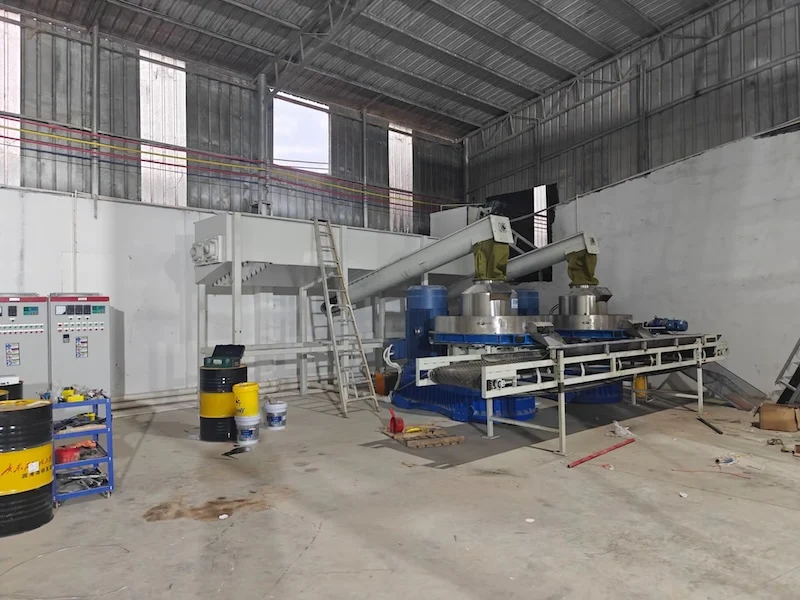
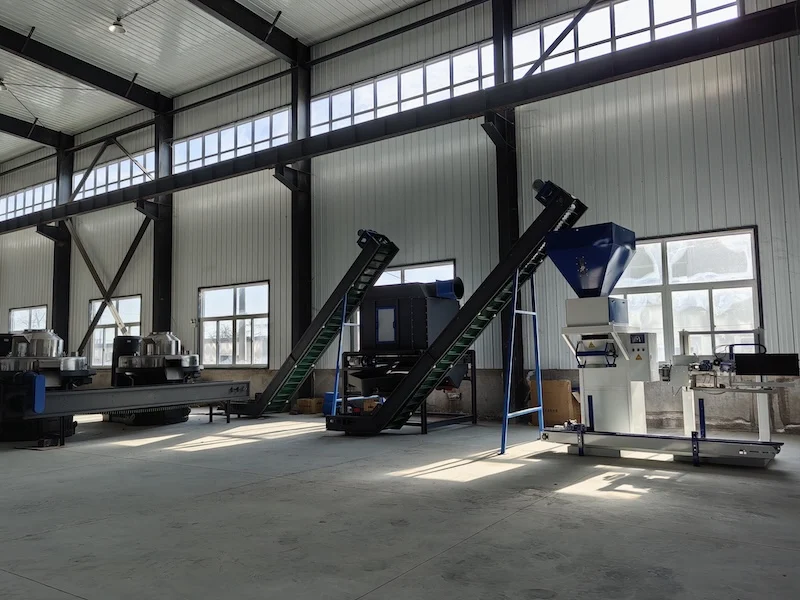
The video above shows a wood pellet production line with a capacity of 3-4 tons per hour, equipped with two 132 kW wood pellet machines. Each machine has a capacity of 1.5-2 tons per hour. The customer uses wood with a moisture content of 50-60%, which is crushed, pulverized, dried, and then made into biomass fuel pellets.
CUSTOMERS CASE
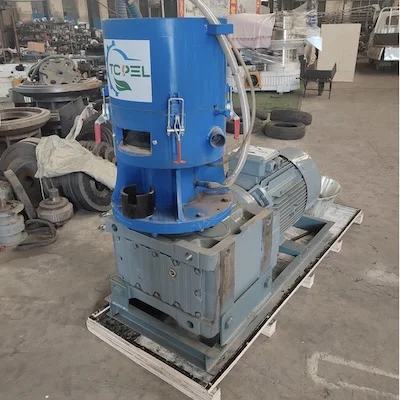
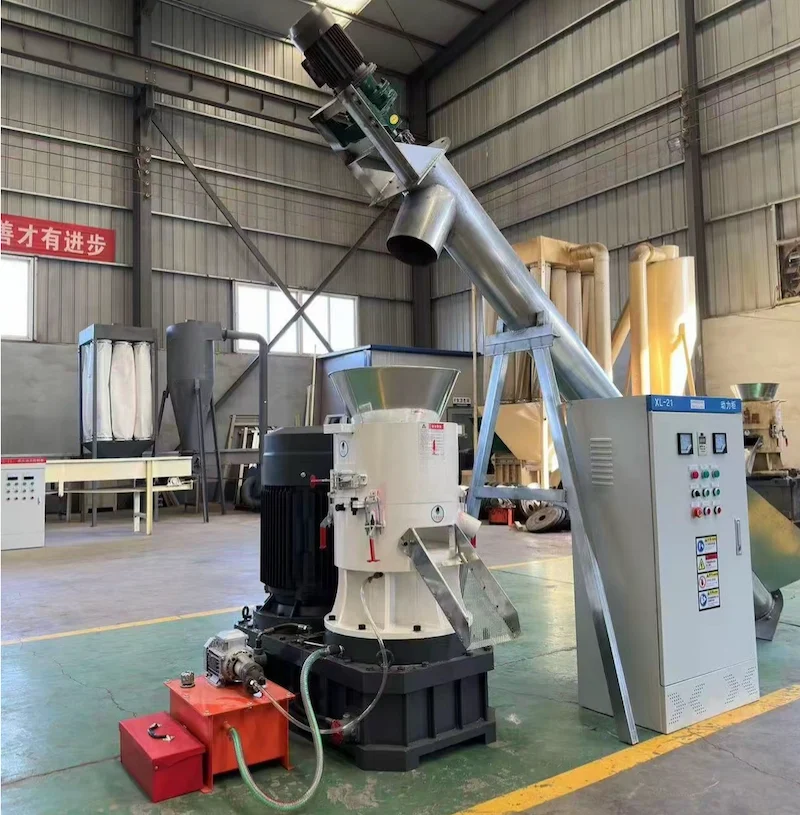
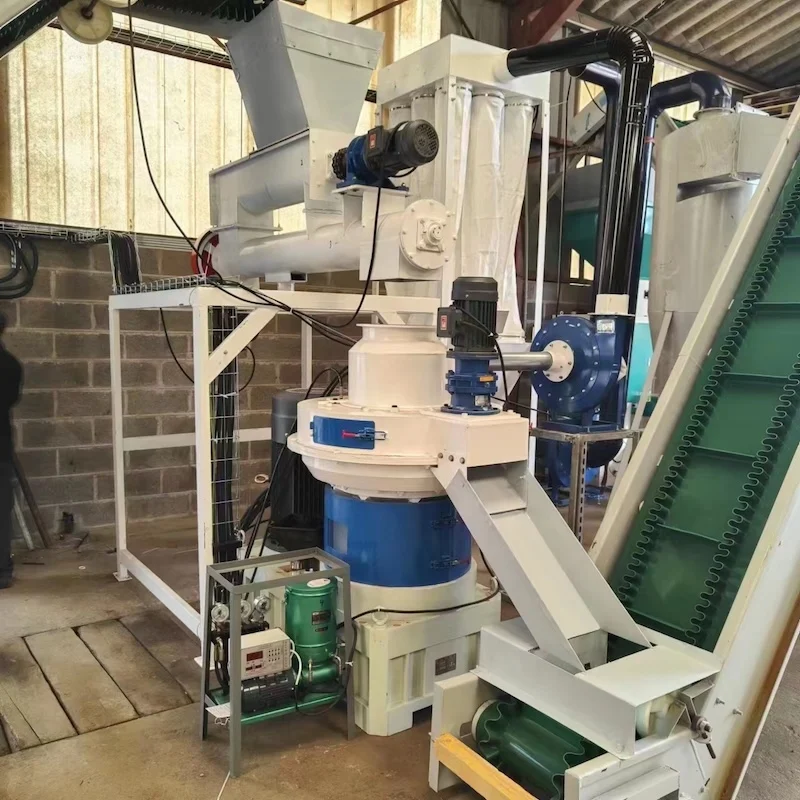
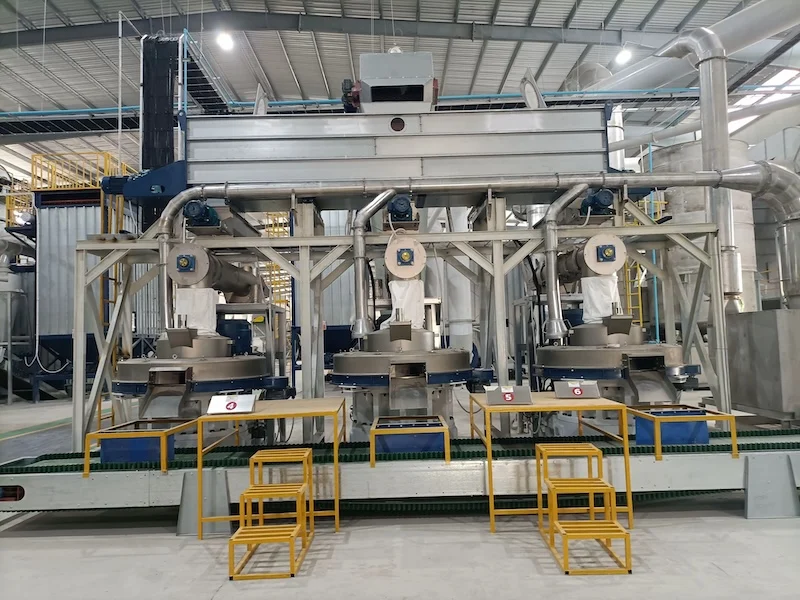
HOW TO CHOOSE THE BEST RING DIE PELLET MILL?
Choosing the best ring die pellet mill can be a challenge for many beginners, as a wrong choice can lead to significant time and financial costs in correcting. If now you’re selecting a pellet mill, we’d like to offer some advice based on our over 20 years of production experience.
1. Choose the ring die pellet machine based on your raw materials.
The optimal model differs between feed pellets and fuel pellets, and the most suitable pellet mill also differs between herbivore feed pellets and poultry feed pellets. If you want to produce fuel pellets and herbivore feed pellets, a vertical ring die pellet mill is the best choice because its vertical feeding design, low-profile heavy-duty reducer configuration, and rotating press roller structure are more suitable for coarse fiber raw materials. If you want to produce chicken and duck feed pellets, a horizontal ring die feed pellet machine is more advantageous because it doesn’t require much pressure to compress this pulverized grain material, and horizontal ring die pellet machine offer higher output. If you want to produce large quantities of fertilizer and RDF pellets, then a vertical ring die pellet mill is the best choice.
2.Determine the most suitable pellet mill type based on your production scale.
When choosing a pellet mill, output and raw material are equally important. If you are new to this industry and have very low production requirements, then a flat-die pellet mill is a better choice because it has low investment costs, simple structure, and is easy to operate and maintain, making it the best choice for small production needs. Small ring die pellet mill not recommend because of the pellet making chamber too small and may face clog problem.
The pellet mill is a key piece of equipment in a pellet production line, directly affecting the normal operation of the entire production line. If you require any technical support, please feel free to contact us. We are dedicated to helping you.
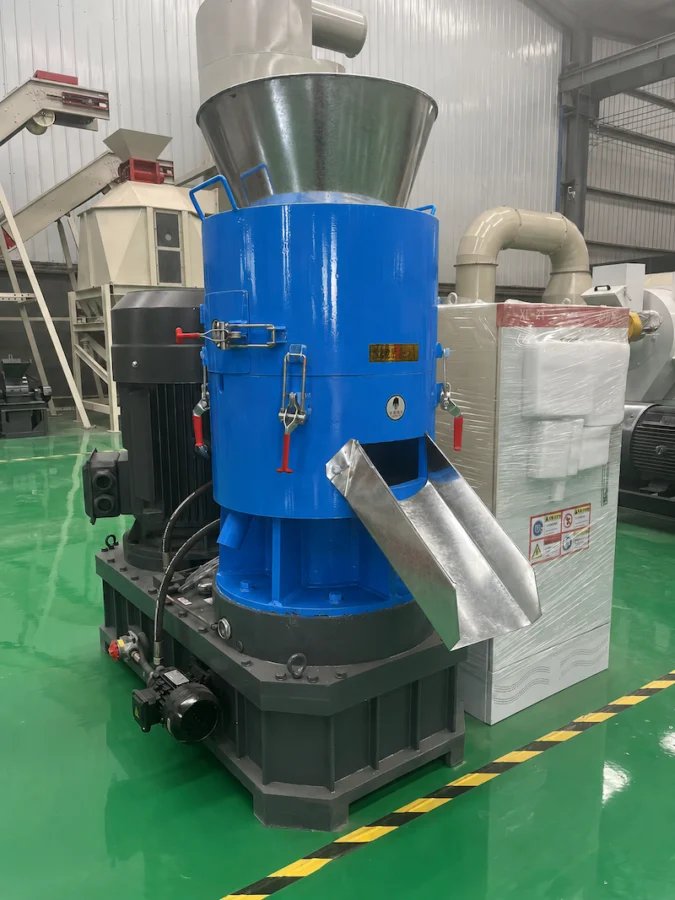
TCPEL - PROFESSIONAL RING DIE PELLET MILL MANUFACTURER
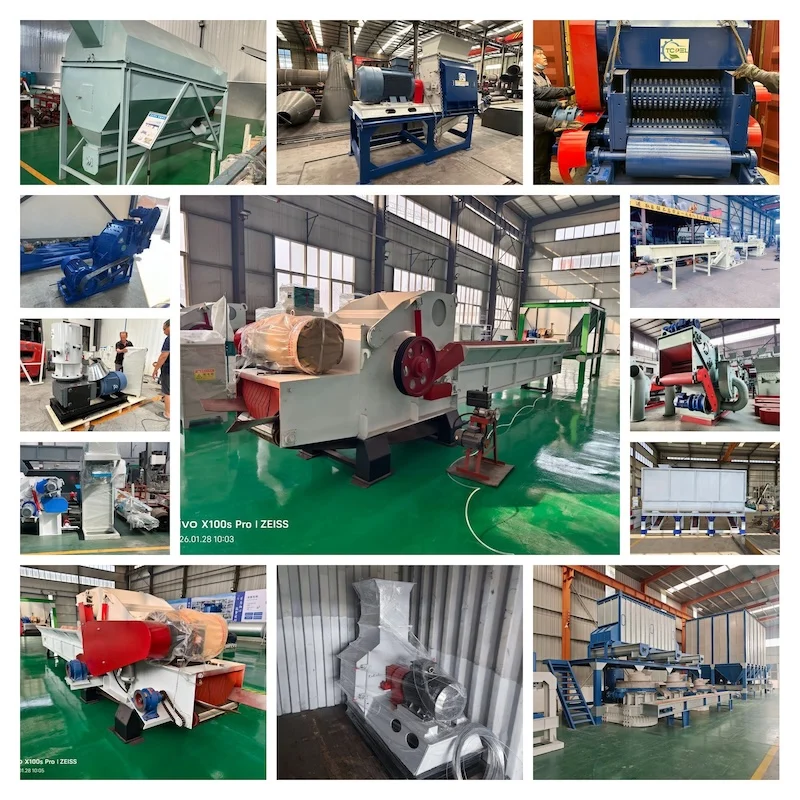
TCPEL boasts years of design and R&D experience, enabling us to recommend and customize the most suitable machines based on our clients’ different raw materials. We provide complete pellet production and solutions; please feel free to contact us with any questions.
FREQUENTLY ASKED QUESTIONS
What is the price of a ring die pellet mill?
The price of a ring die pellet mill mainly ranges from $15,000 to $60,000. The specific price depends on the type of raw material you want to process and your production volume requirements. You can contact our engineers for a detailed quotation.
What is the delivery time for a pellet production line?
Generally, the delivery time for a small pellet production line is about 20-30 working days, while the delivery time for a large pellet production line is 30-50 working days. However, this is just a reference, as customized motors and control cabinets require longer delivery times.
Can you send engineers to our site for installation and commissioning?
Yes, we will send engineers with extensive installation experience to your factory for installation, commissioning, and training. However, you will still need to arrange local workers and some large tools for support.
Related Machine
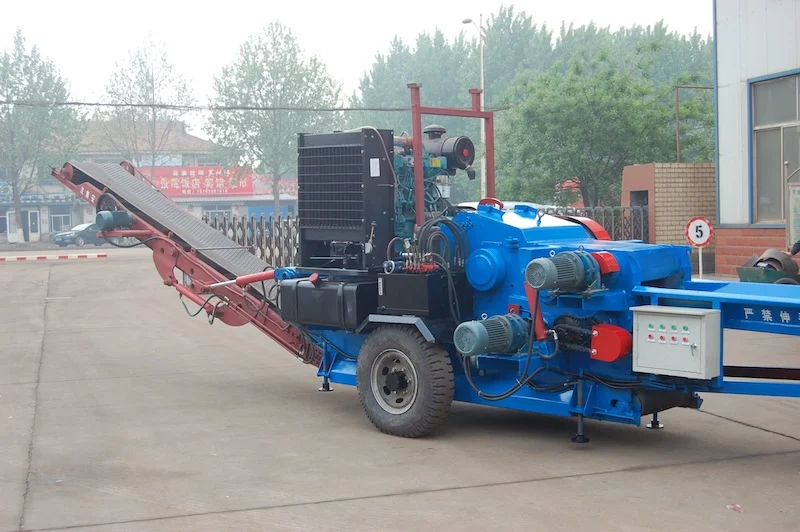
Wood Grinder
crushing the waste wood, branches, plate etc to the wood chips, the final size around 30-50mm.
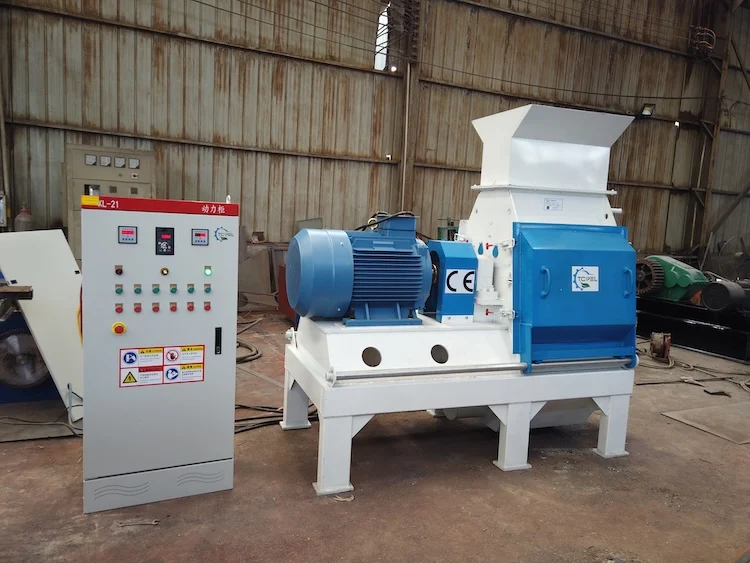
Heavy Duty Hammer Mill
It can crush lumpy organic waste into powder, improving the efficiency of the pellet mill.
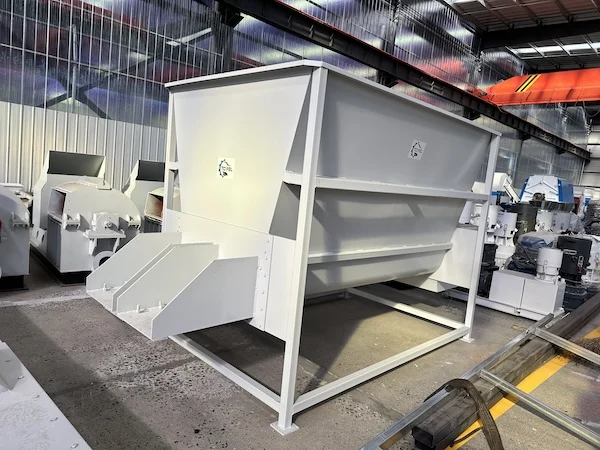
Distribution and Buffer Bin
It plays a role in material distribution and buffering in the production line, saving labor and improving efficiency.
CONTACT US NOW
We are one of the most professional pellet mill and briquette machine manufacturers with more than 20 years experience. You are welcome to contact us to discuss more details.
- The best design & quality machines
- Quick reply within 2 hours
- Provide the best proposal within 72 hours.
- Free test run service for special raw materials
- Detailed case analysis, make you know straw pellet machines soonest.