
EFB PELLET MILL FOR SALE
EFB pellet mill is a heavy-duty machine specifically designed to convert palm fruit bunches into biomass fuel pellets. It’s high-efficiency, stable-performance, and good quality.
BIOMASS EFB PELLET MACHINE
Biomass EFB pellet mill converts large quantities of empty palm fruit bunches into biomass fuel pellets, alleviating energy pressure. EFB pellets have high density, high calorific value, are easy to transport, and have a wide range of applications.
An empty fruit bunch pellet mill is a machine specifically designed to compress empty palm fruit bunches into high-density biofuel pellets. The empty fruit bunch density is very low, but the pressed fuel pellets can achieve a density of 1.1–1.3 g/cm³, and the bulk density is over 650 kg/m³. Palm fruit bunch pellet is the residue of the oil palm high-value solution, as it contains a certain amount of oil that contributes to its high calorific value—on par with that of high-quality wood pellets—thus positioning it as a premium, pollution-free, green energy source.
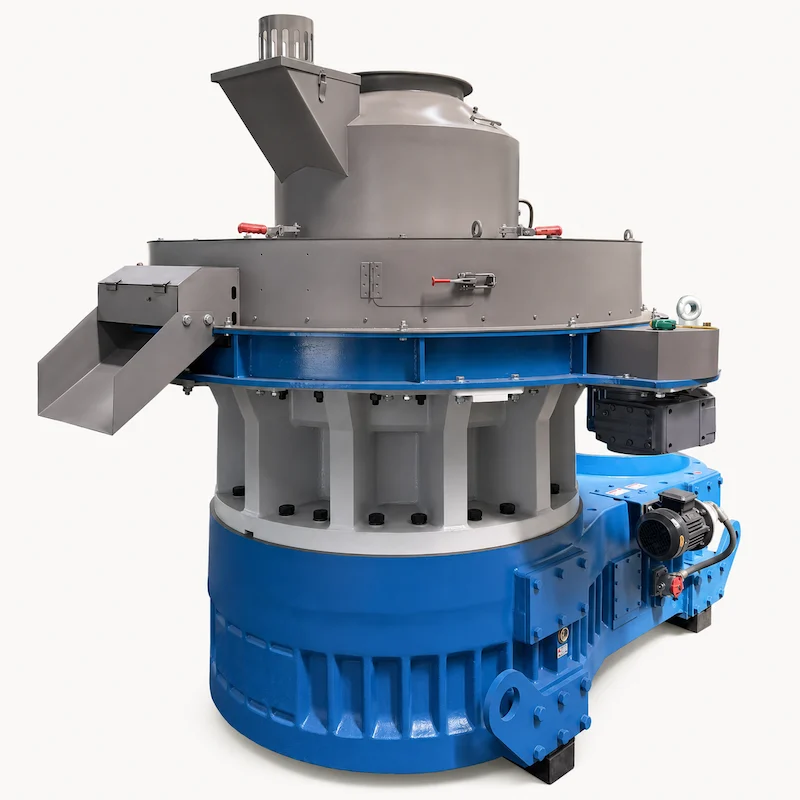

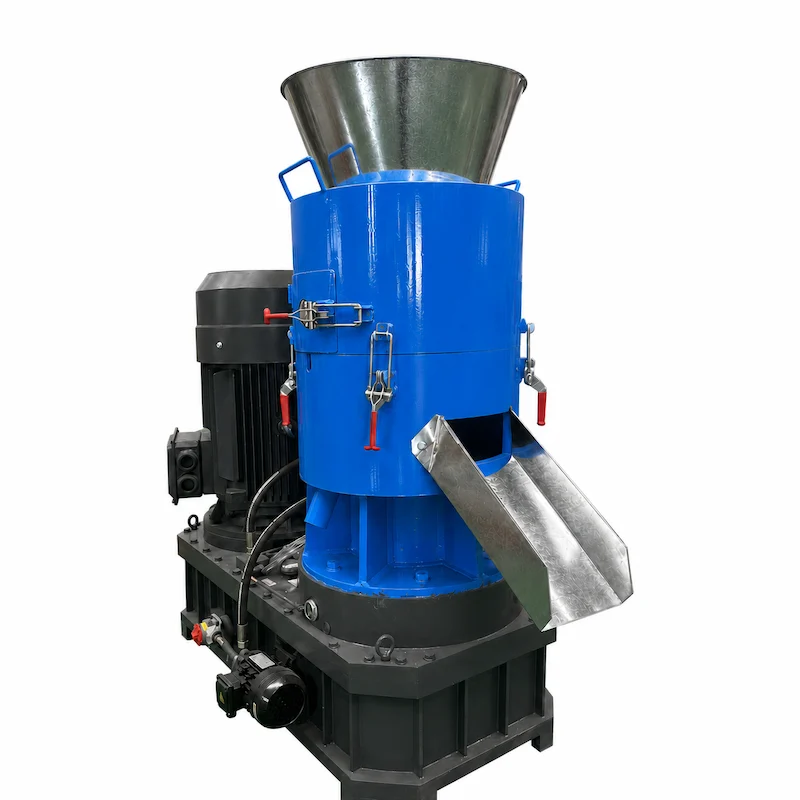
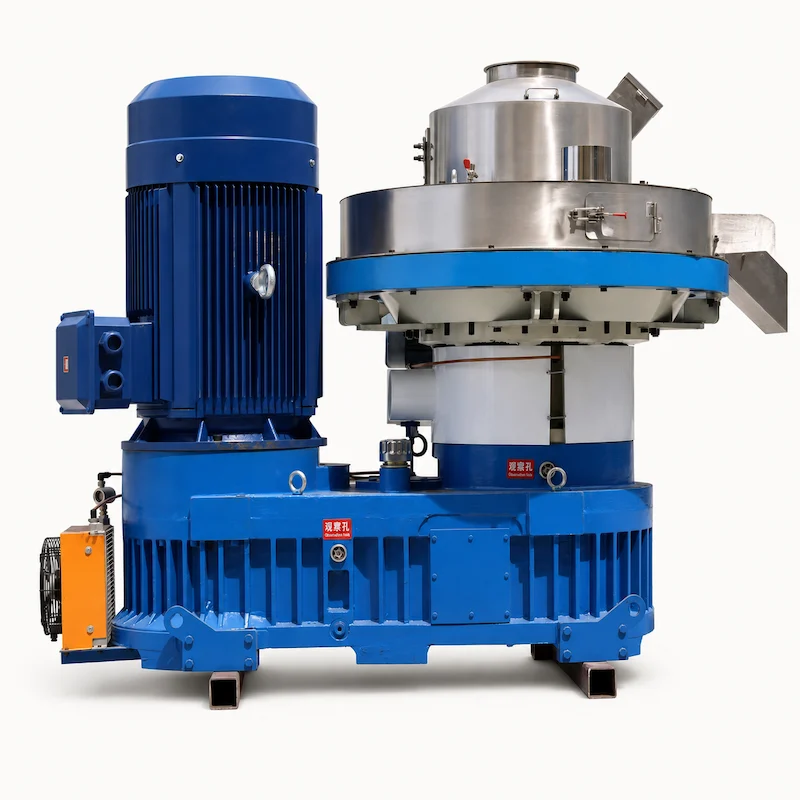
THE TYPES OF EFB PELLET MILL
There are two main types of EFB pellet mills on the market currently: flat die pellet mills and ring die pellet mills. Flat die pellet mills are more suitable for small and medium-sized EFB pellet production plants with a production capacity of less than 1,000 kg/hour. In comparison, ring die pellet mills are more commonly used in medium and large-sized pellet plants with a production capacity of more than 1,000 kg/hour.
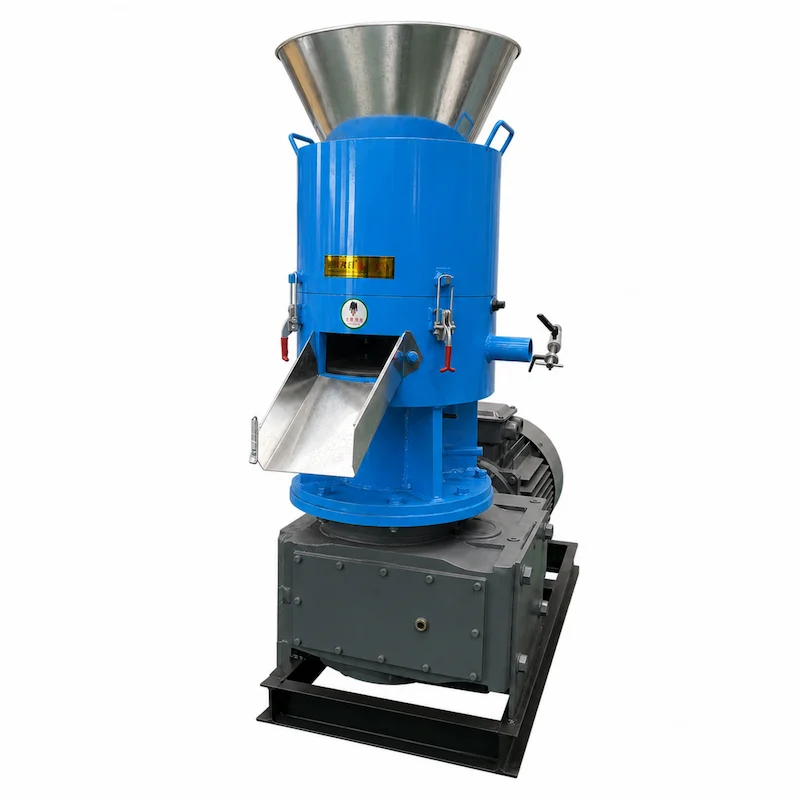
Flat-die EFB pellet mill has a production capacity of 80 kg/h to 1,000 kg/h, with a maximum power of 75-90 kW. The complete system includes a flat die biomass pellet mill, a belt-type feeding conveyor, an automatic lubrication system, and a control panel. That’s a good choice when you just start a small pellet business or test the market. If adding a small all-in-one biomass crusher, then you can build a small EFB pellet production line.
The ring-die EFB pellet machine can achieve a production capacity of 1,000kgs/h – 4,000 kgs/h, and it can operate continuously and stably for 24 hours because of the full automatic lubrication system. For big EFB pellet production lines configured with several sets of pellet machines, the maximum output can reach over 20 tons/h. The complete EFB pellet production system consists of a ring die pellet mill, an automatic feeder, a feeding conveyor, an automatic lubrication system, and a PLC control system. That’s for an industrial EFB pellet production plant.

HOW DO THE EFB PELLET MILLS WORK?
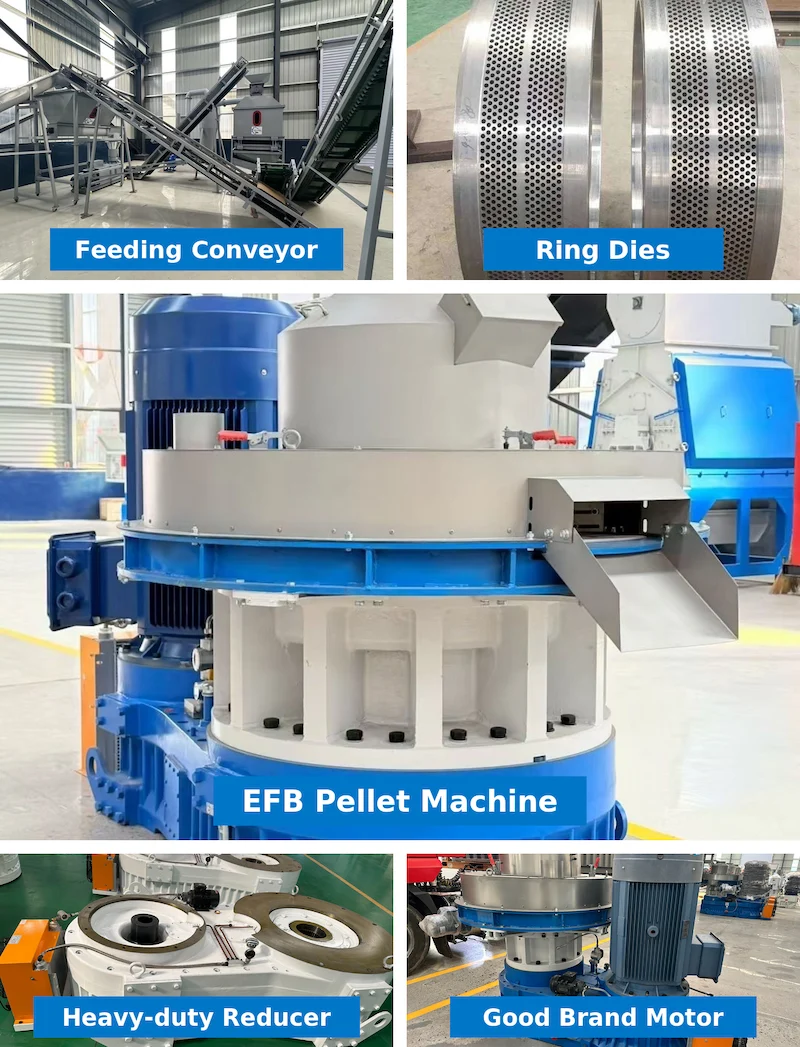
Like other types of biomass pellet machines, the empty fruit bunch (EFB) pellet mill also has requirements on the palm waste moisture content and size. The dried EFB powder is conveyed into the main pellet mill via the automatic feeding belt conveyor. The main motor of the machine drives a heavy-duty gearbox, which then drives the main shaft to rotate through a three-stage reduction mechanism. The press rollers connected to the main shaft immediately extrude the empty fruit bunch fiber, forming it into an EFB pellet. Once formed, the empty fruit bunch pellets are cut off by a scraper and then discharged from the machine through a rotary discharge tray.
Our latest palm fiber pellet machine adopts a rotary discharge disc design. This design significantly improves the biomass pellet forming rate, ensures uniform finished product appearance, and effectively reduces equipment failure rate, making it your preferred model.

EFB PELLET MACHINE TECHNICAL DETAILS
The selection of a palm fruit bunch pellet mill depends primarily on your capacity needs and investment budget. If you plan to build a large EFB pellet plant, a vertical ring die pellet mill is undoubtedly the best choice. It’s important to note that palm fruit bunch powder is lightweight and loose after grinding, which directly impacts the palm fruit bunch pellet machine capacity. To address this raw material weakness, we have specifically improved the reducer and feeding system, significantly increasing equipment output while effectively reducing the incidence of blockages.
EFB PELLETIZER TECHNICAL PARAMETERS
| MODEL | MOTOR | CAPACITY | WEIGHT |
| TCZL250 | 15KW | 100-200KG/H | 400KG |
| TCZL300 | 22KW | 200-400KG/H | 800KG |
| TCZL400 | 37KW | 300-500KG/H | 900KG |
| TCZL450 | 55KW | 600-800KG/H | 1500KG |
| TCZL550 | 55KW | 800-1000KG/H | 1600KG |
| TCZL560 | 90KW | 1000-1500KG/H | 4800KG |
| TCZL650 | 110KW | 1200-1400KG/H | 3200KG |
| TCZL560A | 132KW | 1500-2000KG/H | 5500KG |
| TCZL700 | 160KW | 2000-2500KG/H | 6800KG |
| TCZL850 | 220KW | 3000-3500KG/H | 8800KG |
| TCZL850A | 250KW | 3500KG/H | 10500KG |
| TCZL850B | 280KW | 4000KG/H | 11000KG |

THE PELLETIZING PROCESS FROM EMPTY FRUIT BUNCHES TO EFB FUEL PELLETS
The moisture content of palm fruit bunches is typically 30%–40%, and it rises further during the rainy season. For large-scale palm fruit bunch pellet production lines, the core process generally includes chipping, fine grinding, drying, pelleting, cooling, and packaging. The first crushing and drying equipment needs to be customized to the initial moisture content of the raw materials. The palm waste pellet machine should employ a specially optimized configuration to achieve both increased production capacity and reduced energy consumption.
FIRST CRUSHING SECTION - EFB CRUSHER
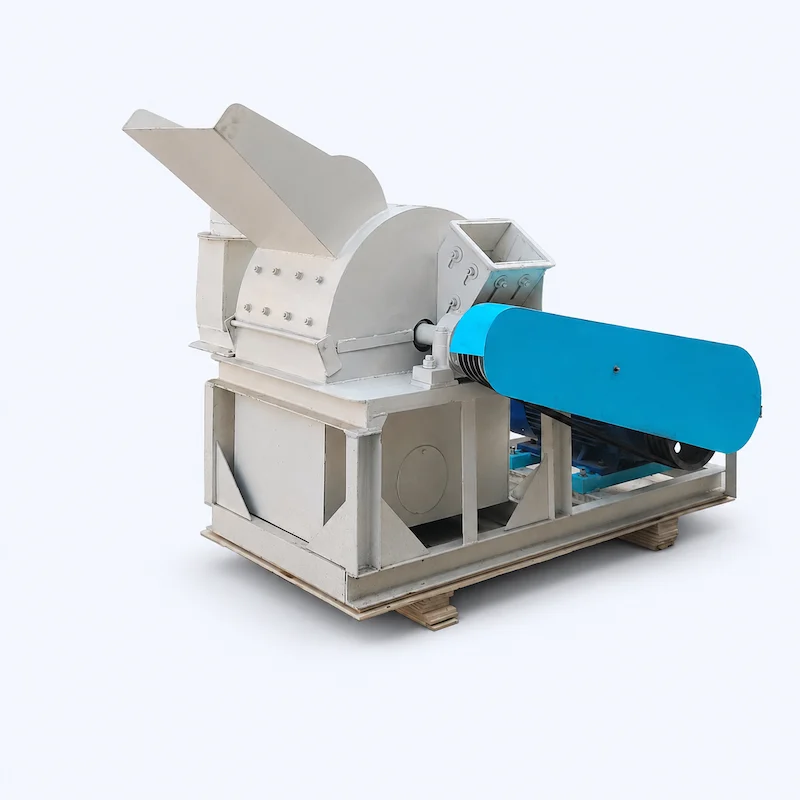
Palm fruit bunches are too large to be directly processed by the hammer mill. So they need preliminary crushing. We have a drum crusher specially designed for EFB. It’s designed for processing high-humidity soft fiber raw materials, and its shear-type crushing structure effectively reduces the risk of blockage. Compared to conventional crushers, it offers superior operational stability. Compared to shredders, it not only has a higher output but also produces smaller sizes after crushing. This greatly increases the efficiency of the dryer and fine crushing stages.
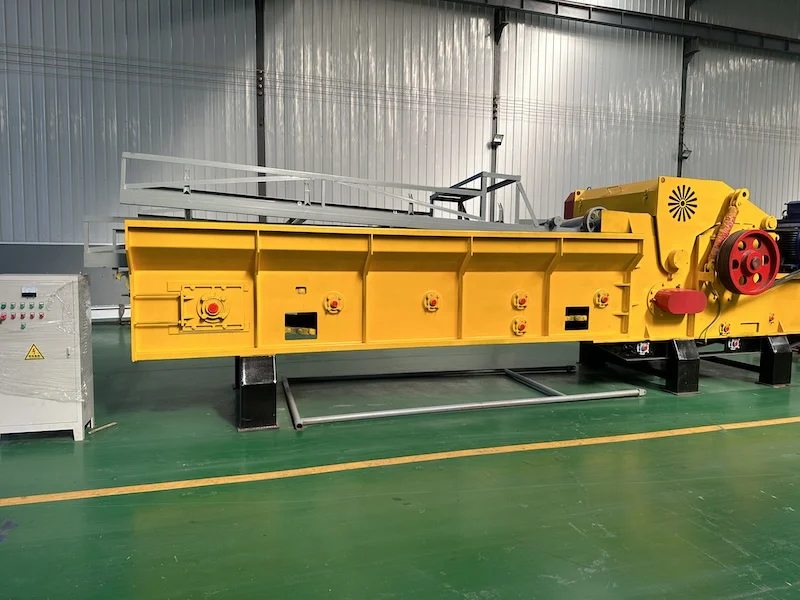
FINE CRUSHING SECTION-HIGH EFFICIENCY HAMMER MILL
In the fine crushing section, the stable operation and crushing efficiency of the large hammer mill are critical. Our EFB-specific grinder features a high-efficiency double-screen design, with both cyclone and twin-screw conveying running concurrently, and efficiency is greatly enhanced. The maximum output of a single machine can reach 10-15 tons/h. Additionally, we can configure the transmission method according to raw material characteristics to ensure 24/7 uninterrupted, stable operation of the equipment.
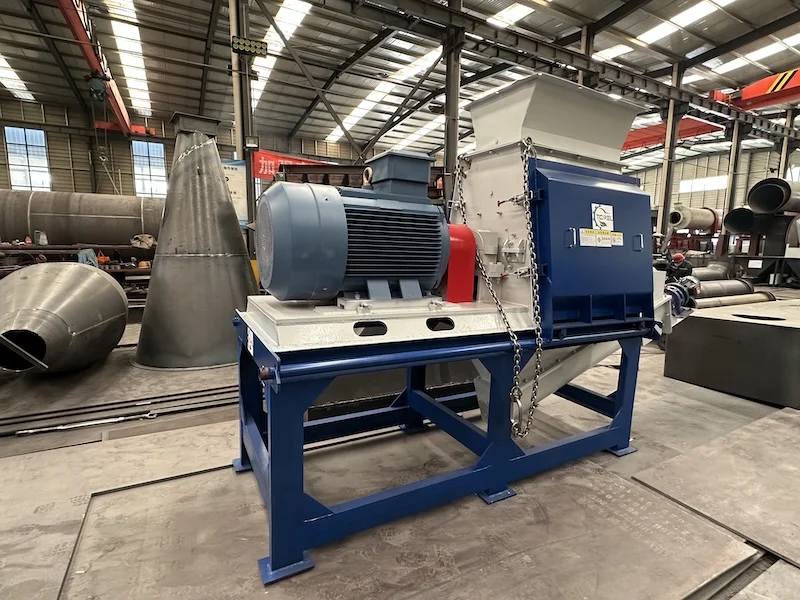
DRYING SECTION-HIGH EFFICIENCY DRYER
The drying process is critical in large EFB pellet plants. As EFB is mainly produced in tropical regions like Indonesia and Malaysia, characterized by year-round high temperatures and heavy rainfall, the EFB raw material moisture content fluctuates greatly. If the moisture content is above 50%, it is recommended to use a high-efficiency multi-channel segmented dryer, but the entire line’s process must be redesigned. You can use a drum dryer directly if the moisture is below 40%. We specially developed a chain plate biomass hot air furnace that offers stable heat output, lower drying costs, improved dryer performance, and energy savings for the entire line.
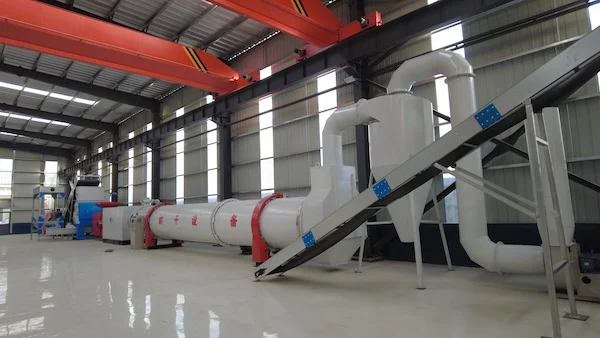
PELLET MAKING SECTION - EFB PELLET PRESS MACHINE
After undergoing two steps of crushing and drying, the raw material is fed into the biomass pellet mill — a process that fully ensures the high output and stable operation of the equipment. Designed specifically to address the high oil content, strong toughness, and high hardness of empty fruit bunches (EFB), our heavy-duty biomass pellet mill guarantees that the finished pellets boast excellent density and superior quality. In addition, the pellet mill is equipped with a dust recovery system, fully embodying the concept of sustainable and environmentally friendly production.
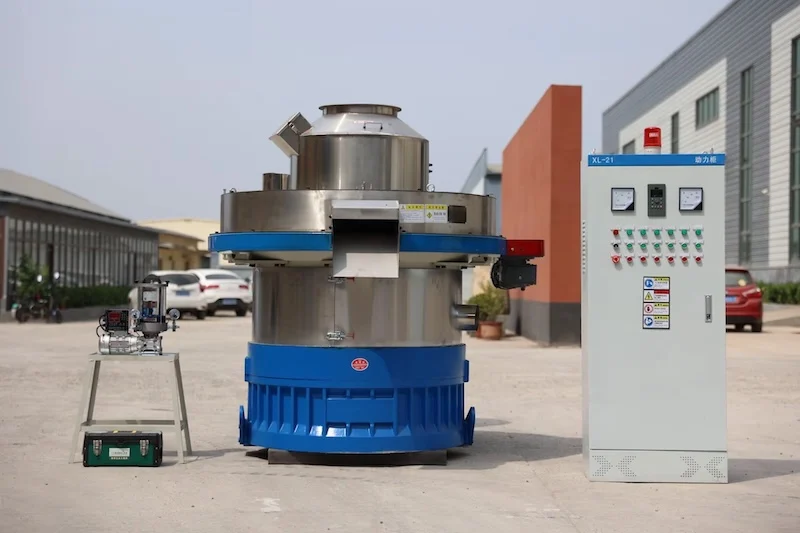
PELLET COOLING & PACKING SECTION
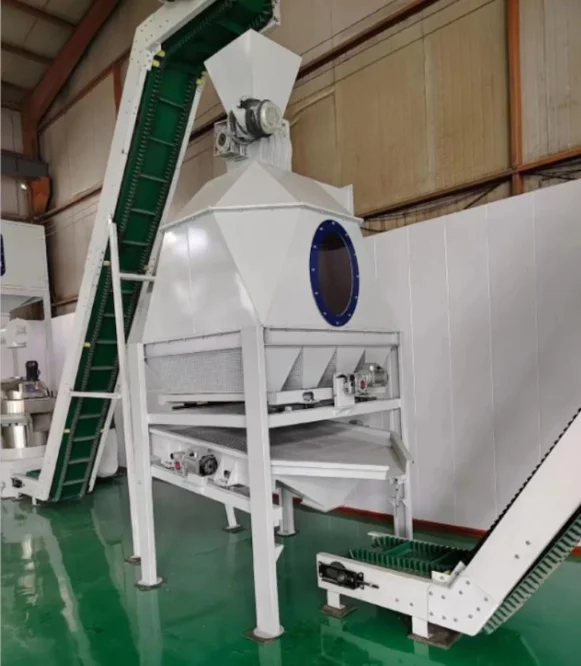
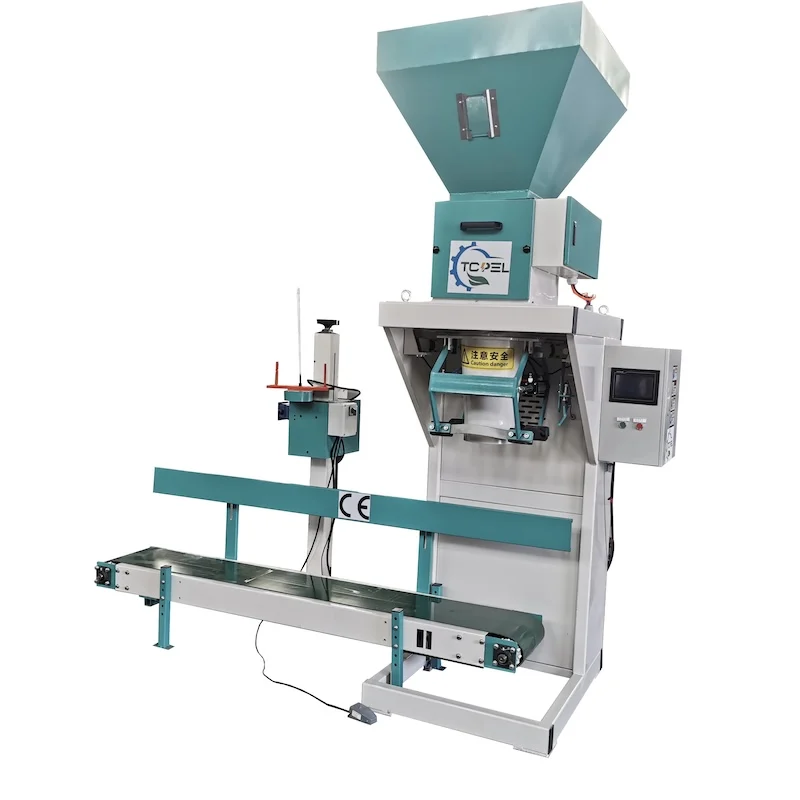
For large production lines, it is recommended to configure a cooling bin or adopt a combination of cooler and cooling bin, which can effectively save labor costs in the packaging section. The packaging process can be flexibly configured according to the scale of the production line – small production lines are suitable for small bag packaging, while large production lines are recommended to use ton bag packaging. Both packaging modes can be compatible and operate on the same production line.

FUEL CHARACTERISTICS AND APPLICATIONS OF EMPTY FRUIT BUNCH PELLETS
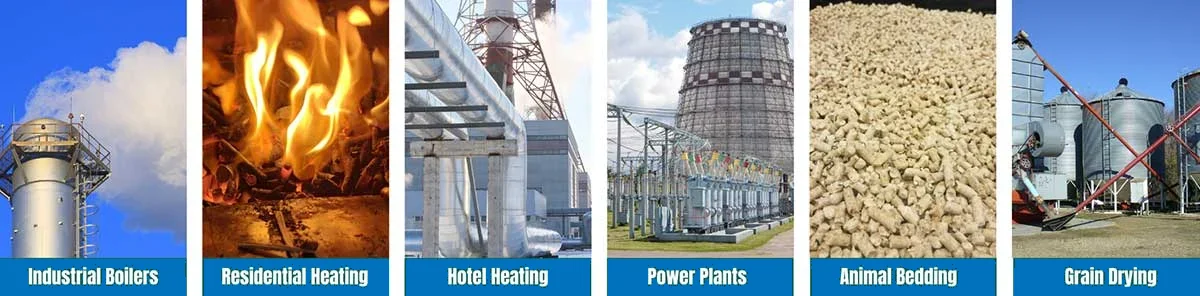
As a green, low-carbon, and eco-friendly fuel, empty fruit bunch pellets offer the following key advantages:
- Low raw material procurement and usage costs. Abundant and readily available during peak harvest seasons, EFB is abundant and plentiful, and is renewable resource.
- Boasting a high calorific value of over 4,000 kcal/kg with stable heat output during combustion, these EFB pellets have a vast market and are widely used for residential heating and industrial boiler applications.
- Requiring no binders, they are green and pollution-free, making them environmentally friendly. In many countries, EFB pellet production is a government-supported initiative eligible for financial subsidies.
- In industrial settings, they are compatible with all types of boilers and support automatic feeding systems, which reduces labor costs and lowers overall combustion expenses.

YOUR TRUSTED EMPTY FRUIT BUNCHES PELLET MILL MANUFACTURER

FREQUENTLY ASKED QUESTIONS
What is EFB and EFB pellet?
EFB is short for palm fruit bunches, a byproduct of palm oil production. Because it contains some oil residue, it has a high calorific value. After being crushed and dried, EFB is extruded through the pellet mill to form high-density, high-quality fuel pellets, known as EFB pellets.
What is the calorific value of an EFB pellet?
The calorific value of EFB pellets is similar to that of coconut shell pellets, approximately 3800-4300 kcal, which is comparable to that of many wood pellets. EFB pellets have a moisture content of only 10%, resulting in stable heating and making them a high-quality biomass pellet fuel.
Why TCPEL is your best choice?
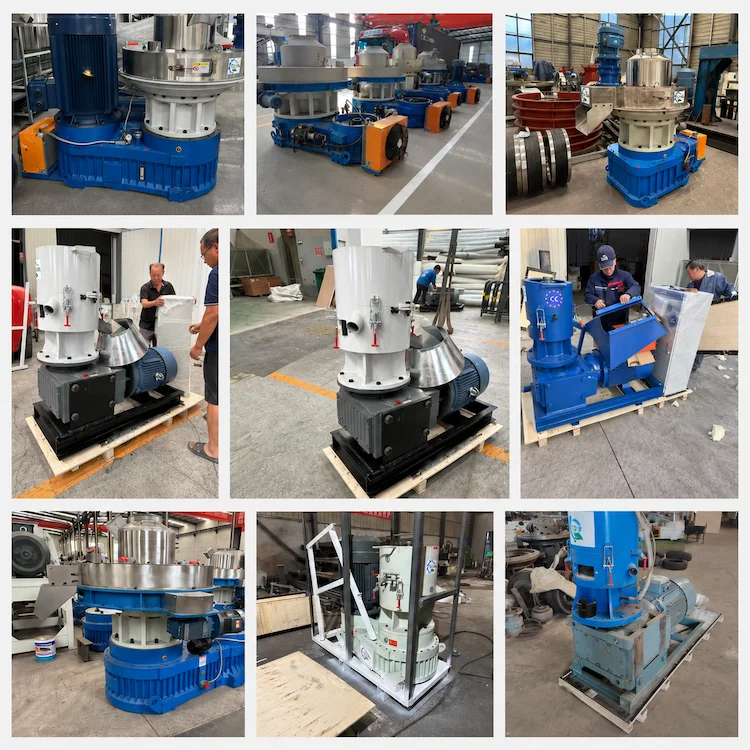
We have deep expertise in this industry, producing everything from crushing to grinding, drying, and pelletizing machines in-house. We conduct research and development to improve our products for different raw materials. Most importantly, we will work with you to solve any problems you encounter during actual use. Our customers have praised us, saying that we are the best machinery factory they have ever encountered in terms of after-sales service, and we are very proud of that.
Does EFB pelleting require binders?
Generally, no need. EFB itself contains a certain proportion of lignin, which softens and forms a natural binding force under the high temperature and pressure of the wood pellet mill. As long as the moisture content, size, and die parameters are properly controlled, stable pelleting can be achieved.
Why does EFB pelleting have higher requests on pellet mills design?
Empty fruit bunches is a high-fiber, low-bulk-density, and highly resilient raw material, making it difficult for ordinary light-duty pellet mill to maintain stable compression. Our heavy-duty pellet mill utilize reinforced pressure rollers and highly wear-resistant ring dies, featuring a die compression ratio specifically designed for EFB, and a heavy-duty gear reducer, ensuring continuous, high-load operation and extending service life.
What is the calorific value of EFB pellets?
The calorific value of palm fruit cluster pellets ( EFB pellet ) is between 4200-4800 kcal/kg, which is similar to that of coconut shell pellets. This is because palm fruit cluster pellets contain oil, which increases the calorific value of the pellets. However, its biggest advantage is that it has a low moisture content and stable calorific value, making it a high-quality biomass pellet fuel.
What are the different types of pelleting machines?
As we mentioned above, flat die pellet mills and ring die pellet mills are the two most commonly used models, but if you can accept larger size briquettes ( 25-80mm diameter), then an EFB briquetting machine would also be a good choice. You can contact us for more details.
RELATED MACHINES FOR EFB PELLET PLANT
Get EFB Pellet Mills Solution
We have been focusing on pellet and briquette machines for more than 20 years, striving for excellence and focusing on details and quality. Choose us and we will never let you down.
- Quick reply within 2 hours
- Provide the best proposal within 24 hours.
- Free test run service for special raw materials
- Detailed case analysis after get your inuiry